

By William Serafino – May 24, 2026
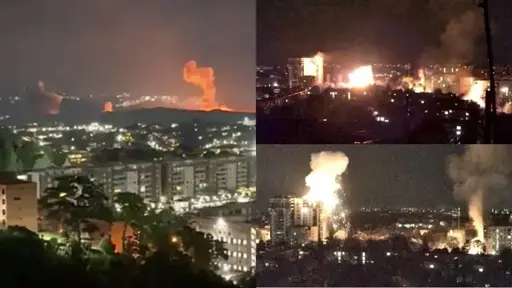
Following the January 3 US aggression, Venezuela has become an intense battleground of interpretations and opinions due to what many consider a controversial political course the country has taken since the normalization of relations between Caracas and Washington, established under clearly asymmetric conditions. The intellectual conventions surrounding the Bolivarian Revolution are now in a profound crisis, as are the analytical frameworks for engaging with a new reality fraught with confusion and uncertainty.
January 3rd as an analytical problem
Prominent intellectual and media figures, both within and outside Venezuela, have engaged in heated debates to defend certain positions and convictions. Listing all of them would exceed the scope of this article.
In a drastic exercise of simplification, two theses can be identified: 1) January 3 (the intervention plus the kidnapping of Maduro) was the product of a “betrayal”, associated with Delcy and Jorge Rodríguez, which would automatically explain Caracas’ subordination to the US; and 2) faced with the military superiority expressed that morning and the subsequent blackmail, the Venezuelan government is making tactical concessions to buy time and build conditions to resume the course established prior to the fateful date.
Both theories, in my view, have a flawed starting point: considering January 3 as a cause with autonomous characteristics rather than a result, a port of arrival, or the outcome of a process full of complexities that escape the eye, whether due to self-interest or naive omission.
The problem is not minor. For those who maintain the thesis of “betrayal,” Venezuela had all the political and military resources to confront the US invasion, repel it, and bear the primarily economic costs of resistance.
It doesn’t take much imagination to project that, in such a scenario, the US energy-financial blockade, aggravated between November and December 2025, would deepen until it precipitates a humanitarian crisis of biblical proportions in Venezuela.
Deep down, it is a comforting thought. Portraying January 3 as an isolated event is a convenient way to divide reality into good and bad, where supposedly an entire country eager to fight and stage a “Caribbean Vietnam” was forced to stay home against its will due to the decision of a few individuals.
This approach would overlook central issues.
First, the terror of the bombings and the accumulated exhaustion of the Venezuelan government itself led to a largely passive social reaction. Far from widespread spontaneous national outrage, the days following the attack were marked instead by great anticipation of the material benefits that a new political landscape without Maduro would bring.
Second, it denies the previous mistake of failing to resolve the deadlock in the clash with Trump; perhaps anticipating that Trump’s intention to attack was only declarative, not having a readiness for the degree of threat and overestimating the reach of Chavismo’s social force, which has been declining as a hegemonic current for several years.
Thus, rather than clarifying, the thesis of “betrayal” conceals not only the previous miscalculations but also the void of legitimacy that was created by the combination of a multi-year hyperinflation with a colossal emigration process. These were the result of a package of suffocating sanctions that completely overwhelmed the government and weakened its ties with the population, something never recognized in all its starkness despite the empirical evidence.
Although avoidable, the situation spiraled toward a head-on collision with scant political and material resources to meet the challenge. Therefore, January 3 is not the origin. It is the culmination of a powerful, willful inertia that trapped Caracas for several years in contradictions and vulnerabilities linked to US economic aggression, which were not properly addressed at the time.
It was most likely considered that the risk of assuming the clearly unfavorable deadlocked scenario early on was lower than continuing with less and less strength, feeding a consuming inertia at the internal level.
Tactical flexibility?
Conversely, the thesis of tactical flexibility projects the same blind spots as the idea of “betrayal.” Its proponents, also taking January 3 as a pivotal point, argue that the exceptional Venezuelan situation is in a kind of interregnum, a pause without irreversible characteristics, where the focus is on preparing for future battles, gaining time and room to maneuver.
In other words, Venezuela has supposedly frozen politically, waiting for the thaw to push the country back into the cycle of confrontation with the US that led to January 3. This appeals to a reassuringly binary notion in the same way as “betrayal,” but from its opposite perspective. Theoretically, everything in Venezuela remains the same.
Starting from the superficial notion of a “pause” implies suppressing the dynamism of any historical process, which is precisely what is happening in Venezuela. Returning to the previous political status quo (polarization with Washington) would lead us to mistakenly assume that both the current external and internal conditions are conducive to such a return.
From that perspective, the generational shift that Chavismo has undergone and the aesthetic and discursive changes established by the government leadership years ago would be denied. The sharp turn in the international landscape, along with the US’ hemispheric geopolitical retreat, configured by the Monroe Doctrine, would face similar treatment.
Confronting Washington would require an alternative, multipolar globalization platform mature enough for Venezuela to integrate into, as well as a continental context inclined towards sovereignist positions that would deter US intervention.
Both of these variables are unfortunately conspicuously absent, further limiting the already compromised room to maneuver. It is difficult to project that they will be available in the short term. Can preparation even take place in a context like this?
Only in this way could the country limit the already proven destructive effects of the sanctions, finding solid markets and instruments to make its oil trade, finances, and connection with the global economy viable.
In general, the theory presented masks the underlying problem: the lack of internal and external forces capable of challenging the US as it has been challenged before. It is not simply a matter of will.
Final notes
The gravitational force exerted by January 3 on interpretive frameworks seems directly proportional to the fear of assuming that the intellectual conventions woven around Venezuela face a scenario of collapse.
This is evidenced by the current contradictory situation hidden behind the noise of social media: sectors of Chavismo are deeply upset by what they consider a surrender to the US. Meanwhile, opposition sectors, including María Corina Machado’s, are deeply concerned that the energy pact between Caracas and Washington will strengthen Chavismo and take them out of the game.
Such a contradiction can only be explained by the fact that the two main options that shaped Venezuelan politics over the last two decades failed to deliver on their promises on the day of the US intervention. There was no “Caribbean Vietnam” predicted by Chavismo, nor did the bombs propel Machado, who staked everything on that criminal maneuver to seize power.
Faced with this shared failure, what remains is a desert before our eyes and an emptying of the concept of sovereignty. From this, the current bizarre moment originates: a post-Maduro Venezuelan government assuming the costs of decoupling from what has historically been understood as Chavismo with each decision oriented towards geopolitical and economic realism, an economically prostrate population whose only immediate redemption is material, and an icy bath of cold water demonstrating that not having overcome dependence on oil facilitated the US tightening its grip on us and subjugating us.
The Return of the “Repentant Dog”: How the Purist Left Judges Venezuela from Afar
The most painful fact of a national failure that has been taking shape for half a century.
Perhaps in the bizarre circumstances of this situation, we have one last chance to address the pending issues knocking at our door with historical urgency. To get there, we must see January 3 in its proper structural dimension, not as an event that, in its strictly political context, tells us nothing of real significance.
Translation: Orinoco Tribune
OT/JRE/SF
From Orinoco Tribune via This RSS Feed.