

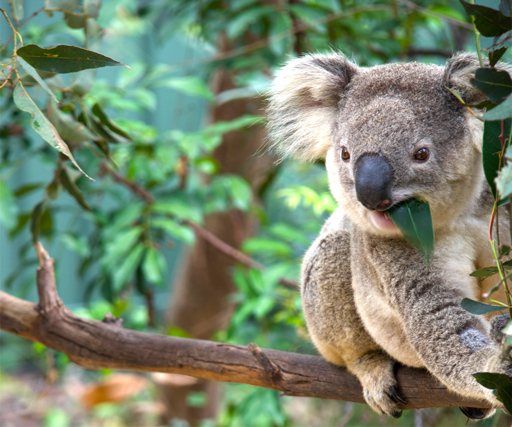
Founder’s Briefs: An occasional series where Mongabay founder Rhett Ayers Butler shares analysis, perspectives and story summaries. The case for Australia’s new Great Koala National Park rests on a practical point: koalas need more than scattered trees. They need connected habitat that can support populations over time. The national park, planned for the state of New South Wales, is meant to link fragmented eucalyptus forests along the east coast, giving koalas a better chance to disperse, feed, and breed. It would also protect habitat used by dozens of other threatened native species, reports contributor Johan Augustin for Mongabay. The park comes at a difficult time for one of Australia’s best-known animals. Koalas (Phascolarctos cinereus) have declined as forests have been cleared, divided by roads and development, and exposed to hotter, more severe fires. In some places, the question is no longer only how much forest remains. It is whether the remaining forest still functions as habitat. That makes connectivity more than a planning concept. A patch of forest can look useful on a map while being too isolated to sustain a local population. Corridors between forest remnants allow animals to move as food, shelter and climate conditions change. For koalas, which depend on particular eucalypt species, that movement can help determine whether a local population persists. The park will also test what protection means in practice. Conservationists have welcomed the proposal, while warning that logging pressure, development, land-use loopholes, and weak enforcement could limit its effect. A park declared on…This article was originally published on Mongabay
From Conservation news via This RSS Feed.