

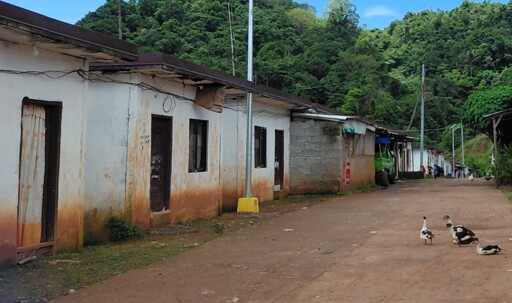
“While the government arrogantly parades its modern, state-funded infrastructure, our people face a catastrophic lack of basic housing, water, electricity, sanitation, and livelihood.”
CAGAYAN DE ORO — Lack of permanent shelters and delayed monetary compensation.
For the families displaced by the 2017 war in the Islamic City of Marawi, these are the primary reasons why, after almost a decade, they have remained in temporary shelters, enduring dire situations.
The Reclaiming Marawi Movement (RMM), a grassroots mobilization led by the internally displaced persons (IDPs) themselves, reiterated calls for their Kambalingan—a Meranaw term for safe and dignified return.
Ramadan Muntor, RMM coordinator, acknowledged the fact that many residents may not be able to return to their original homes, but pointed out that Kambalingan also means relocating to a liveable community—near schools, markets, and their livelihood—where transportation fare would not be a daily concern.
“These are not just the problems of IDPs in temporary shelters but also of IDPs in permanent shelters because the locations [of shelters] are far,” Muntor told Bulatlat in Filipino.
As to the permanently displaced, Muntor was referring to the many IDPs who were locals from barangays Sabala Manao, Datu sa Dansalan, Dansalan, and Datu Naga—among the 24 most affected areas (MAA) during the 2017 Marawi Siege.
Residents in these four villages, whose land titles sit on the “reclamation area” owned by the government—which were highly contested by residents—are no longer able to return.
These areas were used instead as sites for government infrastructure projects, including the four-hectare Sarimanok Sports Stadium (P199.9 million) and the one-hectare Marawi Convention Center (P180 million) by the National Housing Authority (NHA), as well as the Marawi Museum (P44.4 million), the School of Living Tradition building (P53.7 million), the Lake Lanao Promenade (P380 million), and the Peace Memorial Park (P312 million) implemented by the Marawi local government. A total of P1.17 billion was spent for these projects.

A comparison of two satellite images covering barangays Sabala Manao, Datu sa Dansalan, Dansalan, and Datu Naga in Marawi City. Courtesy of Google Earth
For Tirmizy Abdullah, a history professor from the Mindanao State University (MSU) in Marawi City, this commercialization within what they acknowledge as an ancestral land of the Meranaws is a “deliberate assault” on their identity and culture, aside from the fact that thousands of war-displaced families have remained in temporary shelters.
Information from the Department of Human Settlements and Urban Development (DHSUD) states that a total of 2,776 permanent housing units were targeted for identified IDPs who lived along the banks of Agus River and Lanao Lake—considered by the government as danger zones.
The number of permanent housing units targeted for completion is only 3.6 percent of the reported over 77,000 families displaced by the war.
Barangays Kilala, Gadongan Mapantao, Dulay West, Dulay Proper, and Patani were considered as project sites. These were apart from the reported three housing projects of the Bangsamoro Autonomous Region in Muslim Mindanao (BARMM) government.
From 2020 to 2024, the NHA had completed at least 1,310 permanent shelters in barangays Kilala and Gadongan Mapantao, Marawi City, under its Housing Program for Calamity Victims (HPFCV).
The United Nations Human Settlements Programme (UN-Habitat), in partnership with the state-run Social Housing Finance Corporation (SHFC), also turned over at least 691 permanent shelters in barangays Dulay Proper, Dulay West, and Patani from 2021 to 2022. The beneficiaries included displaced families affected by government infrastructure projects.

In addition, 50 permanent shelters under the BARMM’s Marawi Rehabilitation Program in Kapai town, Lanao del Sur, were turned over to displaced families in January of this year. There were also ongoing constructions for 200 units in Barangay Malimono and 150 units in Barangay Kormatan-Matampay, Marawi City, under the same program.
Muntor told Bulatlat that many IDPs whose houses were affected by government projects have remained in temporary shelters.
Marawi Advocacy Accompaniment, a coalition of IDPs and partner civil society organizations, monitored around 17,000 families, or around 80,000 individuals, still living in 15 temporary shelters in Marawi City and Lanao del Sur.
Eviction from temporary shelters has been a major concern of displaced families due to expiring lease agreements. Last month, around 129 families in the temporary shelter in Barangay Pindolonan, Saguiaran, Lanao del Sur—a few kilometers away from Marawi City—faced eviction.
Read:Displaced Marawi residents face eviction from temporary shelter
Muntor told Bulatlat that the families were not evicted, but they needed to pay rent amounting to P1,000 per month if they chose to stay.
Sluggish compensation
Many displaced families who filed claims have yet to receive their compensation from the government. The RMM coordinator considered this as one of the big factors why they remained in temporary shelters.
“The process is very long and slow,” Muntor said in Filipino.
Under the Marawi Siege Victims Compensation Act of 2022, any owner of a residential, cultural, or commercial structure, and other properties in Marawi’s 24 MAA and eight barangays considered as other affected areas (OAA) is entitled to monetary compensation subject to verification.
Compensation claims, under the law, shall be filed within one year from the date of commencement of the filing (July 4, 2023) to the date of its termination (July 3, 2024).
Read:Group opposes Marawi Siege compensation planned changes
Data from the Marawi Compensation Board (MCB), the government body that awards monetary compensation to eligible claimants, revealed that a total of 3,187 claims were resolved from 2023 to 2025, amounting to P3.044 billion. This is only around 22 percent of the estimated total claims to be resolved by 2028.
Last year, the agency conducted a structured interview with 100 randomly selected claimants who had already received their compensation to determine the utilization of funds. Thirty-six percent of the respondents had said that they used their compensation for house repair, of whom 21 percent had already returned to their homes.
This result reflects the huge possibility that many displaced families in temporary shelters are also able to return to their homes once they receive their compensation.
However, Abdullah, who also serves as convenor of the Marawi Advocacy Accompaniment, criticized the provision of this Act that says the compensation received shall be considered as a “complete satisfaction” of the loss and destruction during the siege.
He called this provision a dirty legal trap designed to silence them. “Money is necessary, but compensation can never erase our poverty, our trauma, and nine years of state neglect,” he said.
True face of Marawi rehab
The five-month-long battle between Philippine troops and the Islamic State-linked Maute Group in Marawi City in 2017 marked its ninth year last May 23.
For Abdullah, the prolonged and permanent displacement, long-overdue monetary compensation, and the dire situation of displaced families reflect “the true face of Marawi’s rehabilitation.”
“While the government arrogantly parades its modern, state-funded infrastructure, our people face a catastrophic lack of basic housing, water, electricity, sanitation, and livelihood,” he added.
Drieza Lininding, chairperson of the Moro Consensus Group, a civil society organization, pointed out that the true value of Marawi’s rehabilitation hinges on the restoration of its “people’s dignity, livelihoods, and peace of mind” and not on government infrastructure.

Internally displaced families, civil society groups, and government representatives gather for a multi-stakeholder dialogue on the situation of the 2017 Marawi Siege displaced communities at the Mindanao State University (MSU) in Marawi City on May 22, 2026. Photo courtesy of the Reclaiming Marawi Movement
Bangsamoro-based groups demanded the local governments of Marawi City and Lanao del Sur provide protection to IDPs by totally stopping any eviction until livable permanent shelters are provided, as well as ending the unjust collection of rents in temporary shelters.
They also urged the MCB to hasten the processing of claims for monetary compensation.
Abdullah also called on national legislators to immediately pass legislation that would protect and ensure the rights of the displaced communities.
If displacement still exists, Abdullah said Marawi’s rehabilitation will remain a failure. (RVO)
Note: The project costs of the government infrastructure projects within the most affected areas (MAA) were based on an article published by the Philippine Center for Investigative Journalism, citing data from the now-defunct Task Force Bangon Marawi.
The post After 9 years, Marawi displaced families have yet to return to their homes appeared first on Bulatlat.
From Bulatlat via This RSS Feed.