

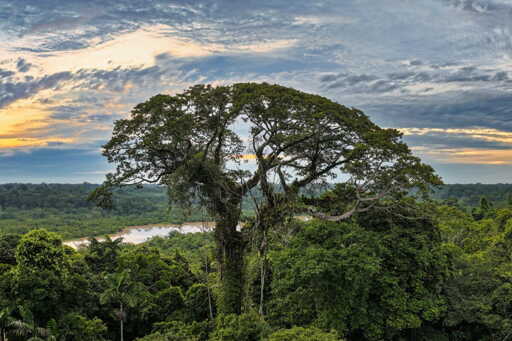
In the coming months, voters in Brazil, Peru, and Colombia will elect new presidents. Together, these three countries contain roughly 82% of the Amazon rainforest, making their elections consequential far beyond national borders. The future of the world’s largest tropical forest — and, by extension, global climate stability — will depend in large measure on the choices their citizens make at the ballot box. More than 35 million people living in the Amazon region of these countries also depend directly on those outcomes. Brazil, home to about 62% of the Amazon, offers a stark example of how presidential policies can shape the fate of the forest. The country has experienced dramatic swings in deforestation over the past two decades. While commodity prices, global markets, climate conditions, and geopolitics all play a role, government policy has often been the decisive factor. In 2004, for example, Brazil lost more than 10 million acres of Amazon forest. By 2012, stronger environmental measures had gradually reduced that loss to less than one-sixth of that level. Those efforts relied not only on stricter enforcement, but also on cooperation with agricultural and business sectors long associated with deforestation. More recent data suggest Brazil’s renewed environmental policies have again reduced forest loss by more than 30% from the previous year. Annual primary forest loss in the Peruvian Amazon from 2002 to 2025 (hectares). This data includes “deforestation” and forest loss due to fire. Data from the University of Maryland’s GLAD lab data and WRI’s Global Forest Watch.…This article was originally published on Mongabay
From Conservation news via This RSS Feed.