

Originally published in Spanish, we present an English translation of an interview with Emilio Albamonte on the prospects of the Partido de los Trabajadores Socialistas (PTS) and the socialist Left in Argentina. Albamonte is a leader and founder of the Trotskyist Fraction – Fourth International, today the Permanent Revolution Current – Fourth International, and of Argentina’s Partido de los Trabajadores Socialistas (PTS, Socialist Workers Party). He is coauthor of the books Socialist Strategy and Military Art and Debates and Foundations on the Struggle for Socialism Today.
You may be interested in: “How to Fight (and Win) against the Right: Lessons from the Workers’ Movement in Milei’s Argentina”
***
How would you characterize the political phenomenon developing around Myriam Bregman and the Left? Why is it happening, and what are its roots in Argentina’s political reality?
The first thing to say is that the phenomenon is not essentially electoral — although several polls give Myriam between 9 and 14 percent voting support as a presidential candidate — but above all one of political sympathy, or what pollsters call “image.”
You may be interested in: “Meet Myriam Bregman, the Revolutionary Congresswoman in Argentina More Popular Than Milei”
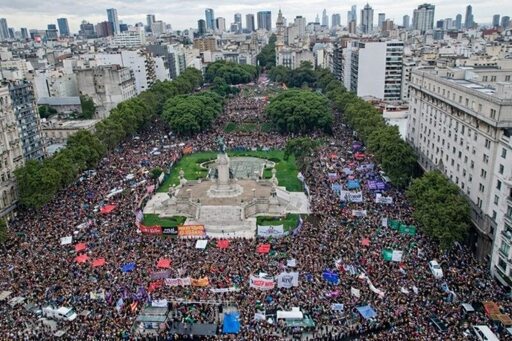
This phenomenon cannot be understood without starting from the class struggle under Milei’s government, which recently included the battle against the labor reform, in the context of which we carried out an enormous agitation campaign, the biggest I can remember of any left-wing organization here outside an electoral period.
The struggle against the reform was an important experience. We could say that the political phenomenon now developing is a political expression of the conclusions that broad sectors of the working class — young people, the feminist movement, as well as sectors of culture and intellectuals — have been drawing from these two years of struggle against this government, during which they saw Myriam and the PTS on the front lines, while much of Peronism and the trade union bureaucracy maintained the balance that allowed Milei to advance.
One of the most commented-on facts was the poll by the Brazilian consulting firm Atlas Intel — the same firm that anticipated Milei’s rise — in which Myriam has a 47 percent approval rating and 46 disapproval rating, making her the only figure in Argentinean politics with a net positive image. She ranks above Buenos Aires governor Axel Kicillof, former president Cristina Kirchner, Senator and former minister Patricia Bullrich, and President Milei himself. The University of San Andrés poll also places Myriam among the four political leaders with the best image in the country. But it’s not only about the polls, right?
No, what the polls reflect is something we had already been seeing in the streets for quite some time: the sympathy generated by Myriam and Nicolás “Nico” del Caño heading the Workers’ Left Front (FIT-U) tickets. It goes beyond Myriam herself as an individual political figure. She is the main expression of a broader phenomenon. For example, in the University of San Andrés poll you mentioned, Nico appears fifth among opposition political figures with the highest positive image.
What is new here, even though these are “image” measurements, is that this is now a national phenomenon. We had already seen in Jujuy that Alejandro Vilca won 25 percent for national deputy in that province in 2021; later, even though he was not reelected, he maintained a high vote share of around 10 percent.
We should also mention Christian Castillo, Luca Bonfante among the youth, and our comrades who are leaders in their workplaces, universities, and workers’ struggles — all of them are part of the same broader fabric.
We have every right to think that this phenomenon — which is also a continuation of what happened in 2025, when the Buenos Aires Province list headed by Nico won two national deputies and Myriam reached 9 percent in the City of Buenos Aires — will also express itself in the class struggle.
How do you situate this phenomenon in the international context, and how would you define the particularity of the Left in Argentina?
Since the 2008 crisis we have seen political phenomena emerging not only on the right but also on the left, although unfortunately the overwhelming majority ended up being channeled through neoreformism. There is a constant we can observe in the history of the workers’ movement: many times, when it cannot find an outlet through direct action in the class struggle, it expresses itself politically.
For example, at the end of the 19th century, after the defeat of the Paris Commune, the European workers’ movement created the great social-democratic workers’ parties and trade unions. The paradigmatic case was German social democracy, which first developed as an enormous semi-clandestine organization under Bismarck’s “anti-socialist” laws.
Dick Geary, in an interesting book on workers’ and socialist movements in Europe before 1914, explains very well how harsh the struggle against employers at the factory level was — lockouts, factory closures. In that context, political organization also responded to the impossibility of advancing solely through workplace struggles, to the need to fight collectively. It is what Rosa Luxemburg summarized by saying that trade union struggle was a kind of Sisyphean task.
The bourgeois regime’s response to this process of organization — which also had an international extension — was to modify the political structure of state domination. We have studied Antonio Gramsci, among other reasons, because he best analyzed this process. The bourgeoisie created an “expanded state” — what Gramsci calls the integral state, meaning dictatorship plus hegemony — in order to go beyond passively awaiting consent, and developed a whole series of mechanisms to organize it, with the institutionalization of mass organizations and the expansion of bureaucracies within them being one of the fundamental elements, with the dual function of “integration” into the state and fragmentation of the working class. In Argentina this process took place under the first Peronist government.
This is not just history. Over the last decade and a half, we have seen dozens of generalized class struggle processes in different countries, most of which took the form of revolts, as well as processes of political mobilization, especially among the youth (Occupy Wall Street, the indignados in the Spanish State, the Tahrir Square movement in Egypt, etc.).
There is a relationship between these movements and the development of neoreformist political phenomena because, as I said before, when the workers’ and popular movements cannot find an outlet through direct class struggle, this expresses itself as political action. Neoreformism tries precisely to separate politics from class struggle. We saw this with Podemos in the Spanish State, Jean-Luc Mélenchon in France, and Syriza in Greece.
Something similar happened here after the December 2001 uprising, when a diversion began with President Duhalde’s mega-devaluation and ended up being capitalized on by Kirchnerism, which incorporated much of the social and human rights movements into the state. It was part of a post-neoliberal cycle that developed across the region from Venezuela to Argentina.
If we take the period from 2008 to today, we see, in the heat of mobilizations and revolts, the emergence of these neoreformist projects or “left populisms” that end up betraying the expectations of the mass movement. Cyclical processes of mobilization and institutionalization emerge, in which the energy unleashed by revolts is dissipated or assimilated by established powers without giving rise to new revolutions.
The particularity of what is happening in Argentina is that it has a Trotskyist Left as its reference point. And this did not emerge out of nowhere. Fifteen years ago, the political Left created the Workers’ Left Front (FIT-U) in Argentina in order to overcome the fragmented stage that followed the fall of the Berlin Wall. The FIT-U is an achievement insofar as it established a pole of class independence within the national situation after years marked by the collapse of the MAS (Movement toward Socialism) party in the 1990s.
What is happening today is, in a certain sense, the culmination of a long process. In 2011, the PTS (Socialist Workers Party), the PO (Labor Party), and IS (Socialist Left) formed the Workers’ Left Front with a program culminating in the struggle for a workers’ government (before the PO accepted, we had formed a front with IS and Nuevo MAS). Never before had the Trotskyist Left in Argentina maintained such a continuous presence on the national political scene. But the example of the Workers’ Left Front cannot be understood without its correlation with the class struggle: for example, the major confrontations on the Pan-American Highway, with struggles such as Kraft in 2009 and Donnelley and Lear in 2014 under Kirchnerist governments.
How did the PTS and its leading figures build the political presence they have today? What elements would you highlight?
There are three terrains which for us are interconnected: economic struggle, political struggle, and theoretical struggle — the three levels proposed by Engels.
To begin somewhere, let’s take the moment when the PTS came to lead the FIT-U. In 2015, after the PO refused to accept Nicolás del Caño as Altamira’s vice presidential candidate, we went to primaries and del Caño won those elections. This cannot be understood without taking into account the enormous participation of the PTS in the very hard struggles taking place at that time, around which del Caño emerged as a left-wing leader. Nor can it be understood without the launch and development of La Izquierda Diario as the first digital newspaper of the Left, using all the possibilities offered by the new technologies available at the time.
Specifically, in 2014 there was a wave of conflicts, whose emblem was the Lear struggle, which struck at the heart of the alliance between the trade union bureaucracy and the government. The conflict included 21 blockades of the Pan-American Highway, 16 national days of struggle with pickets throughout the country, five instances of brutal repression by the police, two weeks of employer lockout, and the government organizing the importation of wiring to break the strike. Also in 2014, workers occupied and restarted production at the Donnelley printshop, now Madygraf, following the example of Zanon. That is why we laugh when some ultra-leftists say we are electoralists …
At the same time, in 2014 we launched La Izquierda Diario, establishing the first digital newspaper of the Left in order to have our own voice on the national scene, competing with the bourgeois media. But this was not only a national initiative. We launched it together with our international current, today the Permanent Revolution Current — Fourth International. We built a network of 14 newspapers in seven languages. Unfortunately, to this day, it remains unique among the revolutionary Left internationally.
Let me give some figures our comrades from La Izquierda Diario passed on to me. Today, LID in Argentina alone gets around 1 million page views and more than 500,000 unique users per month. On Instagram, in February for example, it reached more than 3 million followers and achieved 27 million views. On TikTok it has nearly 200,000 followers and more than 5 million likes. On X, nearly 100,000 followers. We also have a radio program, El Círculo Rojo, hosted by Fernando Rosso on a commercial radio station (Radio con Vos), listened to by thousands every week. And for the past two years we have built LID+, with several weekly political and cultural programs, national and international. The LID+ YouTube channel alone had 327,000 views in February of this year.
But it’s not only that. There are also theoretical journals such as Ideas de Izquierda, where all kinds of theoretical questions are discussed and debated, with many intellectuals contributing beyond the PTS itself, and the youth ideological monthly Armas de la Crítica. There is the CEIP León Trotsky, which is a reference point on Trotsky’s work throughout Latin America. We established Ediciones IPS, a publishing house with more than 100 titles, publishing not only Marxist classics but also works on current debates across various subjects — labor history, political theory, ecology, feminism, economics, and philosophy. One of the latest works published is Paula Bach’s book addressing the principal debates around new technologies.
I do not want to go on too long, but the concept I want to stress is that for us, this is not only about political figures, nor only struggle, nor only political agitation, nor only ideological struggle, but all of it together. We reject electoralism, crude trade-unionism, or student politics detached from a broader perspective. The objective is far more ambitious: to educate the workers’ and youth vanguard, to shape the vanguard through revolutionary Marxism.
This is the great task we face, with all the difficulties implied since the fall of the Berlin Wall. For us, it is precisely this work that is beginning to achieve some success and show results now. It is strange that some intellectuals or journalists impressed by the Myriam phenomenon treat it as something new that the Argentinean Left is Trotskyist. This did not fall from the sky but demonstrates the enormous revolutionary determination of Trotskyists not to yield to all those who denigrated and still denigrate the Leninist tradition of party building.
The phrase often attributed to the great American Marxist Fredric Jameson — that it is easier to imagine the end of the world than the end of capitalism — has penetrated so deeply into the minds and attitudes of the Left that it has liquidated the will to revolutionize society and even to build a revolutionary party.
In the discussion over how to take advantage of the Left’s new situation, several intellectuals have participated, and we received a letter from comrades proposing “committees of struggle for a workers’ government: Myriam Bregman for president.” In her May Day speech, Myriam proposed creating committees throughout the country to organize the support we are receiving. Based on what Myriam said there, how do you concretely imagine these committees? What kind of activity should they develop?
I’ll tell you how I imagine them, but what these committees actually become will depend on the comrades who join them, the proposals they bring, whether we succeed in attracting many people, the ideas they contribute, and the synthesis we manage to achieve. What I can give you is, of course, a partial version — my own and the PTS’s. It is an initial response, but then we have to see what discussions emerge. The synthesis of what we ultimately do will arise from that exchange with those who join the committees.
I think it is very important that several left-wing intellectuals, faced with this new situation, have proposed actively collaborating in building something that advances the Left. With many of them, we are discussing launching the committees together. It is a process that is only beginning. These are the first steps. An exciting period of discussion is opening up to see what kind of synthesis we can achieve.
Returning to the question: the situation of passivity promoted by Peronism, the trade union bureaucracy, the student bureaucracy in universities, etc., is very serious. Milei is deteriorating, but every day he continues to go on the offensive. Take the university question, where the government not only has the luxury of refusing to comply with the law but, worse still, announces new cuts. Faced with this, the various bureaucracies do not organize assemblies or encourage organization but instead stage peaceful and orderly marches every so often. Meanwhile, teachers have already lost nearly 40 percent of their wages. That is the legacy of passivity strengthened by Kirchnerism and, above all, by the experience of Alberto Fernández’s government.
That is why our discussion with every comrade who joins a committee has to begin there: explaining the role of the parties and organizations that have been betraying people, and arguing that we must build organizations capable of transforming the skepticism and demoralization created by the bureaucracies into our own institutions capable of promoting direct action to stop Milei.
The committees we propose have nothing to do with meetings aimed at waiting for the 2027 elections. If people trust Myriam Bregman, Nicolás del Caño, the Left, and join the committees, then our task is to persuade them to create fighting organizations that drive the government crazy and prevent the trade union or student bureaucracies from betraying struggles the way they are doing now — organizations that make life impossible for the traitors supporting the right wing’s plans of attack.
Either we become a ferment for creating confidence and developing mobilization against the government’s permanent attacks, or we will not even live up to the current standing of the Left. If pacifism without action prevails, or actions that change nothing, then even electorally the “lesser evil” could advance, represented by anyone promising to remove Milei.
That does not mean falling into sectarianism — quite the opposite. We have to take advantage of the new situation and integrate many comrades who are enthusiastic about the Left’s current standing, even if at first they think of their support in purely electoral terms. We have to be patient with them, but without abandoning our political line. The committees must be anything except meetings devoted merely to propaganda. They must make concrete decisions for action.
And where there are no open struggles, we have to think hard about what kind of activity can inspire more comrades, what activity can politicize people, advance organization, and mobilize them. They do not necessarily have to be struggles in the strict sense. They can involve ideological discussion or social activities.
How does the perspective of the committees connect with the proposal for a party of the new working class?
We believe an important part of the committees’ activity should be discussion of program and strategy. We are going to publish a manifesto in which we develop some axes that we consider fundamental for discussing a program and a strategy capable of advancing the cause of the working class. In addition to action, the committees must devote time to debating a program that responds to the needs of the working class, against the dictatorship of big business and the right wing.
Alongside the committees, within the PTS we have begun discussing concrete proposals for spaces of programmatic and strategic elaboration in which we want to invite comrades who wish to collaborate, beginning with the intellectuals already participating in the discussion on how to take advantage of the Left’s current position in the national situation.
Through all this programmatic and strategic discussion, and through the shared experience we develop in the committees, we will see to what extent we converge in a common party. For us, this would be the relationship between the proposal for committees and the proposal for a party of the new working class. The development of the committees, their expansion, and shared practice in the class struggle, in addition to programmatic elaboration, will pose the next steps.
In Myriam’s speech she also proposed another way to make use of the phenomenon, linked to promoting different levels of united fronts. Could you elaborate on that and explain how it connects to the proposal for committees?
Of course. The key, if we do everything I described earlier with the committees, is to channel it toward united fronts capable of breaking the passivity of the bureaucratic organizations. That is the real test for a committee: whether it serves to promote concrete struggles and advance the united front. In this regard, there are indeed different levels.
A starting point is that the vanguard of the working class needs its own centers of gravity, its bastions — places where militant accumulation and vanguard organization make it possible to truly influence the balance of forces within political and social struggles. The classic historical example is the Putilov factory in the Russian Revolution, the largest concentration of metalworkers in Petrograd, which became a stronghold of the Bolshevik Party and proved decisive for the victory of the October Revolution in 1917.
Allowing for all the differences, without these kinds of centers of gravity — among teachers, health workers, industrial sectors, universities — there is no way to intervene in the class struggle beyond propaganda. That is why we attach so much importance to building bastions, and why we say the committees should pay particular attention to strengthening these places.
A second level involves united front institutions: struggle committees, regional coordinating bodies, assemblies of self-organized activists, coordinating tables with trade union, student, feminist, environmental, disability rights, neighborhood organizations, etc. In other words, organizations that constantly articulate sectors in struggle and working-class political organizations.
Here we draw inspiration from Trotsky’s idea of “action committees”: institutions of unification and coordination capable of preventing the energy unleashed by the movement from being dissipated in isolated and discontinuous battles, and serving as a lever to blow apart the bureaucratic structure that weighs down the workers’ and mass movements. In other words, it is not only about “fighting together” but also about establishing permanent organizations that bypass the bureaucracy.
At this level, there are also anti-bureaucratic fronts, such as the Multicolor coalition, which allowed the Left to win SUTEBA Matanza [a teachers’ union] and maintain key positions in the cities of Tigre and Bahía, even while including agreements with more conciliatory tendencies such as Azul y Blanca in Matanza. There is a major struggle underway to recover the unions, whether from within, as we have been doing among teachers, or by striking from outside, where that is not possible. We have to revolutionize the unions so they stop being empty shells for administering healthcare funds. We also have to recover student centers so they stop functioning as support-service structures for university deans.
A third level is using all this to effectively fight to impose the workers’ united front on the major unions, or make them pay the full political cost of their complicity with the government. This is properly the tactic summarized by the Third International in the formula “march separately, strike together.”
But imposing the united front requires forces. That is why the three levels I mentioned are completely interconnected. The bastions are the starting point for concentrating forces. The coordinating bodies and action committees serve to articulate the strength of the vanguard and the most active sectors of the masses, and this force becomes the lever for imposing the united front in every major struggle, such as the fight against the labor reform, where, despite everything we did, we still lacked the strength to impose a united front capable of defeating it.
Without that linkage, the current phenomenon of sympathy toward us will remain trapped in electoralism. But with that articulation, we can transform it into a lever allowing the Left to play a qualitatively different role in the class struggle.
In an interview you did a few months ago with Fernando Rosso, you raised the problem of “creating community.” What does that mean, and why do you think it is such an important issue today?
In Trotsky’s time, revolutionaries had to contest the spaces of socialization that already existed within the working class itself — trade unions, cultural spaces, etc. — which in most cases were dominated by the trade union bureaucracy and the social-democratic and Stalinist apparatuses, expressions of bourgeois ideology within the proletariat.
Today, we could say we are one step further back. Workers’ and student organizations have been hollowed out as institutions of socialization. Those spaces have been replaced by social networks, streaming platforms, and so on, in relation to which the working class is atomized and placed, as a collection of isolated individuals, under the constant influence of the ideology of the ruling classes. At the same time, capitalism has rooted the idea of individual fulfillment through consumption. Today, however, the consumerist ideal — unlike what might have existed during the Fordist era — has become practically unattainable for the majority.
Faced with this situation, we raise the need to “create community” on the basis of the enormous power of cooperation as the distinctive force of the working class, which makes the world move but is expropriated by capital. “Creating community” ranges from developing spaces of sociability to building every form of solidarity against the atomization of the proletariat, promoted both by bourgeois ideology and by the trade union bureaucracy itself.
When I say “communities,” I also mean forging centers of gravity for the class struggle — linking together bastions that bring together teachers, industrial workers, students, etc. If we do not wage this battle at the grassroots level, the Left will have very shallow roots. It is part of developing a critical culture against the bourgeois order.
When we argue for promoting coordinating bodies, grassroots assemblies, and institutions of self-organization, we are thinking about this as well: places where different sectors of the working class, youth, the student movement, the feminist movement, intellectuals, and so on, can come together from below.
Peronism will never tell you that self-organization is necessary, or that this self-organization grows out of the cooperation that already exists in workplaces but has been expropriated by capital, and that this cooperation must become conscious cooperation so that the working class can take the country’s major problems into its own hands. This is what Marx meant when he said that the emancipation of the workers must be the work of the workers themselves. If we do not proceed this way, the Left will become not an organic phenomenon but a purely conjunctural one.
What role does the FIT-U play in all this?
First of all, we have always been promoters of the FIT-U and consider it, as I said earlier, a decisive political achievement insofar as it allowed the Left to overcome the fragmented stage into which it had been trapped as a result of accumulated defeats, and ended up constituting a space for combative left politics in Argentina.
Today, the political landscape is made up of the Right, with Milei’s Far Right and Macrism, and Peronism. A center-left of the old FREPASO type no longer exists. Against all predictions, what has emerged is something nobody expected: a clear sector of the combative Left. In that sense, we view the development of the FIT-U very positively.
From an electoral standpoint, we have to consider how to integrate comrades who agree with the program to ensure it doesn’t remain a closed preserve of the four parties that compose it, provided there’s programmatic agreement.
Our position, however, is that the FIT-U, as a coalition of organizations carrying out agitation and propaganda around a combative and socialist program, was and remains very positive — but it isn’t enough. We can’t be satisfied with a coalition of four relatively small groups that often disagree even in the class struggle and that carry out electoral agitation once every two years.
Our central point is that the Left’s new position raises the need both to advance toward a revolutionary vanguard party — making qualitative leaps in that terrain — and furthering class struggle. And that is our proposal to the FIT-U as well.
Some comrades within the FIT-U propose holding a congress of the front as the horizon. For us, that would amount to marking time in the same place. Either we transform sympathy for our leading figures into organization — as we’ve argued throughout this interview — or we won’t rise to the level required for the combative left to decisively influence reality.
On the other hand, it would never occur to us to conceive of building a revolutionary party in Argentina separately from an international party. This is a very important debate within the FIT-U, which also includes significant differences, for example over the war in Ukraine, on which we have publicly argued on repeated occasions.
Within the discussions over how to take advantage of the Left’s current standing, there has been debate over the hypothesis that several revolutionary parties might simultaneously lead a revolution. What would you say about that?
Salvador Dalí once said he was a monarchist because monarchy was the only regime that solved the problem of succession. Paraphrasing Dalí a bit jokingly, we could say that to this day no organization has emerged capable of fulfilling the role of a vanguard party directing revolutionary processes — a party organizing the most perceptive and intelligent sectors of the working class and aiming to lead millions.
As Nahuel Moreno pointed out, in the 20th century, beyond the Russian experience of a Leninist party governed by democratic centralism, we also saw other “party-army” type organizations — bureaucratic organizations that led revolutionary processes, as in China or Vietnam. But what we have never seen anywhere is the resolution of the immense tasks involved in taking power and organizing revolutionary power without some form of centralization — bureaucratic or democratic.
We, of course, defend democratic centralization. There are no victorious revolutions that have expropriated the bourgeoisie without a party, simply because the problem cannot be solved any other way. The bourgeois apparatus is centralized, and if you don’t have a centralized organization confronting it, it crushes you. That’s the material issue at stake.
The Russian Revolution was led by the Bolshevik Party, which was precisely the organization capable of attracting groups such as Trotsky’s Interdistrict Organization and other revolutionary fractions. Here, we need to distinguish between two levels in order to avoid confusion.
We defend multiparty democracy within institutions of workers’ democracy, such as soviets or councils in the framework of a revolutionary transition. We support multipartyism because we recognize that there are class fractions that the vanguard party of the working class does not reflect — for example, the Left Socialist Revolutionaries, with whom the Bolsheviks formed an alliance that later broke down after they assassinated the German ambassador.
What we do not believe, however, is that there is anything justifying the fragmentation of the workers’ vanguard rather than forging a great party. Here, I refer back to the conclusion Trotsky drew in the theory of permanent revolution: that the realization of the revolutionary alliance is conceivable only under the political leadership of the proletarian vanguard organized in a revolutionary party.
We are proposing a movement for a party of the new working class. When we speak of a working-class party, we mean a party that reflects the historical interests of the working class, not one pretending to sociologically represent the class as a whole — that would be a complete fiction. As Trotsky said, classes are heterogeneous. They are made up of different layers, some looking forward and others backward. That is why, for us, the discussion of the program such a party would have is crucial.
We are proposing the FIT-U program as a starting point for debate — a program of class independence that raises the struggle for a workers’ government. Within that movement for a party of the new working class, we fight for the party that emerges to truly become the party of the working-class vanguard, engaging with and seeking to influence the working class as it exists today, engaging with different sectors through institutions of self-organization, in the struggle to recover the unions, promoting the united front, and fighting in perspective for institutions of workers’ democracy like soviets or councils. A party that engages, organizes, influences, and seeks to lead the whole.
Is there anything else you would like to add?
We will see in the coming weeks and months whether we can bring many of Myriam’s sympathizers into the committees that, as I said, we are discussing launching jointly from the outset with many comrades, intellectuals, cultural figures, and so on.
The question is whether we can open a new situation for the Left, not only electorally but so that the Left becomes decisive in the class struggle itself. As I said earlier, these are some of my own views and the product of an initial discussion we have held within the PTS. The final form all this takes will depend greatly on the debates we have, the ideas brought by the comrades who join the committees, and the syntheses we can reach.
Our aim is to give these committees — beyond the electoral arena, which will of course be a major task — an integral revolutionary content. I think an exciting discussion is opening up over how to take advantage of the current situation in order to win decisive influence, surpass Peronism and its politics of class collaboration, and open up a revolutionary perspective.
This article was originally published in Spanish on May 17 in Ideas de Izquierda.
The post Making the Most of the Left’s Position in Argentina: An Interview with Emilio Albamonte appeared first on Left Voice.
From Left Voice via This RSS Feed.