

Illustration: Shawn Parkinson / The Narwhal
Summary
- Manitoba is one of Canada’s sunniest provinces, but it hasn’t prioritized solar power as an electricity source.
- Instead, the province relies on hydroelectricity for almost all of its energy needs. But as electricity demand increases and droughts make hydroelectricity less reliable, Manitoba Hydro has warned capacity could run out as soon as 2030.
- The province argues solar power isn’t well suited to meet Manitoba’s energy demands, which spike in the cold, dark winters. So, it’s prioritizing fossil fuels instead.
In the early 1970s, licence plates were stamped with the slogan “Sunny Manitoba” — a nod to long summer days, crisp blue winter skies and frequent sun dogs reflecting off of blinding white snow. While the slogan later changed, Manitoba’s ranking as Canada’s second-sunniest province has not.
Despite that sunny reputation, solar power — one of the most developed renewable energy sources — makes up a small fraction of the province’s electricity grid.
“It’s extremely marginal, especially when you compare to other jurisdictions like Alberta and Saskatchewan,” James Wilt, policy development manager at Climate Action Team Manitoba, said in an interview.
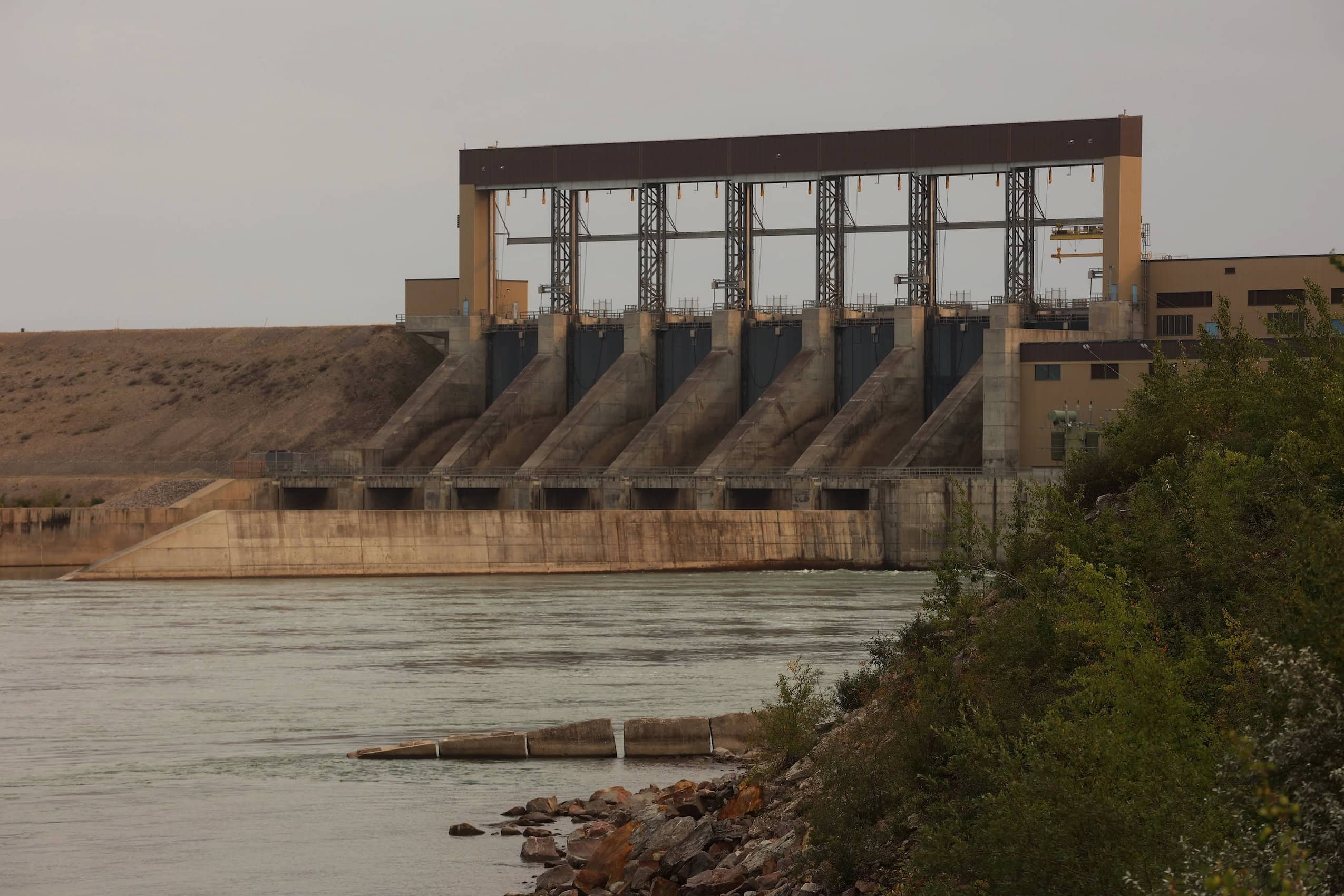
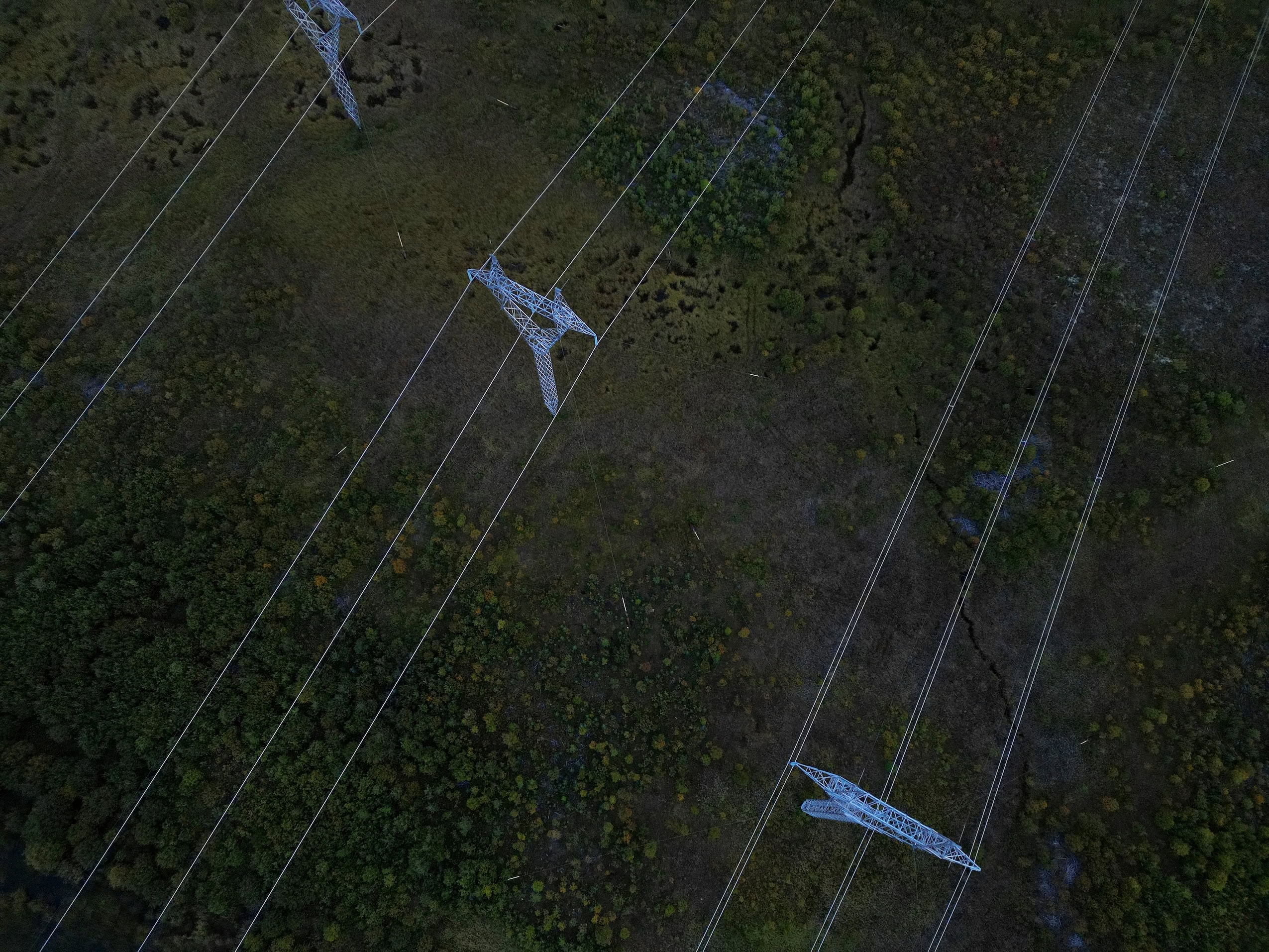
A network of hydroelectric dams currently generates about 97 per cent of Manitoba’s electricity. But that might not be sustainable. Increasing energy demand, combined with more frequent droughts, have prompted Manitoba Hydro to warn capacity could run out as soon as 2030. Photos: Tim Smith / The Narwhal
Manitoba boasts a predominantly emissions-free grid, with 97 per cent of its power generated by a network of hydroelectric dams. But the provincial utility, Manitoba Hydro, has forecasted that its once-abundant renewable energy source will soon fall short. There is growing demand for power amid the electrification of sectors like transportation and heating and the rapidly growing interest in developing power-hungry data centres. Combined with more unpredictable water levels owing to climate factors like extreme drought, it’s all prompted the utility to warn that capacity could run out as soon as 2030.
Manitoba’s plight is not unique: power producers around the world are navigating pressures to keep pace with skyrocketing demand. The International Energy Agency’s most recent world energy outlook states “the age of electricity is here,” and demand will continue to grow “much faster than overall energy use” in the coming decade. It predicts renewables will grow “faster than any other major energy source” in that time, led by solar power.
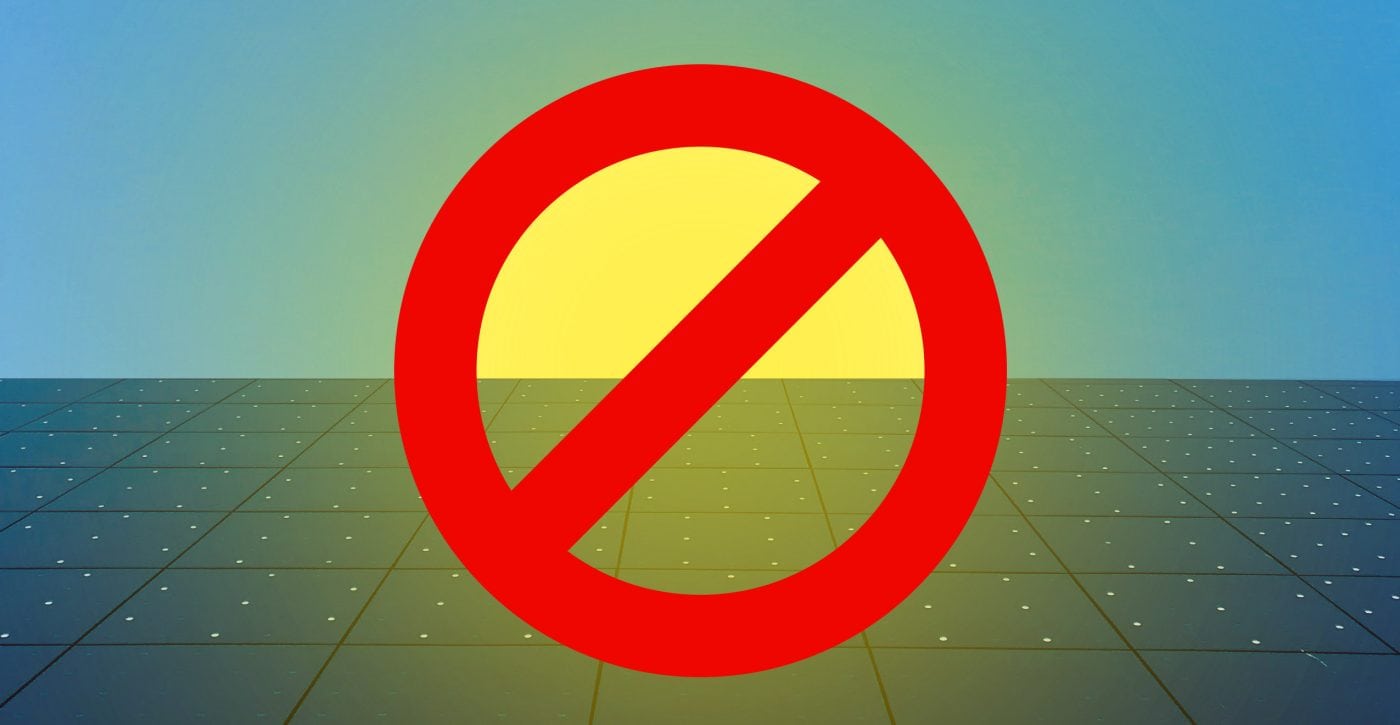
But not in Manitoba. The province’s near-term energy plans include building new wind farms and natural gas-power; utility-scale solar isn’t on the table, with Manitoba Hydro going as far as saying solar power is “opposite to Manitoba’s energy needs.”
Others, however, believe more investment in solar infrastructure and government incentives could help build a more resilient grid without resorting to fossil fuels.
Welcome to the sunbelt: Manitoba is second only to Saskatchewan for sun
Solar power technology has been on the market since the 1980s, and in that time has become less expensive and more efficient, establishing solar power among the most accessible renewable resources.
“The thing with solar is that it really does work effectively anywhere,” Wilt said. “Of course, there are differences in the number of hours of sunlight … but even if it’s farther north or on a rooftop that isn’t perfectly angled, it can still generate a really significant amount.”
Some systems are solar thermal, meaning the sun is used to heat either water or air (think hot water tanks or air-source heat pumps). Solar-powered electricity, however, is generated by solar photovoltaic systems, which use specialized panels to convert sunlight into an electric current.
Photovoltaic systems are typically classed as either distributed, meaning they are installed on individual homes, businesses and farms to generate power for that property, or utility-scale, which refers to larger solar farms that send electricity directly to the grid.
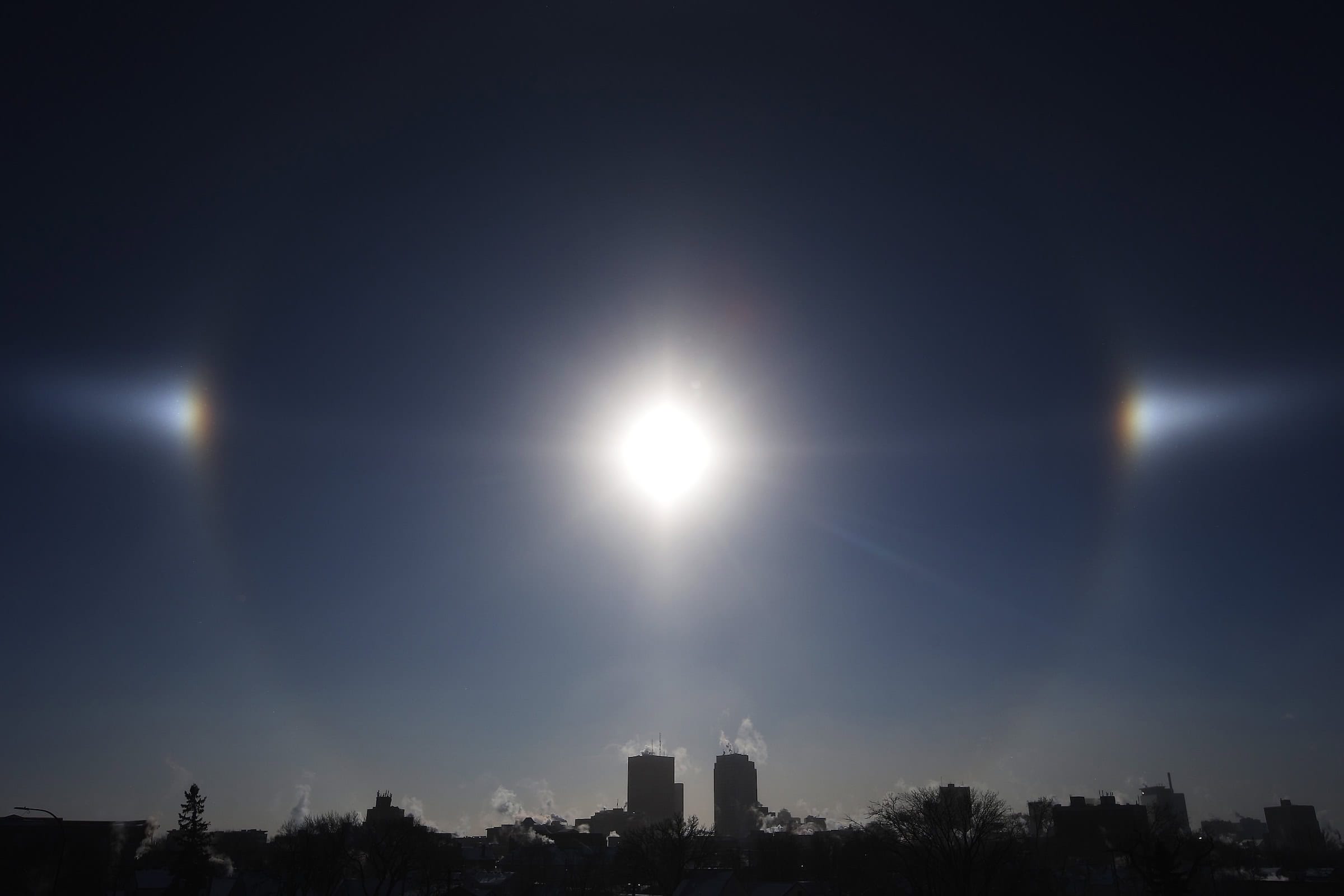
Manitoba is known for its sunshine, even during the winter. A 2018 ranking of major Canadian cities’ solar potential put Winnipeg in fourth place, behind only Regina, Saskatoon and Calgary. Photo: John Woods / The Canadian Press
These systems share the same central principle: when the sun is shining, they’re generating power — regardless of the season or the temperature.
And that’s where Manitoba has an advantage: according to an analysis by Natural Resources Canada, the province (particularly the southern region) has some of the greatest solar power potential in the country.
Winnipeg ranked fourth on the Canada Energy Regulator’s 2018 list of major city solar potential, behind only Regina, Saskatoon and Calgary, with the potential to generate an average of 6.6 kilowatt-hours of electricity per square metre, per month. Manitoba ranked second among provinces, behind only Saskatchewan.
A 2020 Manitoba Hydro study of properties with existing solar electricity systems found panels produced power for about eight hours per day in the winter and more than 14 hours per day in the summer months.
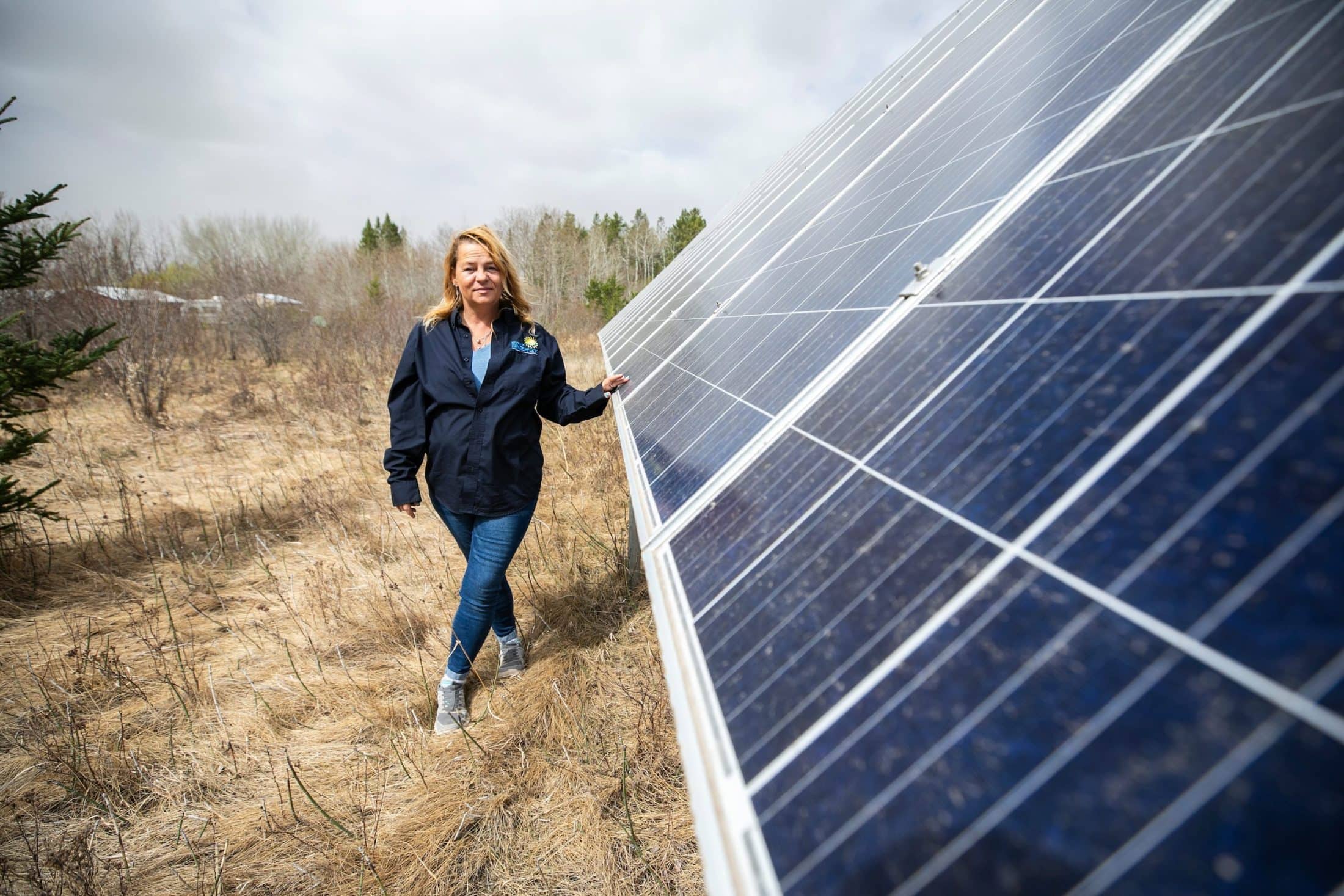
Lorena Mitchell is the lead designer at Evolve Energy, a solar panel installation and education company in Manitoba. Photo: Mikaela MacKenzie / Winnipeg Free Press
“We are in the sun belt of Canada,” Lorena Mitchell, lead designer at solar power installation and education company Evolve Energy, said in an interview. “We do get an awful lot of sunlight hours here in Manitoba.”
Solar power makes up 0.005 per cent of Manitoba’s electricity
Manitoba’s ranking at the top of the solar-power-potential charts hasn’t translated into an abundance of solar energy.
As of December 2024, the most recent numbers available, Manitoba’s current solar capacity of 41 megawatts is exactly middle of the road among Canadian provinces and territories. All of that capacity comes from distributed sources, such as homes, businesses and farms, Manitoba Hydro communications director, Scott Powell, said in an interview.
All told, solar power makes up 0.005 per cent of Manitoba’s energy mix.
“Solar power is definitely part of the energy mix in Manitoba, but what we’ve seen is it’s more so put on very localized production,” Alexander Lavoie, board chair of the Manitoba Sustainable Energy Association, a non-profit advocacy organization, said in an interview.
The gap is more stark when compared to neighbouring provinces Saskatchewan (108 megawatts) and Ontario, which ranks first with over 2,500 megawatts. Alberta — another Prairie sun-belt province — ranks second with nearly 2,300 megawatts, though a less-than-favourable political climate has seen investment interest in solar energy decline. South of the border, Minnesota has more than 3,300 megawatts of installed solar capacity, which accounts for about six per cent of the state’s electricity.
Part of the discrepancy stems from Manitoba’s unique regulatory environment, Lavoie said. In some jurisdictions, like Alberta, private energy companies can develop large-scale solar resources, whereas Manitoba’s public utility model means any major infrastructure investments need approval from an external body — the Public Utilities Board.
Manitoba offers the second-cheapest power in the country (behind Quebec) and must get approval from the utilities board to raise electricity rates, which can constrain capital expenditures.
“Low electricity rates in Manitoba make the investments probably a little bit more difficult to manage,” Lavoie said. “[For] utilities of scale, there may be other opportunities that provide a better [return on investment].”
Still, solar generation has boomed in Canada, from 0.1 terawatt-hours in 2010 to nearly five terawatt-hours in 2023 — about one per cent of the national energy mix, or enough to power 195,000 homes for a year. The energy regulator predicts that share will keep growing, reaching 13 terawatt-hours by 2040.
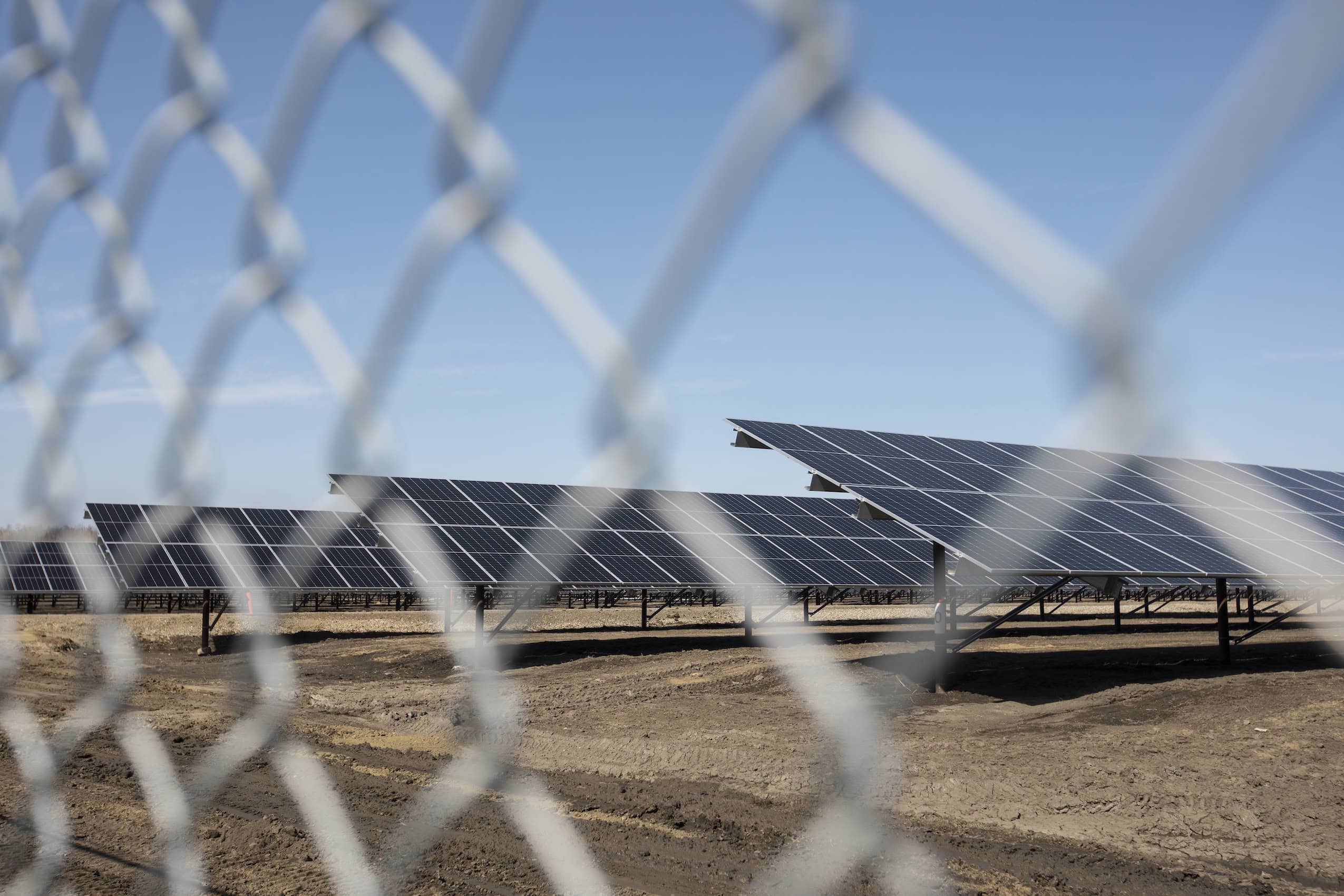
Solar power is expanding across Canada, with Ontario and Alberta leading the way — those two provinces combined have about 5,000 megawatts of solar capacity. In Manitoba, solar generation is mostly limited to small, distributed systems that aren’t connected to the provincial grid. Photo: Amber Bracken / The Narwhal
Quebec, which operates a similar electrical grid makeup to Manitoba, plans to install three gigawatts of solar power by 2035 and an additional 300 megawatts of distributed solar in the next 10 years. New Brunswick will install a 10-megawatt solar project co-owned by Tobique First Nation this year, while Prince Edward Island’s solar incentive program was paused in 2025 because it was oversubscribed.
And while Manitoba has seen its share of solar growth, it is not betting on the sun to meet its future energy needs.
Manitoba Hydro says long, dark nights and snow make solar panels less desirable
Typically, Manitoba Hydro sees the greatest demand for electricity in the early mornings and late evenings of cold winter days, and that peak winter demand is a big part of why Manitoba has hesitated to invest in solar power.
“As much of the system’s winter peak load occurs during the non-daylight hours, solar provides little to no energy when it is needed most,” Manitoba Hydro states in its 2025 integrated resource plan.
The plan, which is intended to guide the utility through the next 10 years of the energy transition, lists six resources it believes will be feasible to develop in that time — existing and expanded energy efficiency programs, wind power, short-term battery storage, natural gas and upgrading the existing hydroelectric infrastructure. Solar isn’t included.
In a slide outlining the rationale for leaving utility-scale solar off the table, Manitoba Hydro notes that while it comes with the advantages of low costs, low maintenance, negligible emissions and easy scalability, solar power “provides zero accredited winter capacity in Manitoba,” adding solar panels are “often covered in snow,” and their “energy production profile does not pair well with Manitoba Hydro’s demand.”
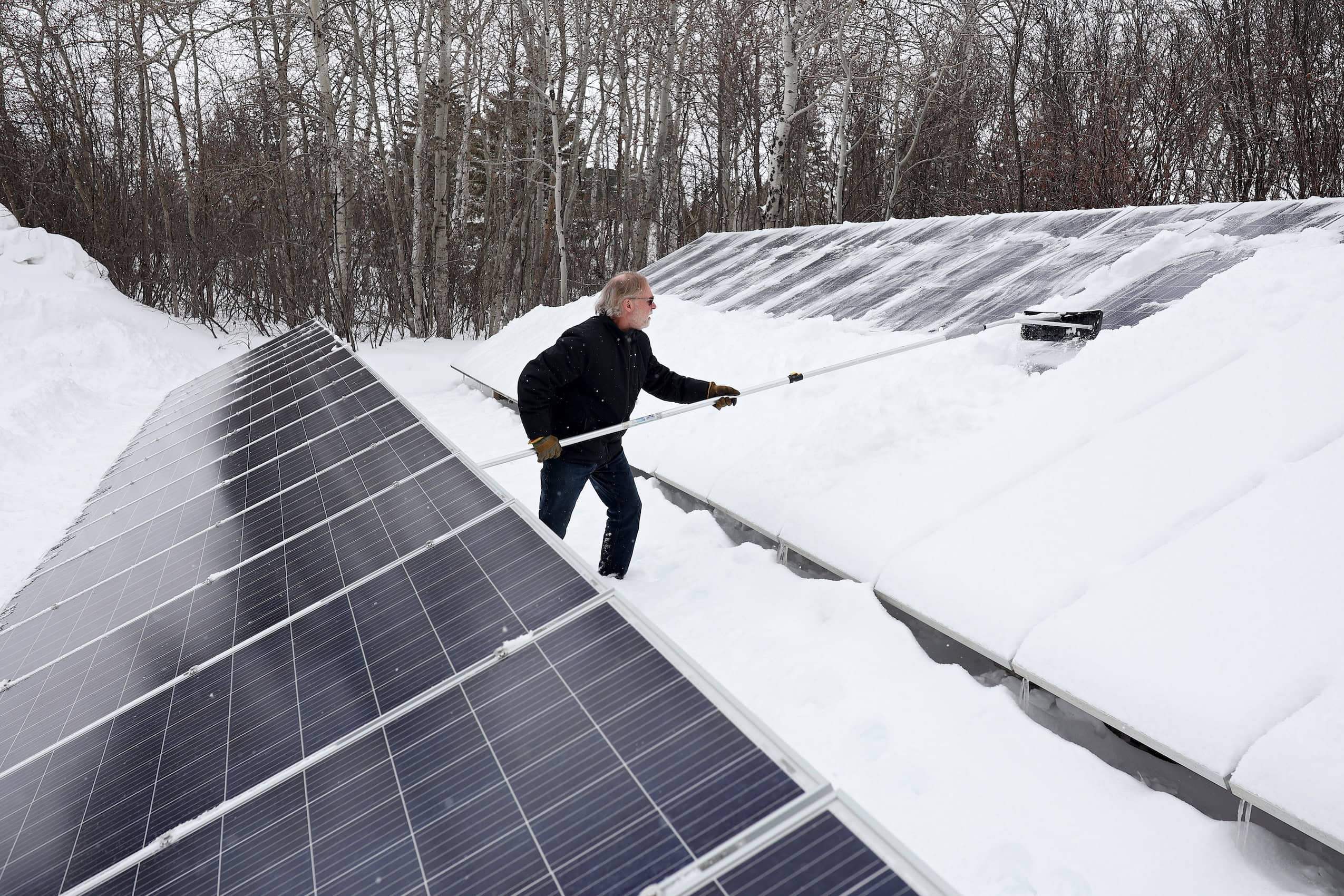
According to Manitoba Hydro, solar “provides little to no energy when it is needed most” — winter nights. But renewable energy advocates say improved battery technology now allows solar energy to be stored for later use. Photo: Tim Smith / The Narwhal
Instead, the utility is prioritizing new generation options that can help address a forecasted shortage of more than 250 megawatts during those peak times.
“The [integrated resource plan] is really about growing our capacity and, at the same time, ensuring we can provide the electricity when we need it most,” Powell said. “At a utility scale, other sources of energy are typically more available and effective based on our load curve.”
To Wilt, at the Climate Action Team, this approach to assessing the value of solar power “takes a very narrow-minded focus on meeting demand without thinking about the system holistically.”
Battery-storage technology has evolved alongside intermittent resources like solar and wind power, and could allow solar energy to be stored and used when it’s needed most, he said.
While Manitoba Hydro plans to run a five-megawatt battery-storage pilot in the coming years, according to the integrated resource plan, Wilt pointed out Manitoba already has a power-storage advantage.
The hydro-powered grid is backstopped by Lake Winnipeg, which has been engineered to serve as a reservoir, with the utility able to control flow to its generators. In other words, the lake essentially serves as a battery that can complement other renewable power sources.
From Manitoba Hydro’s perspective, while the reservoir will be used to help backstop upcoming wind resources, “you can only backstop it so far,” Powell said.
Wilt said the Climate Action Team does not want to downplay the “difficult position” Manitoba Hydro is in when it comes to managing its reservoirs and generation capacity in the face of increased pressures.
“But we would argue that a great way to shore up and prevent overutilization of potentially compromised reservoirs is by adding the lowest cost generation to the mix during the summer,” he said.
“We think that there should be tons of solar put on the grid for the summer, tons of wind put on the grid for the winter — which is when it’s most effective — and have battery storage which can help smooth out the intermittency. Having all of these in place will help keep more water behind the reservoirs.”
Manitoba Hydro solar pilot project was a success — but wasn’t renewed
A decade ago, the forecast for solar power in Manitoba was sunny.
With solar photovoltaic power gaining popularity, the provincial utility launched a pilot project in 2016 offering customers a $1-per-watt incentive to install solar panels on their properties. This rebate was considered among the best in the country at the time, and covered up to one-third of the cost of installations.
Mitchell, at Evolve Energy, has worked in the solar energy space for more than 20 years. She noticed Manitobans interest in solar started to spark in 2013, “then they launched the rebate program and that’s what really kicked it off.”
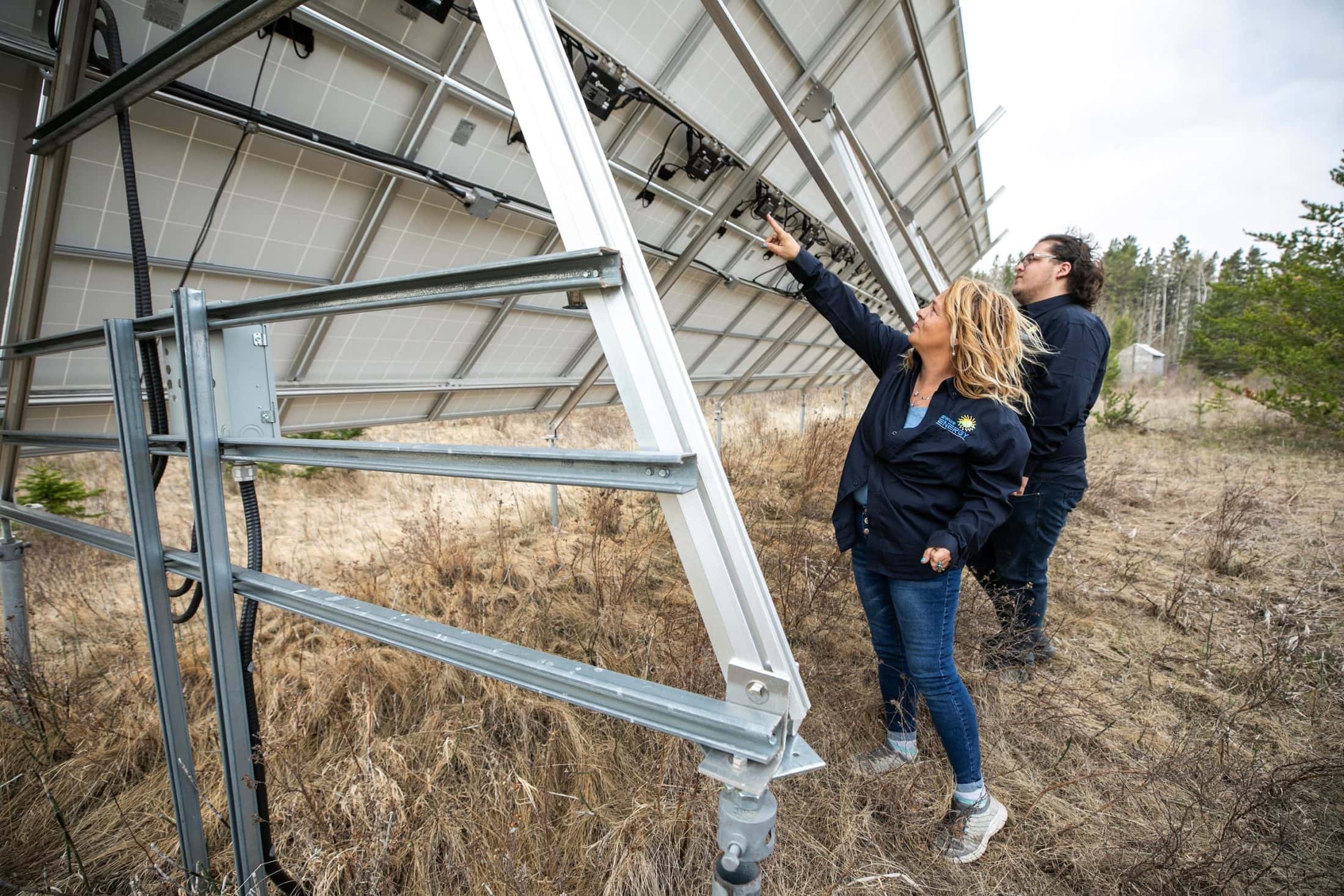
Lorena Mitchell and Dominik Torresmalaga-Mitchell, with Evolve Energy, inspect a solar panel array in Marchand, Man. Photo: Mikaela MacKenzie / Winnipeg Free Press
The pilot program was a success, generating 2.6 megawatts of new solar generation capacity and diverting approximately 3.5 gigawatt hours of energy from the provincial grid each year, about equivalent to the power use of 137 homes.
“By all accounts, Hydro was just completely overwhelmed by the number of applicants,” Wilt said.
(At Hydro, Powell said the pilot was “very well received at the time.”)
Customers were set up with a bi-directional meter that allowed each property to both import and export power to and from the hydroelectric grid. This kind of grid-connected system is common for residential and small commercial solar generation: when the sun is shining, the property draws power from the solar array and sells whatever it doesn’t need back to the grid. When it’s dark, the system can still draw power from the grid as normal.

A pilot project launched in Manitoba in 2016 provided incentives for residents to install solar panels on their properties. By all accounts, the program was a success, but its funding wasn’t renewed. Now, the Province of Manitoba isn’t prioritizing solar as it plans for how to meet future energy demand. Photo: Tim Smith / The Narwhal
Excess power is compensated using either net-metering or net-billing. Net-metering — used in nine of 13 provinces and territories — credits the property owner for each kilowatt-hour of energy they send to the grid, charging users only for the difference between the power they use and the power they contribute.
Net-billing, on the other hand, effectively pays distributed solar producers an electricity rate for each kilowatt-hour sent to the grid. Manitoba, Saskatchewan, Alberta and British Columbia use net-billing systems, with varying rates across the jurisdictions.
Under Manitoba’s solar pilot project, the excess energy rate, as it’s called, was on par with electricity rates charged by the utility.
When the pilot project ended, the solar landscape in Manitoba changed.
Some contractors that had come to the province looking to cash in on the solar boom vanished; several customers were left scrambling to finish setting up their systems before the incentive program ceased.
“When it ended, the whole local industry collapsed,” Wilt said.

A 2024 study commissioned by Efficiency Manitoba and Manitoba Hydro found solar adoption “is not projected to approach levels observed in the past pilot program in the initial years of study unless lucrative incentives … are provided.” Photo: Tim Smith / The Narwhal
The responsibility for doling out future solar power incentives shifted to then-newly formed Crown corporation, Efficiency Manitoba, which is tasked with administering initiatives to help Manitoba reduce its electricity and natural gas consumption. The new program, launched in 2022, offered a $0.50-per-watt incentive for residential installations, up to $5,000, and $0.75 cents for farm or business installations. It also switched to an excess energy rate set by Manitoba Hydro that “reflects the current market value” of electricity.
“Net-billing appropriately recognizes the value of that excess energy when it’s sold back on the grid,” Powell said. “Net-metering would pay customers at a rate that incorporates the full cost to deliver electricity to residential customers. Solar customers don’t have to absorb that cost, so it wouldn’t be appropriate to pay that full rate.”
That price — which is established each spring — has fluctuated widely in the years since. In 2025, it was just over four cents per kilowatt-hour, in 2021, it reached a low of 2.4 cents. This year, it’s just over seven.
“It can certainly provide uncertainty for potential investors and developers,” Lavoie said.
According to Jana Brunel, manager of strategic initiatives at Efficiency Manitoba, the program has seen “steady uptake,” with 750 installations to this point. Manitoba’s cheap and predominantly low-emissions energy, however, can limit the uptake when compared to other jurisdictions.
“We have low energy rates, which make the payback of some investments different,” Brunel said in an interview.
Efficiency Manitoba also works with customers to match the size of their solar generation to their energy use, which results in less excess energy generation, Brunel explained.
“If you can install solar to really reduce the energy you need to use from the grid … that’s where the biggest financial savings come,” she said. “That’s why our program is really geared at properly sizing a system not to have an abundance of excess energy being sent back to the grid.”
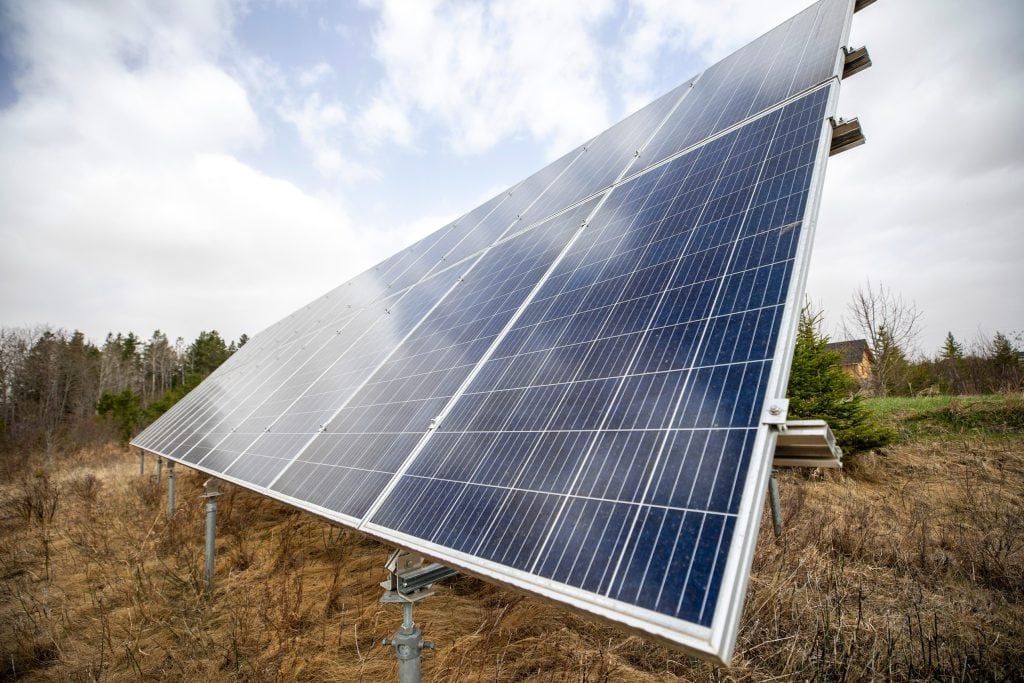
While some homes and businesses in Manitoba are choosing solar power, the province is not prioritizing it as a source of energy for the public electricity grid. Photo: Mikaela MacKenzie / Winnipeg Free Press
Mitchell said the program has been “pretty good” for residential customers and “really amazing” for farms and commercial businesses. Those larger properties who receive higher excess energy rates, including those who are locked in to the on-par price, have seen a return on investment in their solar installations within six to nine years, she said.
“We’re seeing the uptick for them, finally, really happening this year,” Mitchell said.
For residential customers with smaller systems, Mitchell said her business designs systems to protect their investment from the fluctuating energy price.
“I try to caution them that this is what’s going to cause their investment to go up and down,” she said. “It’s like playing the stocks.”
Manitoba’s energy crunch looms, but solar adoption lags
In 2024, Efficiency Manitoba and Manitoba Hydro commissioned Dunsky Energy + Climate Advisors to outline a roadmap to help reduce peak demand through customer-facing initiatives such as energy-efficiency upgrades, heat-pump programs and distributed solar.
The study found that by 2037, peak demand could shift towards the late afternoon, driven by factors like electric vehicle charging and improved energy efficiency. In such a scenario, distributed solar could reduce that demand by up to117 megawatts.
But it also found solar adoption “is not projected to approach levels observed in the past pilot program in the initial years of study unless lucrative incentives … are provided.”
“Despite continued global cost declines for solar [photovoltaic] systems, the decline in Manitoba’s solar [photovoltaic] market following the end of the pilot program, coupled with significant reductions in compensation for excess generation, is expected to reduce customer demand for the next several years,” the study said.

Manitoba Hydro communications director Scott Powell says the agency is “technology agnostic” and could use solar power more if it worked for the system. Photo: Tim Smith / The Narwhal
“However, as solar [photovoltaic] system costs continue to decline, adoption is projected to increase in the later years of the study.”
At Efficiency Manitoba, Brunel said solar power “certainly plays a role in helping reduce electricity consumption and energy consumption,” and its efficacy will improve in the long term as battery storage technology evolves and energy efficiency programs take root.
“When solar [photovoltaic] systems can be paired with battery storage, that presents more of an opportunity to use the electricity,” Brunel said.
Manitoba Hydro isn’t closing the door either, Powell said.
“We’re technology agnostic. If solar was the right answer for our system and our customers, that’s what we would be going with. But there are other technologies, other forms of energy, that offer better value for the system we have,” he said.
“Could that change in the future? Absolutely.”
But with power shortages looming, Mitchell believes Manitoba is already behind on solar investments.
“As things go critical in Manitoba for a net need for energy, they’re going to have to come back and address this, because a few gas turbines isn’t going to do it,” Mitchell said.
“I think diversifying the grid and making it healthier and stronger is the way to go, and you can do that very easily with renewables.”
Julia-Simone Rutgers is a reporter covering environmental issues in Manitoba. Her position is part of a partnership between The Narwhal and the Winnipeg Free Press.
The Narwhal’s reporters are telling environment stories you won’t read about anywhere else. Stay in the loop by signing up for our free weekly dose of independent journalism.
From The Narwhal | News on Climate Change, Environmental Issues in Canada via This RSS Feed.