

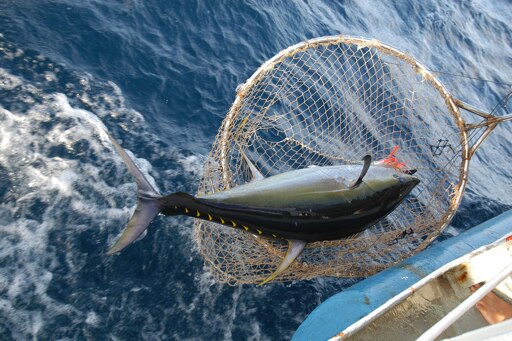
An annual meeting of the regulatory body overseeing the tuna fishery across the Indian Ocean has agreed to update the rules governing one of the region’s most iconic species: yellowfin tuna. The easing of fishing curbs can be traced to the Indian Ocean Tuna Commission’s (IOTC) scientific body finding that Thunnus albacares stocks aren’t overfished, nor are they currently experiencing overfishing in the Indian Ocean. The body first made the determination in 2024, but the finding underwent an internal review process before being accepted by the commission at its recent meeting in the Maldives. The meeting held in May was attended by delegates from coastal nations in Asia, Africa and Oceania, as well as distant-water fishing powers like Japan and the European Union. Now, that scientific advice has translated into a reframing of the management rules, provoking sharply divided reactions. Conservationists are urging caution, citing the long history of yellowfin overfishing and the difficulties in monitoring and curbing overexploitation. Industry representatives, meanwhile, hailed the decision, saying it secures access to one of the region’s most lucrative tuna fisheries. At the meeting in the Maldives, parties agreed on a total allowable catch (TAC) and quotas for contracting members for the period from 2027-2028. In doing so, the IOTC became the first tuna regional fisheries management organization (RFMO) to implement catch allocation systems for all three tropical tuna species under its management: yellowfin, skipjack and bigeye. The IOTC adopted its first yellowfin rebuilding plan in 2016, on the back of scientific evidence…This article was originally published on Mongabay
From Conservation news via This RSS Feed.