

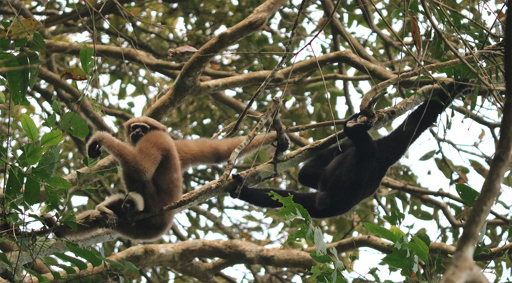
As gibbon seizures reached a record high in 2025, conservationists warn that dismantling the illegal trade requires a deep understanding of the diverse motivations driving consumer demand, contributor Ana Norman Bermúdez reports for Mongabay. In 2025, authorities confiscated 336 gibbons between January and August alone, representing approximately 20% of all recorded seizures since 2016, according to an analysis by the wildlife trade monitoring network TRAFFIC. Experts say that because motivations for buying a gibbon vary widely across different buyer communities, solutions must be tailored accordingly. “Primates have always fascinated people,” said Elizabeth John of TRAFFIC, adding that gibbons are particularly appealing “because of their uniqueness and rarity.” While Indonesia and Vietnam have historically dominated the gibbon trade, India and Malaysia have emerged as key countries in the illegal chain in recent years. In Malaysia, demand is often driven by a misplaced “love” for animals. Mariani “Bam” Ramli, founder of the Gibbon Conservation Society, said most owners acquire gibbons through informal networks or online, usually to keep as pets, and surrender their animals voluntarily. “Most of them say they love animals, or they want their children to have an animal to play with,” Ramli said. The market in India has two kinds of demand: local trade in rural areas and wealthy urban buyers willing to buy gibbons for social standing. Florian Magne, director of the HURO Foundation, said that gibbons are often perceived as “prestigious pets, attracting attention and conferring social status.” Magne also points to a growing demand from private zoos and…This article was originally published on Mongabay
From Conservation news via This RSS Feed.