

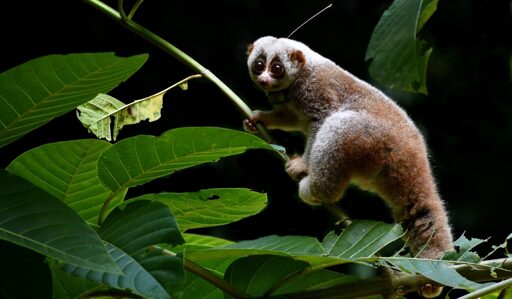
The wild can be a “death trap” for rescued slow lorises, one of the world’s most trafficked primates, according to a recent study, reports Mongabay’s Carolyn Cowan. Researchers followed the fate of nine confiscated Bengal slow lorises (Nycticebus bengalensis) released into Lawachara National Park in Bangladesh. Six months later, only two individuals were surviving; several died within days or weeks of release. Slow lorises are the world’s only venomous primates and highly territorial animals. The findings highlight the lethal nature of their territorial conflict in the wild: Researchers recovered four bodies bearing marks of venomous bite wounds on their heads, faces and digits, indicating they perished in fights, most likely with wild residents. “It’s assumed that returning confiscated or rescued animals to the wild is always a positive conservation story,” said study co-author Anna Nekaris, a professor of ecology, conservation and the environment at Anglia Ruskin University, U.K. “But for animals such as the Bengal slow loris, this is not always the best course of action.” The two survivors established larger home ranges than those that died, the study found, suggesting that success for released slow lorises depended on moving away from established territories of other lorises. Longer stays in captivity also negatively impacted survival in the wild. “For this reason, release should take place as soon as an animal meets strict health and behavioral criteria, rather than extending captivity unnecessarily,” said Richard Moore, senior adviser at the conservation organization IAR Indonesia Foundation, which has been rehabilitating and releasing Javan…This article was originally published on Mongabay
From Conservation news via This RSS Feed.