

This article by Aleida Azamar Alonso originally appeared in the May 19, 2026 edition of Rebelión. The views expressed in this article are the author’s own and do not necessarily reflect those ofMexico Solidarity Mediaor theMexico Solidarity Project*.*
The Mexican government has once again raised the idea that “fracking and a greater commitment to fossil gas could solve the country’s energy problems.” The argument seems simple, even overly obvious, but the underlying idea is that if Mexico imports a significant portion of its gas, creating a structural dependence on a player that has become particularly unreliable, then it should extract its own gas, even through hydraulic fracturing, to reduce that dependence. The problem is that this approach starts with an apparent solution and ignores the conditions under which such an extraction process would operate. While Mexico has a history of using fracking, this doesn’t mean it has the necessary capabilities to make it a viable strategy for meeting domestic demand.
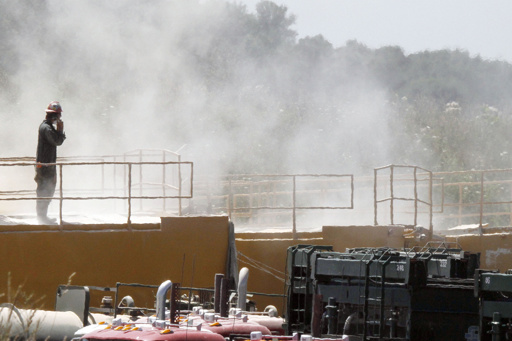
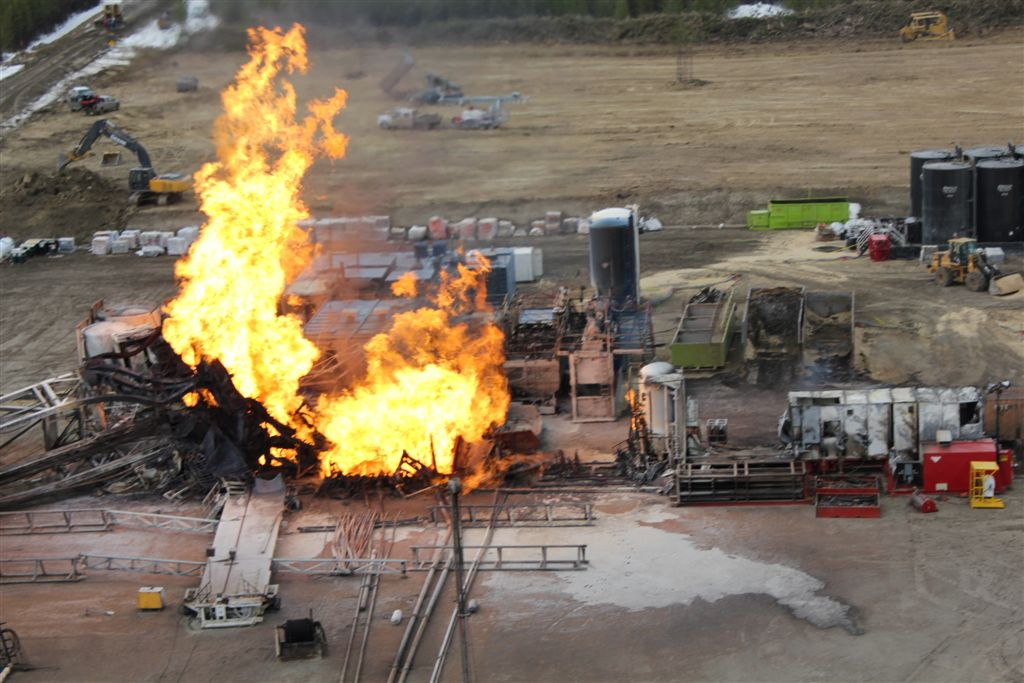
Perhaps the biggest problem with fracking is its inherent socio-environmental risk, which cannot be eliminated even with new techniques or processes that have not yet been explained or presented to the public. Hydraulic fracturing requires drilling wells in shale formations and injecting large volumes of water, sand, and chemicals at high pressure to release gas trapped in low-permeability rocks. It is a technique that is intensive in water, land, infrastructure, energy, and regulatory oversight. And given that we live in a country with increasing water stress, territorial inequality, and limited institutional capacity to monitor environmental damage, fracking is not a technical solution for our reality.
It’s not just about drilling more wells; it would also require specialized technology, transportation and storage infrastructure, much more complex regulatory capabilities, technical expertise to manage environmental and operational risks, water availability, and an institutional system capable of monitoring a highly complex activity. Therefore, we are thinking too much about the supposed benefits without thoroughly reviewing how we are going to obtain them.
The question isn’t whether we need more energy sovereignty—of course we do—nor is it questioning whether gas plays an important role in the country’s current electricity generation—it certainly does. What we need to know is whether expanding the gas pipeline route with more pipelines, more imports, more export projects, and more fracking actually strengthens the country or makes it more vulnerable. And I think the answer is clear: not only does it not strengthen energy security, but it weakens it in the long term, since the gas obtained through fracking isn’t infinite either, it doesn’t eliminate technological and territorial dependence, and it doesn’t necessarily offer lower costs compared to other energy options, especially renewables, which we could promote over extractive industries.
The United States serves as a prime example of this contradiction. Since 2008, the US has rapidly intensified its gas extraction through fracking, becoming one of the world’s largest producers. However, this experience does not prove that fracking is a permanent solution; on the contrary, it is beginning to show its limitations. In recent years, reports have emerged warning that some of the best unconventional fields are reaching or may have already reached their peak production, forcing further drilling, expanding the already exploitable frontier, and seeking new mechanisms to sustain increasingly expensive production. If this is happening in a country with greater experience (the US), infrastructure, private capital, and technological capacity to develop this technique, it is unrealistic to think that we could turn fracking into a simple, cheap, and safe solution to our gas dependency.
The solution lies not in fracturing the subsoil to sustain a model that is already showing its limitations, but in diversifying the electricity mix, strengthening transmission, developing storage, reducing losses, boosting efficiency, democratizing renewable generation, and protecting communities from new sacrifice zones.
At this point, it is important to highlight some data regarding our gas capacity for consideration. Domestic production reached its recent peak in 2009, at around 7 billion cubic feet per day, but by 2024 it had fallen to just over 3.4 billion cubic feet per day. That is, it was reduced by more than half, while domestic consumption continued to grow, reaching over 9 billion cubic feet per day, driven primarily by electricity generation and industry. Therefore, the difference is being covered by imports, mainly from the United States.
Furthermore, national reserves do not support a narrative of self-sufficiency. According to data from the National Hydrocarbons Commission, 2P natural gas reserves as of January 1, 2024, stood at 23,302 billion cubic feet. Compared to the current extraction rate, the reserves-production horizon is only about 13 years without significant investment in exploration and expansion of our national deposits (Azamar, 2026; CNH, 2024). It is clear that those 13 years will increase according to how the government’s plans develop, but it is a good measure to understand that we are hanging by a thread, that in case of crises, conflicts, problems and/or situations completely beyond our control, this energy source is not a solid basis for building a long-term energy strategy, much less if the intention is to increase extraction through an extremely complex and risky technique like fracking to sustain domestic consumption, feed new power plants, and participate in export chains, as is being planned with the gas re-export plants being developed in collaboration with the United States.
That’s why fracking appears as a tempting solution, because the rhetoric promises to unlock unconventional resources, increase production, among other supposed benefits. For example, one of the most repeated arguments in favor of gas is that it pollutes less than coal and can serve as a “bridge fuel” toward a cleaner energy mix. And while it’s true that, when burned, gas emits less carbon dioxide than coal per unit of energy generated, this comparison is incomplete since the fossil gas chain doesn’t begin at the power plant; it begins with extraction, continues with processing, pipeline transport, compression, leaks, combustion, and, in some cases, liquefaction and even re-export. Methane, a greenhouse gas much more potent than CO₂ in the short term, can be released at all these stages. In fact, the International Energy Agency notes that methane has a global warming potential between 84 and 87 times greater than CO₂ over a 20-year horizon, according to the IPCC (IEA, 2021).
Since only the gas extraction process presents relevant methane leaks, its supposed climate advantages are reduced or even disappear, given that fugitive emissions along the supply chain can make gas as problematic as other fossil fuels in climate terms, especially when assessing its short-term impact (Alvarez et al., 2012; Howarth et al., 2011).
However, if we add to the above the fact that the hydraulic fracturing extraction process would have to be carried out in regions where water is already a source of conflict, and given that fracking uses large volumes of water per well, generates wastewater containing chemicals, and can affect aquifers without strict regulation and constant monitoring, it becomes a recipe for disaster. International experience shows risks of water contamination, increased induced seismic activity, territorial fragmentation, increased heavy traffic, atmospheric emissions, and negative impacts on communities near extraction sites (Osborn et al., 2011; Shonkoff et al., 2014). From my perspective, it is naive to think that we could expand this technique nationwide without reproducing socio-environmental damage equal to or worse than that already known.
However, the problem is also economic. Investing in fracking would mean allocating enormous public and private resources to a fossil fuel infrastructure that could become trapped in a global energy transition that seems to be accelerating rapidly in the face of recent conflicts in the Middle East, which have highlighted the fragility of economies overly reliant on fossil fuels. New wells, pipelines, compression plants, processing infrastructure, and transportation systems require costly, long-term investments, and if these investments are made today, the country could be committed for decades to a fuel that logically should gradually reduce its share of the energy mix, not only for environmental reasons but also because it will ultimately become prohibitively expensive.
The problem is that we tend to think that producing more gas automatically guarantees cheaper energy, but energy security doesn’t depend solely on extracting more of this resource. It also depends on having a diversified energy mix, resilient infrastructure, sufficient storage, robust networks, demand management capacity, and less exposure to external shocks. Even assuming we could develop a broad extraction strategy, we would still need to factor in the cost of the pipelines needed to transport the resource, since those we currently have are saturated and those under construction are already fully committed. Furthermore, our strategic storage capacity is essentially nonexistent (barely a few days, while the international average for those with this type of storage is several weeks or months).
Given all of the above, it is extremely confusing to understand why, at the same time as we face this fragility, projects are being promoted to turn the country into a territory of intensive extraction of a resource (gas) that at most will provide a few more decades of it, but will end up leaving us in the same or worse place than where we started, with a serious dependence, lack of infrastructure and diversification to overcome it.
This push for more gas diverts resources that could be directed toward alternatives more aligned with long-term energy security, since every peso spent on prolonging gas dependency is a peso not invested in electricity transmission, battery storage, distributed solar generation, wind power, energy efficiency, demand management, or grid modernization. We have enormous renewable potential, especially in solar and wind energy. It would be far more beneficial to promote local and regional projects to avoid excessive centralization, reduce fossil fuel dependency, foster more resilient infrastructure, and simultaneously develop a national industry that recovers jobs and economic capacity.
This does not mean denying that gas currently plays a role in the electricity system; that would be absurd, since gas sustains a significant portion of generation today and cannot be replaced overnight without planning. However, acknowledging its present role does not imply making it the cornerstone of the future. Therefore, a responsible strategy should gradually reduce its centrality, using it only as a temporary backup, strengthening other alternatives, and decisively promoting renewables based on social, territorial, and public criteria. Our goal should not be to replace one dependency with another, nor to build megaprojects without consultation or local benefits, but rather to move towards a more democratic, decentralized, and resilient energy security.
Fracking runs counter to the above, as it does not reduce structural vulnerability; in fact, it would have the opposite effect, deepening and keeping the country tied to a fossil fuel-based economy, demanding water in a context of water crisis, increasing the risk of contamination, opening new fronts of territorial conflict, generating methane emissions, and absorbing resources that could accelerate a just energy transition. Furthermore, even if it were to temporarily increase production, it would not solve underlying problems such as the high dependence on gas for electricity generation, the lack of strategic storage, the weakness of the grid, exposure to international prices, and the need to reduce emissions.
The solution lies not in fracturing the subsoil to sustain a model that is already showing its limitations, but in diversifying the electricity mix, strengthening transmission, developing storage, reducing losses, boosting efficiency, democratizing renewable generation, and protecting communities from new sacrifice zones. It also lies in ceasing to think of energy as a mere business and beginning to understand it as a condition for well-being, sovereignty, and environmental justice.
That’s why fracking is not an option for the country. It’s not an option because of its environmental impacts, its social costs, its pressure on water resources, its climate risks, and its inability to resolve structural dependence. Nor is it an option because insisting on gas as the backbone of energy development postpones the transformations the country needs.
Literature
Alianza Mexicana contra el Fracking. (2020, 19 de mayo). Información oficial confirma que el fracking sigue avanzando en México. https://nofrackingmexico.org/informacion-oficial-confirma-que-el-fracking-sigue-avanzando-en-mexico/
Alvarez, R. A., Pacala, S. W., Winebrake, J. J., Chameides, W. L., & Hamburg, S. P. (2012). Greater focus needed on methane leakage from natural gas infrastructure. Proceedings of the National Academy of Sciences, 109(17), 6435–6440. https://doi.org/10.1073/pnas.1202407109
Azamar Alonso, A. (2026). México en la encrucijada gasífera: Seguridad energética contra la ambición de convertirse en hub exportador. Universidad Autónoma Metropolitana; Centro Mexicano para la Defensa del Medio Ambiente.
Comisión Nacional de Hidrocarburos. (2024). Reservas de hidrocarburos al 1 de enero de 2024. Gobierno de México. https://hidrocarburos.energia.gob.mx/media/6460/reservashidrocarburos/_202401.pdf
Howarth, R. W., Santoro, R., & Ingraffea, A. (2011). Methane and the greenhouse-gas footprint of natural gas from shale formations. Climatic Change, 106, 679–690. https://doi.org/10.1007/s10584-011-0061-5
International Energy Agency. (2021). Methane and climate change. https://www.iea.org/reports/methane-tracker-2021/methane-and-climate-change
International Energy Agency. (2023). Global methane tracker 2023. https://www.iea.org/reports/global-methane-tracker-2023
Intergovernmental Panel on Climate Change. (2023). Climate change 2023: Synthesis report. Summary for policymakers. https://www.ipcc.ch/report/ar6/syr/summary-for-policymakers/
Osborn, S. G., Vengosh, A., Warner, N. R., & Jackson, R. B. (2011). Methane contamination of drinking water accompanying gas-well drilling and hydraulic fracturing. Proceedings of the National Academy of Sciences, 108(20), 8172–8176. https://doi.org/10.1073/pnas.1100682108
Secretaría de Energía. (2025). Balance Nacional de Energía 2024. Gobierno de México. https://www.gob.mx/cms/uploads/attachment/file/1047704/Balance/_Nacional/_de/_Energ/_a/_2024R.pdf
Shonkoff, S. B. C., Hays, J., & Finkel, M. L. (2014). Environmental public health dimensions of shale and tight gas development. Environmental Health Perspectives, 122(8), 787–795. https://doi.org/10.1289/ehp.1307866
Aleida Azamar Alonso is a Research Professor at the Metropolitan Autonomous University, and member of the group: Our Future, Our Energy; of the Energy and Popular Power Network in Latin America, as well as of the Let’s Change It Now Collective.
-
Mexican Government Announces Plan to Guarantee White Corn Price
May 21, 2026May 21, 2026
Drought, the dumping of subsidized crops from the US, middle-men profiteering and falling prices have been indebting and ruining Mexico’s corn producers.
-
Fracking: A False Solution for Mexico
May 21, 2026
Every peso spent on prolonging gas dependency is a peso not invested in electricity transmission, battery storage, distributed solar generation, wind power, energy efficiency, demand management, or grid modernization.
-

Sanampay. Yesterday, Today & Always.
May 21, 2026
In 1977, almost half a century ago, one of the most popular groups in Latin American folk and nueva canción was formed in Mexico, giving a new dimension to Andean music.
The post Fracking: A False Solution for Mexico appeared first on Mexico Solidarity Media.
From Mexico Solidarity Media via This RSS Feed.