

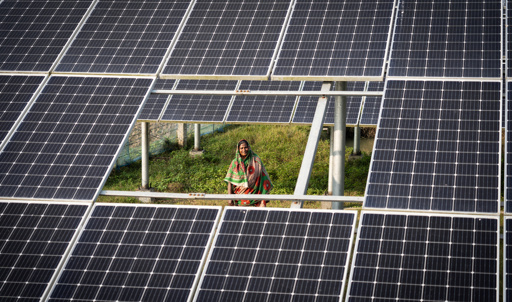
As Bangladesh grapples with fuel shortages, power plant outages and rising energy import costs, the country’s small but growing solar sector is helping cushion the grid against widespread blackouts. According to the Bangladesh Power Development Board (BPDB), 16 of the 136 power plants and electricity import sources are solar facilities. At least 52 power plants are currently fully shut down because of gas and coal shortages. Despite having installed electricity generation capacity far exceeding peak demand, Bangladesh has recently struggled in recent months to generate enough power to meet its needs. Fuel supply constraints, maintenance shutdowns and technical faults have forced many gas- and coal-fired plants to operate below capacity, leading to periodic load-shedding, or blackouts, across the country. While fossil fuel-dependent plants have been hampered by supply shortages, solar plants continue generating during daylight hours and remain largely insulated from global fuel price volatility. A BPDB report published May 10 showed that Bangladesh generated and imported a combined 312,620 megawatt-hours (MWh) of electricity on May 9. Of that total, solar contributed 5,377 MWh, compared to 127,700 MWh from gas and 105,400 MWh from coal. Although solar still accounts for only a small share of the national energy mix, experts say its importance becomes more apparent during crises when fossil fuel-dependent plants can’t operate at full capacity. The same BPDB report showed that Bangladesh faced a generation shortfall of 3,868 megawatts due to gas constraints and an additional 1,668 MW due to plant shutdowns and maintenance. Several major gas-fired plants were operating below capacity because of…This article was originally published on Mongabay
From Conservation news via This RSS Feed.