

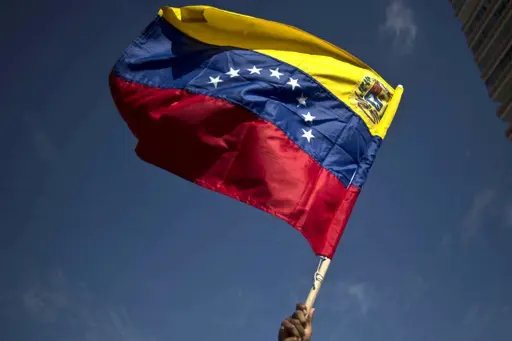
Following its January 3 military strikes and kidnapping of President Nicolás Maduro, the US has imposed a semi-colonial tutelage over Venezuela. This piece breaks down the setbacks suffered by the Bolivarian Process and the dangers of compromised sovereignty in the long run.
Author bio: Ricardo Vaz is a writer and journalist based in Caracas, Venezuela. He’s the lead editor of independent outlet Venezuelanalysis.
On January 3, the US bombed Venezuela’s capital region and kidnapped President Nicolás Maduro. The unprecedented attack represented the culmination of a quarter-century of imperialist hybrid war, including devastating unilateral sanctions, mercenary incursions, “color revolution”-style insurrections, media disinformation, and NGO infiltration.
The four months since have brought a flurry of developments, from renewed diplomatic ties with the US to an overhaul of key legislative pillars of the Bolivarian Revolution. Additionally, the Trump administration established semi-colonial control over Venezuelan oil revenues, with the amounts and timings of disbursements back to Caracas left entirely at US officials’ discretion. The arrangement is similar to the one Washington has forced on Iraq since the 2003 invasion.
This compromised sovereignty is a catalyst for other issues. On the one hand, it makes it tougher for the Venezuelan government to improve living standards without challenging business interests. On the other, the burden of Venezuela’s external debt might see Washington attempt to impose an IMF loan that will bury the country in debt and dependency for decades.
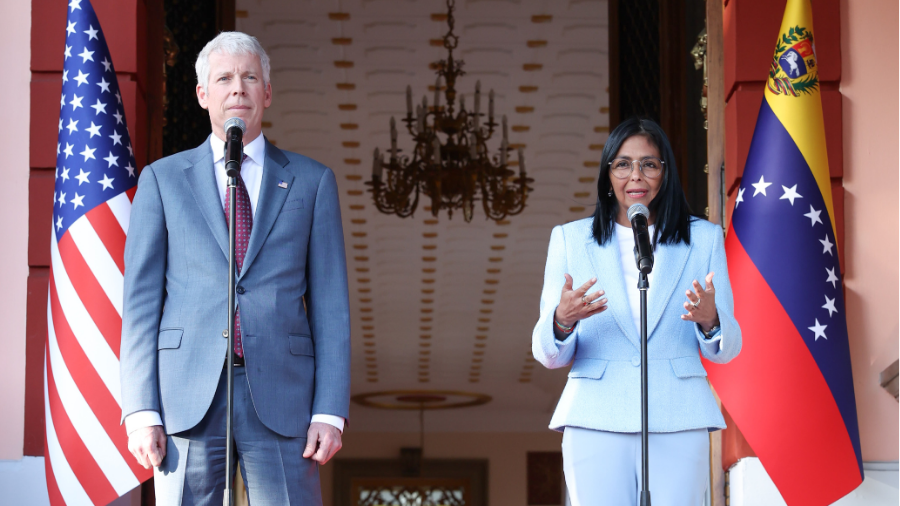
Venezuelan Acting President Delcy Rodríguez alongside US Energy Secretary Chris Wright at the presidential palace. (Credit: Presidential Press)
The holy grail of foreign investment
The acting Rodríguez government’s tenure has been marked by accelerated political and economic transformations. On the international front, Caracas has restored diplomatic ties with Washington and recently resumed dealings with the US-controlled International Monetary Fund (IMF) and World Bank.
Domestically, Rodríguez has changed key cabinet and military posts, while pushing through the National Assembly a number of reforms with the explicit goal of making the country more attractive for private sector investment, especially from Western multinationals.
Plans to reform pension, tax, housing, and the landmark 2012 labor law are in motion. Mining and hydrocarbons have already undergone pro-business overhauls, with slashed fiscal responsibilities, decreased oversight, and disputes subjected to international arbitration. In contrast to Chávez’s reassertion of oil sovereignty, which underpinned the massive sociopolitical achievements of the Bolivarian Revolution, the reformed energy law brings back the old concession model that puts operations and sales in the hands of private corporations.
In tandem, the Trump administration has issued licenses to pave the way for Western conglomerates to return to Venezuela, and several have already struck deals under the new highly favorable conditions. The licenses maintain and even double down on US sanctions by barring dealings with China, Cuba, Iran, North Korea, and Russia and mandating that all Venezuelan state revenues from oil and mining be deposited in US Treasury-run accounts.
The subordination to US impositions saw Venezuelan authorities extradite former diplomatic envoy and minister Alex Saab to face charges in the US with little to no explanation. The move was shocking but not out of context. In recent weeks, there has been a succession of ceremonies at Miraflores presidential palace where Trump officials get the red-carpet welcome and escort corporate executives to sign contracts under the new pro-business incentives. Far-right tech moguls, including Palantir founder Peter Thiel, are already taking advantage of Trump’s leverage to establish a lucrative foothold in the country. For his part, the US chargé d’affaires holds regular publicized meetings with Venezuelan cabinet ministers.
Caracas’ technocratic and pragmatic approach has dovetailed with a corresponding shift in discourse. On foreign policy, the anti-imperialist rhetoric has all but vanished. As Trump unleashes a savage war against Iran and threatens to “take over” Cuba, Venezuelan leaders have refrained from condemning the escalating imperialist aggression while emphasizing their desire to build good relations with Washington. At the same time, references to Maduro have drastically decreased, as documented in a recent investigation. Domestically, the central focus has become macroeconomic stability and attracting foreign investment. Both Acting President Rodríguez and her brother, National Assembly President Jorge Rodríguez, acknowledged receiving “recommendations” and “suggestions” from oil majors amid the recent hydrocarbon overhaul.
Rodríguez and the Bolivarian leadership, under ongoing US pressure, are betting that the pro-business opening will lead to accelerated economic growth that will trickle down into improved living conditions, thus allowing the government to rebuild social legitimacy and political prospects. However, this plan faces serious roadblocks.
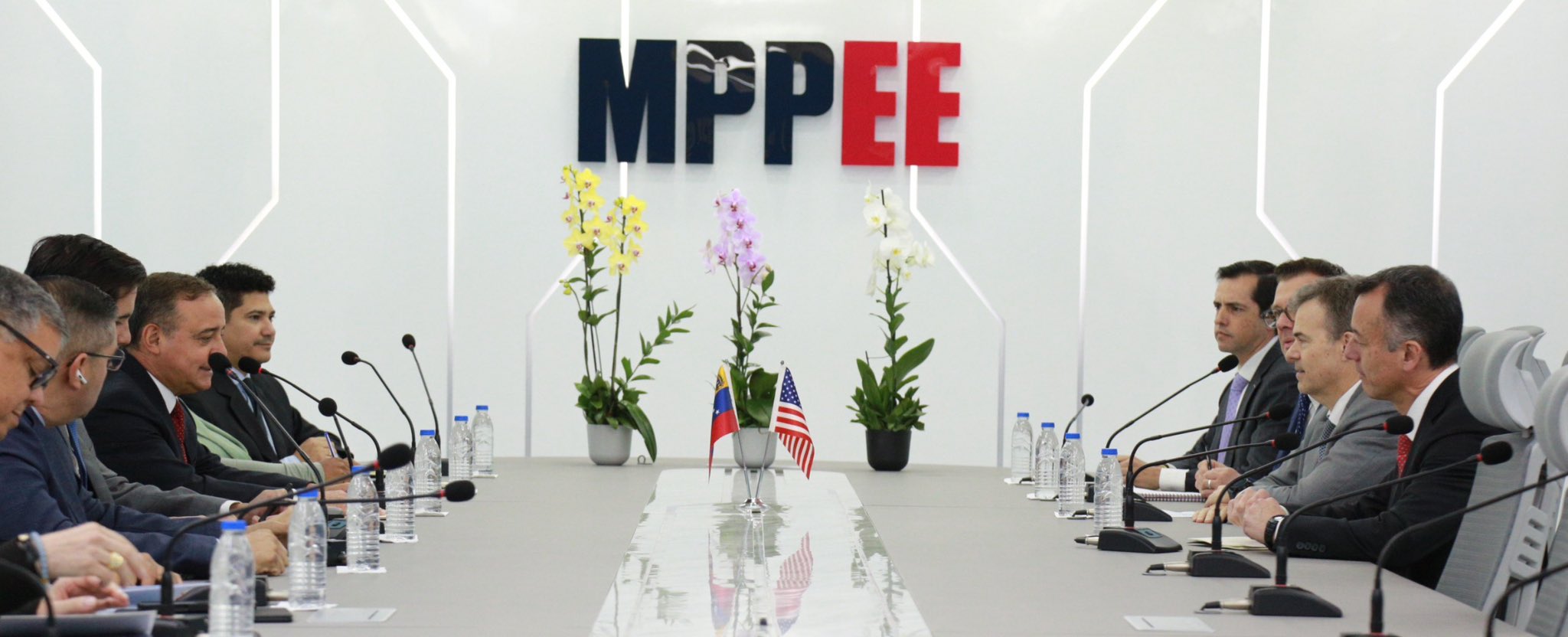
US Chargé d’Affaires John Barrett meeting with Venezuelan Electricity Minister Rolando Alcalá. (Credit: @usembassyve)
Rising domestic pressure
The first issue is that the acting authorities may not have a lot of time to improve the living conditions of the Venezuelan people.
Over the previous seven years, with the economy asphyxiated by the US economic blockade, the Maduro government prioritized macroeconomic stability and reduced inflation first and foremost, through a strict monetarist policy package. While the approach, coupled with a modest oil industry recovery, did lead to slowed down inflation and modest economic growth, it came at a price of freezing wages, consumer credit, and public spending. The minimum wage, last raised in 2022, is now worth less than US $1 per month, with further increases replaced by non-wage bonuses that cheapen labor costs for employers.
Though these bonuses have increased periodically (the income floor is now $240/month for public sector workers), they are still far from covering living costs. On May 1, Rodríguez ignored growing calls for a minimum wage hike, the conversion of bonuses to wages, and the restoration of collective bargaining rights, instead doubling down on the bonus policy. With government officials announcing a labor reform soon, it is likely that the return of the minimum wage will come alongside a significant erosion of workers’ rights and employer responsibilities.
However, apart from its commitment to fiscal discipline, the Rodríguez acting government has little room to maneuver because of its lack of direct management over oil revenues. At the mercy of the Trump administration to return export earnings in the amount and timing of its choosing, Venezuelan authorities are unlikely to commit to anything that might unsettle the budget. Rodríguez herself warned that wage increases must be “responsible.”
There is a delicate balance to strike. To implement the current pro-business agenda, not to mention the US rapprochement, the government needs social peace, and only improved material conditions for the working-class majority can ensure that in the short term.
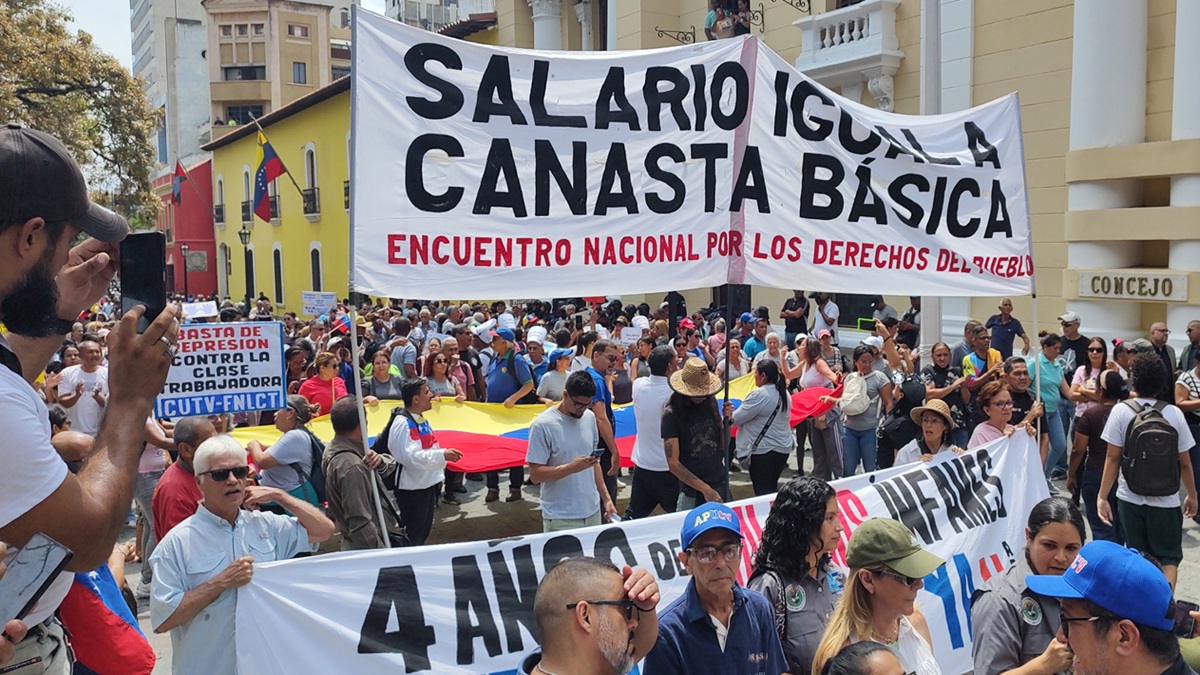
Venezuelan trade unions have mobilized to demand a restored minimum wage and labor rights. (Credit: La Izquierda Diario)
The specter of debt
It is not just the pressure for better living standards that looms large on Venezuela’s economic front. There is a growing expectation that creditors will soon reengage with Venezuelan authorities to collect on a sizable external debt: a combination of defaulted bonds, unpaid loans, and arbitration awards that, with interest accrued over years, may amount to as much as $170 billion. The Venezuelan government recently announced the launch of a debt restructuring process, while Washington issued a license allowing the hiring of financial and consulting services.
Given the recent overtures to foreign capital, Venezuelan leaders will be hard-pressed to honor whatever commitments necessary to render the country a favorable investment climate. Nevertheless, a major chunk of this debt is illegitimate.
On the one hand, debt ballooned in the mid-2010s as Venezuela’s credit rating was unjustifiably downgraded and borrowing costs went up, as Washington slapped its first rounds of sanctions on the Caribbean country. The Maduro government made a strategic choice to prioritize debt service as the economy reeled following a collapse of global oil prices, hoping that this “discipline” would stave off a scenario where the country was shut out of financial markets. It turned out differently.
Venezuela was gradually locked out of global finance after the Trump administration’s 2017 financial sanctions. Bonds defaulted one after another and have been accruing interest ever since. And the notoriously corrupt US-backed “interim government” also played its part in running up Venezuela’s liabilities and pilfering state assets abroad.
The diverse group of bondholders and corporations owed arbitration awards is sure to receive the backing of the White House, which holds the purse of Venezuela’s export proceeds. This mechanism could be utilized to directly transfer Venezuelan state income to creditors in what would effectively amount to international wage garnishing. Given how Venezuelan bonds have risen in recent months, investors are eagerly eyeing a significant windfall.
Venezuela’s unsustainable debt burden opens the door for further US imperial predations. Even if there is an agreement to pay 50 cents on the dollar for Venezuela’s $170 billion debt for a period of 15 years, that comes to $5.6 billion a year, roughly a quarter of the present budget. It is simply unpayable.
While Caracas may be able to settle with some creditors by privatizing Venezuelan state assets, it will not amount to much. Venezuelan leaders will stress that, with the recent reforms and US opening, the economy will grow tremendously, and they will be able to honor all commitments. But creditors are not willing to wait when they can cash in now, especially given Venezuela’s weak bargaining position. The government cannot maintain a functioning country in the short term with a huge debt burden. As a result, the US might take advantage of the crisis to impose a major loan from the IMF or some lending coalition.
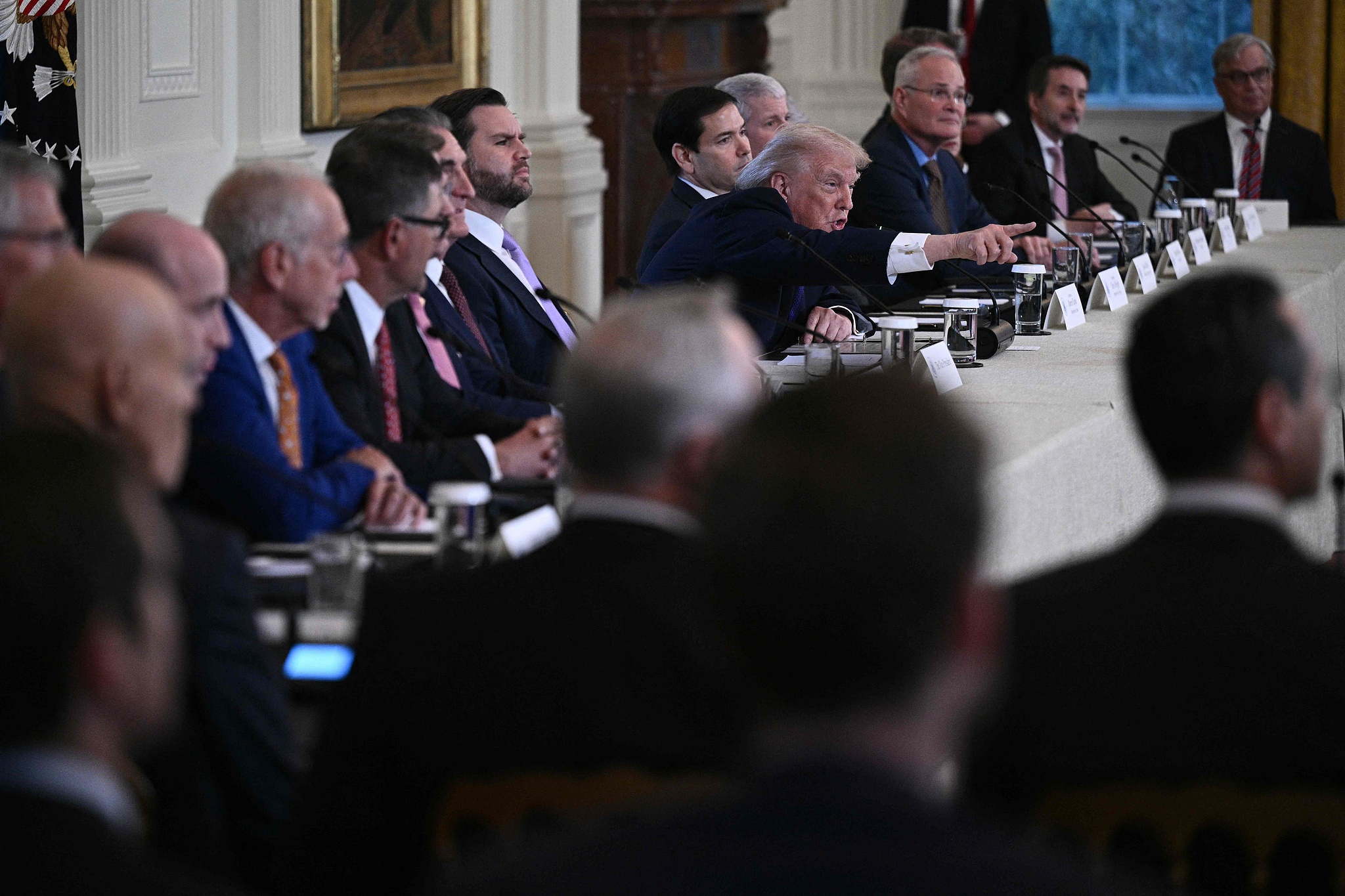
Trump has pushed for the return of Western corporations to Venezuela at the expense of Russian, Chinese and other counterparts. (Credit: VCG)
Sovereignty under threat
An IMF or similar loan program is more than just an agreement to lend some amount under certain repayment conditions. It is an opportunity to impose neocolonial arrangements on Global South countries. In Venezuela’s case it is even more symbolic: it would mean exacting the proverbial pound of flesh for Chávez’s revolutionary audacity to challenge US hegemony in the Western hemisphere.
An eventual long-term credit program would surely come alongside a structural adjustment package of mass privatizations, gutted social expenditure, and all-around liberalization of the economy. Given the current leverage over Venezuela, US officials may attempt to further entrench the rollback of the Caribbean nation’s sovereignty.
Between the growing domestic demands for improved living conditions and the specter of debt renegotiation, the acting Rodríguez government will find it increasingly difficult to walk the tightrope of maintaining social peace while continuing to make one concession after another to monopoly capital and the Trump White House.
With the limits of US imperialism nakedly exposed in Iran, Trump needs a victory in Venezuela. But that victory does not entail a buoyant economic recovery with social justice, let alone the survival of a sovereign and revolutionary project. Victory for the US is a dependent country, mired in debt and underdevelopment, where Western corporations plunder natural resources and geopolitical rivals are kept at bay.
Ultimately, any long-term plan for sovereign development needs to start from the fact that US imperialism, to echo Che Guevara, is “not to be trusted even a little bit,” much less considered a “partner” in a “cooperation agenda.” It will undoubtedly be a major hill to climb. But thankfully, even if it means starting over, the Bolivarian Revolution is not starting from scratch.
From Sovereign Media via This RSS Feed.