

Voters in six states — Alabama, Georgia, Idaho, Kentucky, Oregon, and Pennsylvania — went to the polls on Tuesday, May 19, in the busiest primary day so far of the 2026 midterm cycle. Coming roughly six months out from November, the results are indicative of the political terrain heading into the midterms. The Republican Party still owned by Donald Trump, while the Democratic Party is riding a wave of anti-Trump turnout without a message beyond “affordability.” At the same time, a Far Right and Supreme Court-enabled gutting of the Voting Rights Act is playing out in real time in the Deep South, while a socialist Left is scoring meaningful, if uneven, victories in the Democratic primaries.
Three takeaways from the night stand out.
- Despite Falling Approval, Trump Maintains Control of the Republican Party — and Massie Is Proof
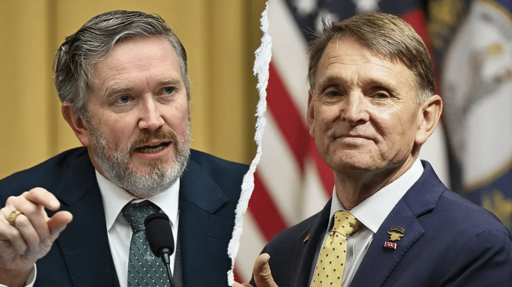
The marquee race of the night was in Kentucky’s 4th Congressional District, where eight-term incumbent Representative Thomas Massie lost the Republican primary to Trump-endorsed former Navy SEAL Ed Gallrein by roughly 54 to 45 percent. The race became the most expensive U.S. House primary in history, with over $32 million in ad spending, the bulk of it from out-of-state super PACs.
The pro-Gallrein PAC spent around $5.6 million attacking Massie while AIPAC and other pro-Israel groups spent close to $9.4 million more. Top donors against Massie included hedge fund billionaire Paul Singer, casino heir Miriam Adelson, and hedge fund manager John Paulson. Massie, who outraised Gallrein in small-dollar donations and led overwhelmingly in donor counts, was buried by a coordinated campaign of capital and Zionism. In an extraordinary move, Defense Secretary Pete Hegseth traveled to the district to campaign against Massie the day before the vote, despite federal law prohibiting cabinet officials from engaging in political activity in their official capacity.
Massie, for his part, has long been a thorn in Trump’s side. A Tea Party, Ron Paul Republican who sparred with Trump during his first term over Covid relief, Massie emerged as a strong critic of Trump since the start of his second term. He sponsored the Epstein Files Transparency Act that forced the release of documents tied to Trump’s former associate, voted against Trump’s “One Big Beautiful Bill,” opposed U.S. military action against Iran, and introduced legislation requiring AIPAC to register as a foreign agent.
Unlike Marjorie Taylor Greene or Tucker Carlson, however — figures who built their brands inside the MAGA coalition and are now distancing themselves from Trump over Iran, Israel, and Epstein — Massie was never a part of what was seen as the Trump coalition. Now, in his campaign, he attempted to position himself as a voice, among the Right, to give voice to the growing strata of Republican voters increasingly uneasy with Trump. And there was momentum for this too, with Trump’s approval at a second-term low of 37 percent, and nearly seven in ten voters disapproving of his handling of cost-of-living and the economy. Among independents — the bloc the GOP needs to hold the House in November — 69 percent now disapprove.
But this was not enough. Some polling in the final week showed the race tightening, with one survey showing Gallrein up just five points and Massie’s own internal polls suggesting a dead heat. On election night, Trump’s pick carried the day with relative ease.
Between the campaign and the election night results, there are two takeaways here. On one hand, as the polling momentum behind Massie showed, there is a section of the Republican base genuinely disaffected with Trump. But that sentiment remains trapped within the Right’s own dead-ends, offering no real solutions to the crises driving it. On Tuesday, it was ultimately drowned out by the alliance of money and the Israel lobby, strengthened by Trump’s continued grip on the Republican party.
Massie wasn’t the only one, as Trump’s so-called “revenge tour” claimed others too. In Georgia, Trump foe Brad Raffensperger, who refused to “find” votes for Trump in 2020, lost the GOP gubernatorial primary. Trump-backed Lt. Gov. Burt Jones, who has echoed Trump’s stolen election claims, advanced to a June 16 runoff. In Alabama, Tommy Tuberville, one of Trump’s most loyal foot-soldiers, easily won the GOP gubernatorial primary. The Republican Party that emerges from these primaries will be even more disciplined behind Trump than the one that won in 2024.
- In Alabama, the Attack on Voting Rights Came Into Full View
Beyond the results of the elections last night, Alabama stood as an important example on the assault on voting rights currently being spearheaded by the Right and backed by the Supreme Court.
Indeed, much of Alabama’s elections were consumed by confusion after a Supreme Court ruling just weeks earlier attacked key provisions of the Voting Rights Act, diluting the power of minority voters and paving the way for Republicans to redraw electoral district boundaries. Governor Kay Ivey responded by ramming through a special legislative session, asking the Supreme Court to allow the state to throw out a court-ordered congressional map — one with two majority-Black or near-majority-Black districts — and revert to a 2023 Republican-drawn map that lower courts had previously found unconstitutional. With the Court’s blessing, Ivey last week delayed elections in four of Alabama’s seven House districts, meaning that more than 100,000 votes already cast on Tuesday in those districts may no longer count. A redo primary is scheduled for August 11 in a winner-take-all situation with no runoff, under the new map that could hand Republicans an additional House seat.
Three days before the primary, an estimated 6,000 people gathered at the State Capitol in Montgomery for the “All Roads Lead to the South” national day of action, organized by Black Voters Matter and more than 250 organizations.
What is being attempted in Alabama — the open unwinding of Black political representation a generation after it was won by the Civil Rights Movement won it — is not unique to the state. Facing worsening polls, Republicans have leaned heavily on voter suppression, redistricting, and gerrymandering to protect their congressional majority and to further suppress voting rights with the complicity of the Supreme Court. From Louisiana to Tennessee, the Right is taking a hammer to democratic rights, showing it is a fight that cannot be defeated state by state. It will take a national, mass movement that goes well beyond the Democratic Party’s electoral calendar. The defense of democratic rights, of the franchise itself for Black workers in the South, has to be a central axis of the fight against Trump and the Right.
- The DSA Won Key Races, amid a Democratic Surge
In the midst of a Democratic voter surge, Tuesday’s primaries saw the Democratic Socialists of America (DSA) win important victories.
In Pennsylvania’s 3rd Congressional District, the deep-blue Philadelphia seat, DSA-endorsed Chris Rabb won the Democratic nomination by roughly 20,000 votes with 90 percent of the vote in. Barring a November upset in this overwhelmingly Democratic district, Rabb will join existing DSA-endorsed Democrats like AOC and Rashida Tlaib in Congress.
The organization also picked up state legislative seats in Kentucky and Georgia and advanced to runoffs in two notable races: Tim Denson, an Athens-Area DSA candidate for mayor in Athens-Clarke County, Georgia, led a crowded primary field; and Andrea Parr advanced to a Metro Council runoff in Louisville.
These wins came in red and purple states, and they came in a primary where Democratic turnout swamped Republican turnout almost everywhere. In Georgia, the contrast was particularly evident, where about one million voters cast Democratic primary ballots, versus around 700,000 Republican ballots. On Tuesday, Democrats accounted for roughly 53 percent of votes cast and Republicans 45 percent.
In the context of high Democratic voter turnout, DSA’s performance isn’t a footnote. The surge of progressive turnout is reflective of a working class searching for solutions out of the compounding crises they face, and where the establishment presents no real alternative, many are open to more radical ideas. Yet, beyond the lip services to “affordability, “ the party they are being funneled into has no real program to provide that answer, and has every interest in making sure the energy is absorbed and dissipated rather than translated into independent working-class power.
The defense of democratic rights against the right-wing offensive, and the struggle for a working-class agenda that can take on the billionaires and capital, will not be won inside the Democratic Party. They will be won in the streets, in workplaces, on campuses, and using the power of the working class and its unity. The job of socialists has to be to build that fight — with our own organizations, our own program, and our own forces and to offer a clear perspective of class independence to fight capital and both of its parties.
The post Primaries: Trump Maintains Grip on the Republican Party, Voting Rights Under Siege, and the Left Makes Gains appeared first on Left Voice.
From Left Voice via This RSS Feed.