

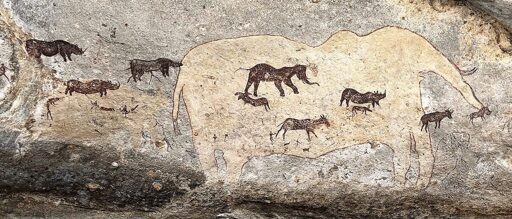
Across continents and cultures, one of the most striking features of ancient rock art is how often it places the natural world at its center. Whether etched into sandstone cliffs in the Sahara, painted in hidden shelters in Southern Africa, or drawn on stone faces deep in the Amazon, the recurring subject is not architecture, warfare or abstract political power. It is animals, forests, rivers, spirits of the land and the intimate relationship between people and the living world around them. I have seen rock art in remote regions of the Amazon, left by ancient San communities in Angola, across the Ennedi Plateau in Chad, and in the Nuba Mountains of Sudan, I have come to believe that these works reveal something profound: long before the language of “biodiversity” existed, many human societies understood that their survival, identity and spirituality were inseparable from the ecosystems that sustained them. Modern conservation discourse often treats biodiversity as a scientific concept — a measurable index of species richness, ecological resilience and genetic variation. This framing is useful, but it can obscure an older and deeper truth. For much of human history, biodiversity was not an abstraction. It was immediate, sacred and embedded in daily life. The extraordinary prevalence of animal and ecological imagery in rock art across the world suggests that early human societies recognized, at minimum intuitively, the centrality of the natural world to both material survival and cultural meaning. Ancient rock art depicting wildlife and humans, Ennedi Plateau, Chad. Image courtesy…This article was originally published on Mongabay
From Conservation news via This RSS Feed.