

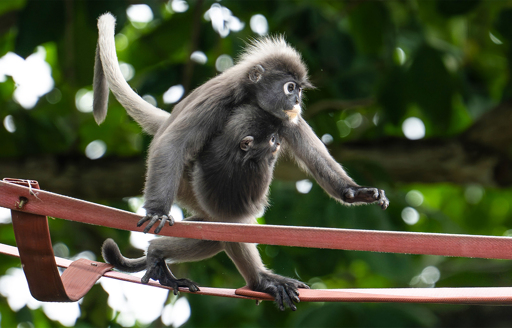
In Malaysia’s Penang state, conservationists and residents are collaborating to reduce conflict between humans and endangered dusky langurs displaced by urban development and habitat loss. The Langur Project Penang built a canopy bridge to help langurs safely cross a busy road and access more habitat, reducing time spent in residential areas and lowering complaints from residents. Malaysia’s wildlife agency receives tens of thousands of wildlife complaints annually, and often responds with trapping, relocation or culling; but conservationists argue education and coexistence measures can be more sustainable responses to increasing human-wildlife encounters. The project’s success has depended heavily on local support and citizen scientists, with some residents gradually shifting from frustration toward compassion and acceptance of living alongside wildlife. TANJUNG BUNGAH, Malaysia — The 50-year-old mango tree growing through Tan Soo Siah’s second-story terrace is a favorite stopping place for the family of endangered monkeys that has taken up residence in a small park near his home in Malaysia’s Penang state. “Since everybody chases them away, I try to let them have a rest here,” says Tan, 64, who likes to watch the dusky langurs (Trachypithecus obscurus) from his bedroom window, peeking up at them playing in the foliage. Not everyone in Taman Concord, a residential community home mostly to retirees like Tan, is as taken with the langurs as he is. Around three years ago, the monkeys were inciting complaints from seniors who were fed up with langurs leaping across their houses, damaging their rooftops and denuding their gardens. Tan Soo…This article was originally published on Mongabay
From Conservation news via This RSS Feed.