

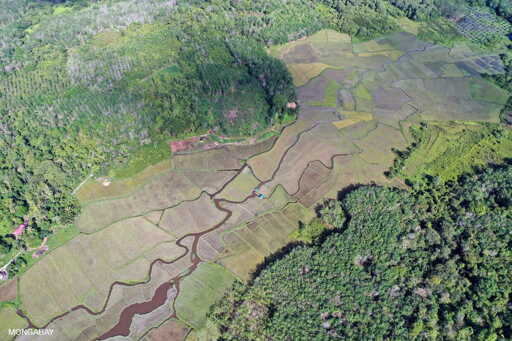
In general, plantation companies view local communities and smallholders as obstacles to expanding operations and to securing social licenses. In deforestation-free supply chains, smallholders are also often treated as a risk. In my experience, this is one reason forest protection efforts fail: we don’t want to understand why smallholders are perceived as a risk. Yet many of the people closest to the forest are also the ones with the strongest reason to keep it standing. That was not how I saw things at the start of my career. Years inside corporate sustainability changed my view, as did many difficult conversations with communities. Customary forest behind smallholders oil palm plantation in Sanggau, West Kalimantan. Photo by Aida Greenbury. People often asked me, “How did someone like you, a corporate slave, end up working for smallholders?” It’s a long story. I worked for corporations for many years. Some people might remember me as Managing Director of Sustainability at one of the largest integrated forestry, pulp and paper companies headquartered in Indonesia. A forest-based company of that size in Indonesia is frequently criticized for deforestation. More than a decade ago, before I left the company, that work led me to help develop the High Carbon Stock Approach (HCSA), a multistakeholder initiative to develop a deforestation-free methodology for extractive companies operating in humid tropical regions. With many existing deforestation standards unclear and rife with loopholes, adopting a clear, science-based deforestation-free methodology, supported by companies, NGOs, and other global stakeholders, was what I needed to…This article was originally published on Mongabay
From Conservation news via This RSS Feed.