

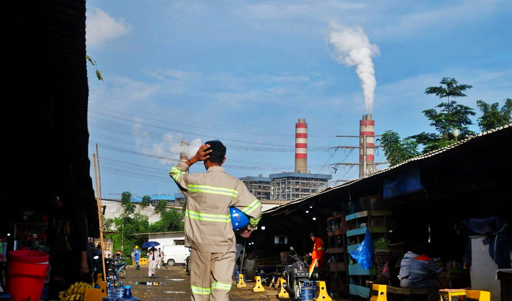
HALMAHERA, Indonesia — New research examining Indonesia’s vast nickel-processing regions has documented rising rates of ill health and workplace harm linked to a key industry supplying the global energy transition. A report published in April by Indonesia’s human rights commission, known as Komnas HAM, cited Central Sulawesi provincial health data showing respiratory infections reached 305,191 diagnoses in 2024, a 26% increase over the 262,160 cases recorded in 2023. In the Central Sulawesi district of Morowali, home to Southeast Asia’s largest nickel processing estate, the PT Indonesia Morowali Industrial Park (IMIP), the number of respiratory infections diagnosed in 2024 was 57,190. The IWIP industrial area, which has been tied to mercury and arsenic exposure. Image by Garry Latulung. A civil society coalition protests in front of the PT IWIP office in Jakarta. Image by Christ Belseran/Mongabay Indonesia. “Communities living near mining and smelter areas are at higher risk due to exposure to dust and emissions from production processes,” said Uli Parulian Sihombing, a coordinator at Komnas HAM. The rights commission called for greater state intervention to uphold rights in and around Central Sulawesi’s nickel processing estates. “Based on these findings, this study concludes that the state has failed to guarantee protection of human rights in the nickel mining and processing sector,” the Komnas HAM report concluded. The report also noted the increase in deforestation recorded on Central Sulawesi tied to the booming mining sector. “This situation is exacerbated by massive ecological damage that has led to a health crisis for communities…This article was originally published on Mongabay
From Conservation news via This RSS Feed.