

Israel has increasingly relied on targeted assassinations in densely populated civilian areas as pretext for continued mass atrocities and, analysts suggest, to sabotage negotiation efforts.
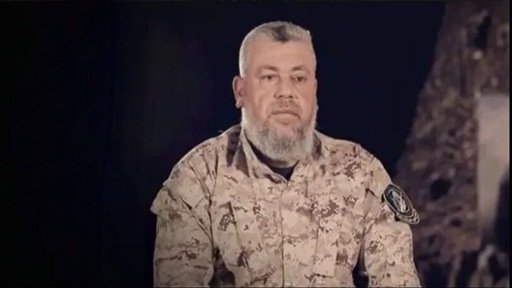
Israeli forces confirmed they assassinated Izz al-Din al-Haddad, the head of Hamas’s military wing, the Al-Qassam Brigades, in the Gaza Strip on Friday, May 15.
In the targeting of the senior Hamas military leader, long-dubbed “The Ghost” for surviving several assassination attempts by Israel, Israeli forces committed a massacre, killing several people and destroying civilian structures.
Israeli defense officials said that three fighter jets dropped 13 bombs on a residential building in Al-Rimal neighborhood west of Gaza City, and a vehicle leaving the building at the time of the operation.
Besides Al-Haddad, the assault resulted in the death of his wife and daughter alongside a number of civilians, in yet another breach of the truce agreement.
Why does Israel consider Al-Haddad’s elimination a strategic achievement?
Israel accuses the late commander of being one of “the architects” of the October 7 attacks. It is also believed that he was in charge of rebuilding Al-Qassam’s military capabilities following Israel’s two-and-a-half-year genocidal aggression on the Gaza Strip.
He assumed this responsibility after his predecessors Mohammad al-Deif, and Mohammad Sinwar were assassinated by Israel.
With the killing of Al-Haddad, Netanyahu’s government claims to have eliminated the last mastermind of Operation Al-Aqsa Flood. This in turn would help Israeli Prime Minister Benjamin Netanyahu and his entourage regain popularity after being blamed by their people for the security failures on October 7.
Analysts also suggest that the targeting of Al-Haddad potentially aims to sabotage the negotiations on phase two of the US-brokered Gaza ceasefire deal, and push Hamas to demilitarize.
Hamas had already demanded that Israel stop its violations of phase one, before phase two of the agreement was launched.
Read more: Hamas demands that Israel implement phase one of Gaza ceasefire
Over 850 Palestinians were reportedly killed in the besieged enclave, as a result of Israel’s almost daily violations since the agreement took effect in October 2025.
Moreover, Israel’s targeted assassination tactic against the head of Al-Qassam came a couple of days after Trump’s appointee for guiding the so-called “Board of Peace” in Gaza, Nickolay Mladenov, exerted further pressure on Hamas to disarm.
While ignoring thousands of Israeli violations committed in the last seven months, Mladenov held Hamas responsible for the stalemate in the negotiations due to its rejection to disarm before it is provided with guarantees.
On a broader scope, the assassination of Al-Haddad is seen as part of Israel’s effort to eliminate the top leaders of the Axis of Resistance, in what seems to be an existential regional war that may alter the balance of power in West Asia.
Read more: Iran’s Supreme Leader Ali Khamenei confirmed dead
Al-Haddad’s guidance inspired the Al-Qassam Brigades, says Hamas
Hamas issued a statement on Saturday, mourning the leader of its military wing and praising his role in confronting the Israeli occupation, particularly during Operation Al-Aqsa Flood, which it said “constituted a source of inspiration for the heroes of Al-Qassam, and defeated the enemy and its army.”
The movement also stressed that the killing of Al-Haddad and the “crimes committed by the occupation” against the Palestinian people, since the ceasefire came into force “reaffirms the criminal and fascist nature of this terrorist entity, its disrespect of international law and conventions, and its failed attempts to impose realities on the political and field levels, after being unable to achieve them by force.”
The post Are targeted assassinations permitted during ceasefires? According to Israel, yes. appeared first on Peoples Dispatch.
From Peoples Dispatch via This RSS Feed.