

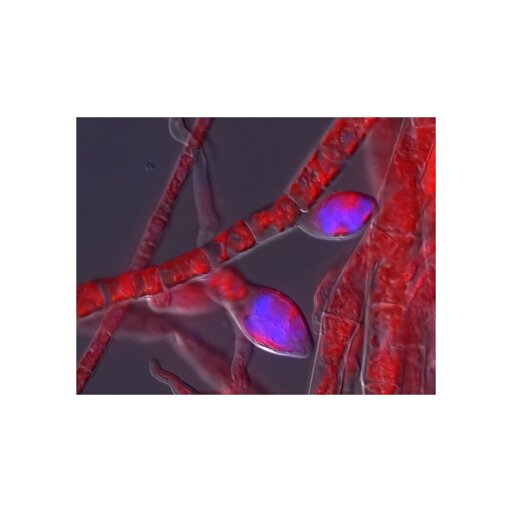
Researchers at the Max Planck Institute for Biology Tübingen have shown that giant viruses long thought to exist only as fleeting, free-living particles that can embed themselves permanently in the genome of a multicellular host, lie dormant for generations and then wake up on demand. Their study, published in Nature Microbiology, challenges fundamental assumptions about how giant viruses operate and establishes a powerful new model for studying viral latency in complex organisms.
From Biology News - Evolution, Cell theory, Gene theory, Microbiology, Biotechnology via This RSS Feed.
You must log in or # to comment.