

This Article was Originally Published on the Substack The Labor Movement is a Mess… and What We Can Do About It
***
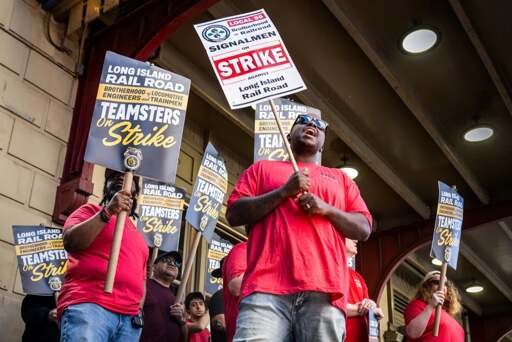
I’m sure you know that five unions of Long Island Rail Road workers are on strike for the first time since 1994. The workers on strike include locomotive engineers, electrical and mechanical maintenance (repair) workers, signal workers, train dispatchers, and some clerical workers. (Much of the information below comes from the linked March 16, 2026 Presidential Emergency Board report). Here’s a link to picketing sites.
The LIRR Unions Have a Right to Strike – Sort Of
Unlike NYC transit workers, who are prohibited to strike under the NYS Taylor Law, LIRR workers are covered by the Railway Labor Act, which allows strikes after lengthy mandated mediation and “cooling off” periods. As a result, these workers have not had a raise since their previous contracts expired in 2023. Between August 2025 and early May, the MTA and the five unions had ONLY ONE bargaining session.
The MTA negotiators are headed by Gary Dellaverson, one of my least favorite people, who handled NYC Transit — TWU Local 100 negotiations from 1991-2008 (and precipitated the 2005 strike with demands for pension concessions) and (as a private labor consultant) CUNY — Professional Staff Congress negotiations in 2023-24, where he won concessions from the union on Adjunct faculty job security.
Competing Offers
Dellaverson, the MTA, and Governor Hochul seem to have been caught off guard by that March PEB report, which triggered a final 60-day period before a strike could begin. The Board (and the unions themselves) recognized a previous “pattern” for three years of raises set by the MTA’s 2023 contract with TWU Local 100 contract, which represents subway and bus workers: 3, 3, and 3.5%, and a $3000 one-time signing bonus. The dispute that triggered the strike centers on the (final) fourth year of the contract. The MTA proposed a 3% raise for a 13.5 month “year” to the Board, with an additional 1.5% contingent on a host of work rule “productivity” concessions, eliminations of penalty payments, and contracting-out provisions that would, for example, have resulted in a loss of 4% in wages for engineers. (see PEB, pp. 4-5; 14-16; 36-41) Later (after the Board’s report), it demanded health benefit cost concessions similar to those it won from Local 100 back in 2023. (I discussed penalty payments in my articles on the nurses strike. The idea behind them is not so much to win those payments as to limit or prevent hurtful management behavior.)
The unions originally asked for a 6.5% raise in the fourth year, and pointed to comparable raises at other railroads. (PEB, pp. 25-26) Later it modified its fourth-year demand.
Ultimately, the Board recommended a 4.5% raise, and no changes in work rules: “the Carrier’s insistence on all of its work rule changes, in our view, makes its Final Offer the less reasonable of the two,” (PEB, p. 31) it wrote, and “It is not reasonable for the Carrier to expect [engineers] to accept such a decrease in exchange for a 1.5% wage increase.” (PEB, p. 42)
Will the Strike Set a “Pattern”?
What particularly worries the MTA and Hochul, and has prevented them from striking a deal, is that a 4.5% raise for 2026-27 might set the “pattern” for Local 100, whose contract expired this weekend, and then for DC37, whose contract expires in November (and other unions after that). “The Carrier expressed its concern that the upcoming negotiations with the organizations that historically have set the pattern for economic bargaining within the MTA family — TWU Local 100 and SMART-TD — would be influenced by the fourth-year increase agreed to by these Parties.” (PEB, p. 20)
This weekend, Hochul and Trump engaged in a little tit-for-tat, with Hochul writing that the strike was a “direct result of reckless actions by the Trump Administration to cut mediation short and push these negotiations toward a strike,” and Trump responding, “Kathy, it’s your fault… if you can’t solve it, let me know, and I’ll show you how to properly get things done,” and promoting her Republican opponent (conveniently from Long Island) in this year’s gubernatorial race.
Even “Sort of” Is So Important!
While it’s unclear whether Trump meddled in the Board’s findings in order to make trouble for Hochul, what is clear is the value of being able to strike even when, as with these unions, they had to jump through hoops (and forego raises) for years to gain that right.
Even before that, the MTA and Dellaverson had to testify before the Board about the cost value of the concessions they sought (PEB, pp. 31-44) in order to claim that its demands were “reasonable.” That created a specific record the unions were able to rebut – to show that the value of the concessions demanded was far more than the “productivity raise” offered. Compare that with traditional municipal bargaining where no such official record exists. In PSC bargaining, Dellaverson never had to quantify the value to CUNY of limiting Adjunct job security rights — let alone “pay” for it.
Then, rather than management simply being able to wait out the unions — take our proposal or tick, tick, tick, we’ll see you next year — these unions had a recourse. That’s why, as the great labor academic Stanley Aronowitz said at the first PSC union meeting I ever attended in 2015, a union that surrenders its right to strike does not deserve to call itself a union.
The post What’s Behind the LIRR Strike? appeared first on Left Voice.
From Left Voice via This RSS Feed.