

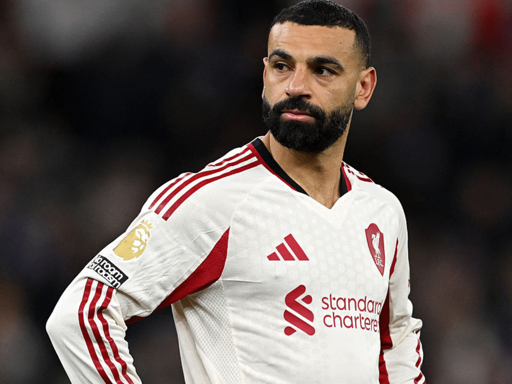

Mo Salah has pulled no punches. In a blunt social‑media statement after Liverpool’s 4-2 defeat at Aston Villa, the club’s talisman demanded a return to the “heavy metal attacking team that opponents fear”.
It was a verdict. Salah framed the season as a collapse — “very painful and not what our fans deserve” — and made clear that mere sporadic wins won’t do.
Insisting the club must reclaim an identity that produces trophies, he wrote:
Winning some games here and there is not what Liverpool should be about
Salah’s message in one line
Salah’s line is simple: Liverpool must stop being average. He tied the club’s DNA to an aggressive, relentless style the so‑called heavy metal football associated with Jurgen Klopp and warned that everyone who joins the club must adapt to it.
That’s not nostalgia. It’s a strategic demand. Salah isn’t asking for flash, he’s asking for clarity of purpose: attack, press, and win. For a club that lifted the Premier League last season, the bar is higher than survival or occasional glory. Qualifying for next season’s Champions League, he said, is “the bare minimum”.
What Salah’s words expose
Liverpool’s problems are both tactical and cultural. The Villa defeat left them with 52 league goals conceded, the most they’ve leaked in a 38‑game Premier League season, and exposed recurring frailties from set pieces and defensive lapses. Those numbers aren’t just stats; they’re symptoms of a team that has lost its edge.
Salah’s statement lands as a public rebuke and a rallying cry. It implicitly questions whether the current setup, including, coaching, recruitment, and player mentality, is aligned with the club’s historic identity. When a senior figure of his stature says the team has “crumbled”, it forces a conversation that cannot be smoothed over by PR lines.
Slot’s response and the wider context
Manager Arne Slot accepted the result and promised improvement, pointing to injuries and a difficult campaign as partial explanations. He argued that a strong transfer window and a fresh start could change the trajectory. But Slot also admitted the obvious: missing so many regular starters has hurt the team’s cohesion.
That defence will ring hollow for some supporters. Liverpool’s slide has been visible all season: defensive frailties, inconsistent away form against top teams, and a worrying inability to close out matches. Salah’s call for a return to an identity opponents fear is as much a critique of the present as it is a prescription for the future.
What needs to change at Liverpool?
- Recommit to an attacking blueprint
Salah’s demand for “heavy metal attacking” is shorthand for high tempo, aggressive pressing, and forward momentum. That requires personnel who buy into the system and a coach who can enforce it consistently.
- Defensive overhaul
Conceding more than 50 goals in a season is unsustainable. Set‑piece vulnerability and lapses in concentration must be addressed through coaching, recruitment, and physical conditioning.
- Mental toughness
Salah singled out the pain of repeated defeats. Fixing that starts with culture: leaders in the dressing room, clearer standards, and accountability for performances that fall short of the club’s history.
- Smart recruitment
Slot’s optimism about a transfer window is valid only if signings fit the identity Salah demands. New players must be able to press, run, and contribute to a high‑intensity style from day one.
Risk and opportunity
There’s a risk in public dissent: it can destabilise a fragile dressing room and put Slot under more pressure, especially when high‑profile names are available as potential replacements. But there’s also an opportunity. A clear, uncompromising message from Salah can galvanise the club if it is followed by decisive action.
Salah’s legacy at Liverpool is already cemented: over 250 goals, multiple trophies, and a place among the club’s greats. His final weeks at Anfield, which he will leave at the end of the season, are now a test of whether his words will be a footnote or a catalyst.
Final word: Identity or drift?
Liverpool stands at a crossroads. Salah has drawn a line in the sand: reclaim the attacking identity that wins trophies or risk drifting into mediocrity. The club’s response over the summer in the transfer market, in coaching decisions, and in the dressing room culture will determine whether this is a moment of renewal or the start of a longer decline.
Salah didn’t mince his words. Now the club must act with the same clarity.
Featured image via Shaun Botterill/ Getty Images
By Faz Ali
From Canary via This RSS Feed.