

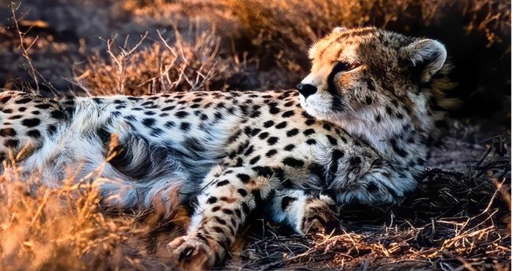
The Asiatic cheetah, the world’s most endangered big cat, faces an increasingly precarious future as ongoing conflict in Iran disrupts critical conservation efforts, reports Mongabay contributor Kayleigh Long. Once ranging from the Arabian Peninsula to India, the cheetah subspecies (Acinonyx jubatus venaticus) is now confined to just 16% of its former territory, with fewer than 30 individuals estimated to remain in the wild in Iran. Before the war began in February 2026, conservationists observed a rare sign of hope: a female cheetah named Helia was filmed in North Khorasan province with five cubs, the largest litter ever recorded for the subspecies. Bagher Nezami, national director of the Conservation of the Asiatic Cheetah Project, told Iranian media that these were “ID-carded” individuals being monitored by researchers. However, access to protected areas for nongovernmental groups has now “slowed down considerably,” interrupting long-term monitoring and camera trapping, a local conservationist told Mongabay, speaking on condition of anonymity. There are also fears that conservation vehicles could be misidentified as military targets in the remote desert landscapes where the cheetahs live. Sarah Durant, a research scientist at the Zoological Society of London, emphasized the protection of field scientists, park rangers, and Indigenous peoples during armed conflict is “a matter of urgent international concern.” Beyond the direct impact of combat, Western sanctions on Iran have also taken a toll. “Critical activities such as monitoring, law enforcement and the development of wildlife-friendly infrastructure have declined,” the authors of a 2025 study wrote. “These limitations have contributed to…This article was originally published on Mongabay
From Conservation news via This RSS Feed.