


This story was originally published by Source New Mexico.
Patrick Lohmann
Source New Mexico
Three New Mexico pueblos and one tribe on May 12 sued the prediction market platform Kalshi, alleging the app enables sports gambling on tribal land and, in doing so, violates gaming compacts and federal law.
In an announcement May 13, the plaintiffs — the Mescalero Apache Tribe, as well as the Pojoaque, Sandia and Isleta Pueblos — said Kalshi provides anyone over age 18 access to sports gambling in New Mexico, which deprives tribes of revenues they receive for schools and other services in accordance with hard-fought tribal compacts and state and federal law.
“The use of prediction markets for gambling purposes diverts essential revenue away from our governments, provides an end-run around regulation of gaming on our lands, and allows gaming by underage people,” Sandia Pueblo Gov. Stuart Paisano said in a statement. Only people aged 21 and over in New Mexico can gamble at tribally owned casinos under state gaming compacts and federal law.
The lawsuit, filed by a Washington-based law firm, alleges that Kalshi, which is based in New York City, could and should have created a “geofence” to prevent its app from being used within tribal boundaries. It also says that by operating on tribal land, the company is violating the federal Indian Gaming Regulatory Act and infringing on tribal rights to self-determination that the United States Supreme Court first recognized in 1987.
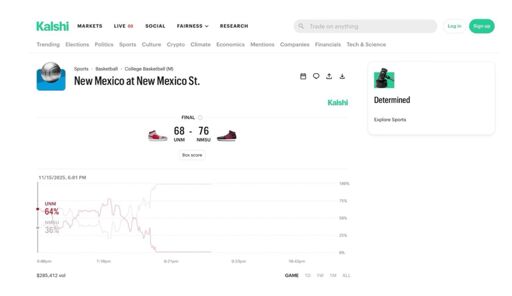
As one piece of evidence, the lawsuit contains a screenshot of the platform allowing New Mexico users to gamble on the University of New Mexico Lobos men’s basketball game against the New Mexico State University Aggies last November.
The lawsuit marks the latest escalation in local pueblos’ campaign against the prediction markets. Last month, U.S. Rep. Gabe Vasquez (D-N.M.) visited a school on Isleta Pueblo land that received most of its funding from tribal gaming revenues.
Isleta Gov. Eugene Jiron told Vasquez that the pueblo anticipated “a lot of impact down the road” as a result of prediction markets enabling sports gambling. Vasquez said he is working on legislation prohibiting markets like Kalshi and Polymarket from offering sports betting services.
Last July, Mescalero Apache Tribe Vice President Duane Duffy urged state lawmakers to help crack down on the markets. Duffy, in the statement May 13 announcing the lawsuit, said Mescalero and other tribes and pueblos in New Mexico “fought hard to protect their inherent sovereign right to operate and regulate casinos on tribal lands. We cannot sit by idly as the laws that enshrine this right are ignored.”
Duffy did not return Source NM’s request for additional comment May 13. Representatives for Kalshi also did not respond to an emailed request for comment May 13.
At least one other tribe has sued Kalshi for similar allegations. The Ho-Chunk Nation in Wisconsin sued Kalshi last August, alleging the company illegally provides sports betting on tribal land.
A federal judge on Monday denied the tribe’s request for an immediate prohibition on the company from operating in Wisconsin, but he did affirm that the tribe had shown a “likelihood of success” as it pursues a lawsuit against the company for potential violations under federal Indian gaming laws. The tribe hailed the ruling as a “major” win in a news release May 12.
According to the latest figures, 14 tribes and pueblos in New Mexico reported generating more than $266 million in “adjusted net win” in the last quarter of 2025, a figure that includes the revenue made from gaming machines minus the amount paid out in prizes and regulatory fees. It’s not clear from New Mexico Gaming Control Board figures how much of that money came from sports gambling specifically.
The post New Mexico pueblos sue Kalshi, alleging prediction market violates tribal gaming sovereignty appeared first on ICT.
From ICT via This RSS Feed.