

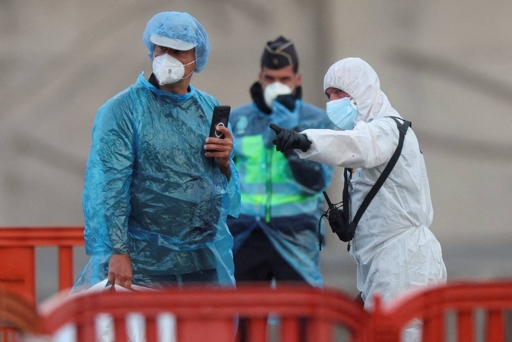
In early April, a Dutch retired couple boarded a cruise ship up the Atlantic, after traveling to Argentina to observe the birds. Quickly, the man reported infectious symptoms, which resolved in a few days. About three weeks later, seven other people on board or already disembarked reported severe symptoms one after the other and were hospitalized, two of which died quickly and were confirmed to have been positive for hantavirus via testing. This was the beginning of the hantavirus epidemic on board the MV Hondius. As of May 12 the toll is eleven infected people, including three who have died.
The first victim of this recent spread contracted the virus on land. Hantaviruses are pathogens circulating in rodents and transmissible to humans, in whom they cause serious diseases. One of these being hantavirus pulmonary syndrome (HPS) a syndrome that often leads to respiratory failure and death. While typically not possible in other hantavirus strains, the so-called “Andean” strain, is transmissible from human to human. It is also particularly virulent: the cases identified have led to deaths in 30 to 40% of cases. Since its discovery in the 1990s, several small outbreaks of hantavirus have affected Chile and Argentina, especially in 2018-2019 in Chubut province. In the region, the virus is endemic to wild rodent populations, with human cases recorded almost every year. But occurring this time on a cruise ship with 150 passengers and crew members of 23 nationalities, this new epidemic outbreak has taken on a global importance. Without appropriate management, the risk of a global pandemic, along with its health and social consequences, cannot be excluded.
Erratic Health Management: The “Reassurists” Are at it Again
After landing on Sunday, May 10 in the Canary Islands with complete protective equipment and under WHO surveillance, the people who were still on board were repatriated to their respective countries by special flights. Most of the crew was directed to the Philippines, while many of the passengers returned to varying Western countries. The standards of passengers’ quarantines vary widely. Despite the clearly global implication of this disease, the WHO has left it to the discretion of each country to determine necessary precautions. These vary from strict isolation in a dedicated structure (Spain), to self-isolation at home without control measures or anything to protect roommates (in the Netherlands). France, which initially announced that it would opt for solution number two, backpedaled to finally put the five repatriated at Bichat Hospital in strict quarantine, after one of them reported symptoms on the plane. This woman is now in intensive care in critical condition after being confirmed hantavirus-positive.
In the U.S. 16 of the passengers are being treated at the Administration for Strategic Preparedness and Response Regional Emerging Special Pathogen Treatment Center at the University of Nebraska Medical Center/Nebraska Medicine (UNMC) in Omaha. Another 2 passengers were taken to Emory University’s Serious Communicable Diseases unit in Atlanta. Peculiarly, and somewhat troublingly, in the U.S. while patients at UNMC are supposed to be monitored for the full 42 day monitoring period, Dr. Brendan Jackson, the CDC’s acting director of high-consequence pathogens and pathology, recently stated patients may be able to go home during the monitoring period, but only if they have support to isolate at home.
If this uncoordinated, disjointed response wasn’t concerning enough, another source of concern relates to potential epidemic “leaks” (i.e. people getting off the ship unmonitored who could potentially infect others). For example, about twenty international passengers of the HV Hondius had already disembarked before the alerts were given, several of whom have since been found to have the disease potentially exposing countless other individuals. The tracing of people who have been in contact with them remains very incomplete depending on the country, not to mention the unclear or non-existent isolation instructions given to those who may have been exposed.
From health authorities and experts invited to the corporate media in varying countries, the message has been that the pandemic risk is very low. In particular there has been a large-scale effort to ensure that it will not be “a new COVID-19.” But this point of comparison is as extreme as it is hypocritical: after escaping all restraint, COVID-19 has become a pandemic of unprecedented magnitude and severity in modern history, while still being constantly minimized by the authorities. Official speeches have only spoken about it as if it is completely in the past, left back in 2022 (a year that was to become the deadliest), even though the virus continues to circulate to this day at the rate of several waves a year. An analysis published by The Economist in 2023 estimated that COVID-19 had likely already caused more than 30 million deaths, not to mention the hundreds of millions of chronically ill people.
If COVID-19 therefore embodies a worst case scenario that is being conveniently used to minimize the risks of hantavirus, we should remember that the planet has experienced other terrible epidemics of international scale in recent decades, which can constitute more proportionate comparisons in the event of a loss of control over the Hondius-related outbreak. For example, the SARS pandemic in 2003 affected 8,000 people and killed 800 in 30 countries before being contained in a few months.
But there is another problem in the official speeches from the WHO, which are then relayed by representatives of the State and health institutions: it is that they justify their call for calm by a set of lies about the characteristics and transmission risks of the virus, which are ironically very similar to those used to “reassure” the population from the beginning of the COVID-19 pandemic. These speeches have fueled conspiracy, deeply misinformed the population about the effective tools to protect themselves from the virus (such as certain types of masks and vaccines), and ultimately contributed to worsening the health crisis.
Hantavirus: What Research Shows vs. What Health Authorities Say
Since its discovery in 1996, this strain of Andean hantavirus has caused only a handful of human-to-human transmission outbreaks. The largest of them, quickly circumscribed by drastic quarantines, affected only a few dozen people. Its average contagiousness is therefore difficult to estimate at the moment as the behavior of the same viral strain can vary greatly from one individual to another and it is hard to draw conclusions based on only a few cases. Nevertheless, a cluster that occurred in 2018/2019 in Epuyén, a village of 2000 inhabitants in Chubut, Argentina, showed that “superspreaders” may exist.
This episode was described in a very detailed study published in 2020 in the New England Journal of Medicine (NEJM), in which the authors determined that a hantavirus, first passed from a rodent to a human, then managed to infect 34 people, boosted by three patients who alone were responsible for 64% of the contaminations. The episode ended after eleven deaths, thanks to the strict quarantine of a hundred inhabitants for forty-five days, as well as the prohibition of gatherings in the village for twice this duration. Before the measures were implemented, the “reproduction rate” of the virus (R0) was 2.12, i.e. in this cluster, an infected person had transmitted the virus on average to two people. For comparison, the R0 of the flu is about 1.3, and that of the original strain of SARS-CoV-2, the COVID virus, was around 2.9. Again, the small number of cases does not allow this figure to be considered reliable, and the fact that there have been so few outbreaks of hantavirus in several decades, while the cases of proven rodent-human transmissions are counted in hundreds in the region where this strain is present, gives hope that the interhuman contagion risk is actually lower. Nevertheless, the fact is that the available data do not support the official line at the current moment, relayed throughout the media by many doctors and health officials, that this virus is not “very contagious.” We are minimizing the risk for a virus whose lethality rate exceeds 30%! To compare, the lethality of the first variant of COVID-19 was of the order of 1%, that of SARS was around 10%, and that of Ebola was 50%.
The hantavirus is dangerous, and it is therefore essential to stop today the transmission chains initiated on board the Hondius before the virus spreads. But to determine an effective strategy, other characteristics of the virus are important to consider, including: the incubation period, the contagiousness window, and the mode of transmission. And scientific knowledge on the last two is already contradicted by the WHO and health authorities, just as they have been and still are about COVID-19.
The incubation period (aka the time from being exposed to the time from exhibiting symptoms, which is 6-7 weeks) of the hantavirus is particularly long, anywhere from 9 to 40 days. With such a long incubation period, people can go long periods of time carrying the virus, but not exhibiting symptoms. This means particularly long quarantines are ideally required for exposed people, before they can be declared out of danger. This also means a relatively slow progression in the event of an epidemic, according to the general principle that an infected person does not become contagious until the end of the pathogen’s incubation period. This could be good news compared to the speed of COVID-19 transmission. For example, the latest variant, Omicron, can jump from person to person in just one to three days. This is due to its very short incubation time (about three days), along with a very short contagiousness window, beginning one to two days before the onset of symptoms.
Now, what about the current strain of hantavirus? The NEJM study cited established that half of all transmissions occurred during the first three days of the symptomatic phase. However, it does not rule out the possibility that the window of contagiousness may begin in the days preceding the onset of symptoms. This is a point the International Society for Hantavirus Study felt compelled to emphasize in a press release on May 7 — alarmed by the WHO’s stance, which was reiterated during a press conference on the same day — as the WHO had initially not recommended quarantine for exposed individuals unless they reported symptoms. This high-risk gamble, incidentally, remains embedded in the health protocols of certain countries, such as Switzerland; there, the Federal Office of Public Health asserts that a passenger on a flight to Zurich “was not contagious” while on the plane because their symptoms began three days later, thereby justifying the decision to take no measures regarding the other passengers on the flight. We see a similar gamble taking place today in the U.S. potentially allowing those exposed to “quarantine at home,” possibly exposing family members. This reflects a convenient “simplification” — one that has already served as a cornerstone of the reassuring narrative surrounding COVID-19. In the case of COVID-19, the fact that a significant proportion of infections are caused by asymptomatic or pre-symptomatic patients has been consistently denied or downplayed since 2020.
Finally, the mode of hantavirus transmission is — unsurprisingly — subject to the same censorship as that of COVID-19. Once again, airborne transmission (i.e., via micro-droplets known as aerosols, which float in the air and accumulate in a room much like tobacco smoke) is denied by the authorities in favor of droplet transmission (i.e., respiratory droplets), a mode that entails far lower costs in terms of the preventive measures required. Yet the study published in the New England Journal of Medicine is unequivocal: its observations are consistent with transmission via both droplets and respiratory aerosols. Moreover, data suggests contact doesn’t necessarily need to be all that close at all. The index patient in the 2018 outbreak infected five other people in just 90 minutes during a birthday dinner attended by one hundred guests in a large hall—including one individual he merely crossed paths with on his way to the restroom. Nevertheless, in its official briefing (accessed on May 6), the WHO chose to disregard these findings, asserting instead that infections “are associated with close and prolonged contact, particularly within families or couples.” This message has been repeated verbatim on television sets around the world by various prominent physicians and specialist journalists — individuals laden with academic credentials, yet apparently incapable of reading the scant existing literature for themselves, or of challenging the authority of the WHO.
These stances are reflected in the inept health measures implemented aboard the Hondius itself once the alert had been issued to the WHO — as reported by a French national on May 7. Prior to disembarking on May 10, passengers were provided with surgical masks and instructed to take their meals together, albeit seated in a staggered arrangement. These two measures were pertinent for preventing transmission via respiratory droplets, but entirely ineffective against airborne transmission — for which only N95 masks are appropriate, alongside measures to ensure extensive indoor air exchange or filtration using HEPA filters. In other words, aboard the Hondius itself, the tangible consequences of this reassuring rhetoric manifested as inadequate measures that ultimately served to exacerbate the situation. To be clear, at this stage, there is no indication that the outbreak is spiraling out of control, but regardless, these measures in the context of the data covered are still extremely alarming.
A World Even More Vulnerable to Pandemics Than Before the Emergence of COVID-19
At this stage, there remains a strong likelihood that the hantavirus outbreak will be quickly contained — primarily thanks to the immense advantage that it was detected right from the very first cases. Yet, in the hands of capitalist states — as the handling of COVID-19 so tragically demonstrated — no emerging epidemic can be considered trivial. The tracing and quarantine protocols implemented around the Hondius — fragmented and at times contradictory — already offer a glimpse of this reality.
Far from having learned the lessons of COVID, the world today appears more exposed than ever to the risk of a pandemic. This hantavirus cluster serves merely as a reminder, and it is only a matter of time before another pathogen sets out to conquer the globe — with avian flu standing out, among others, as a serious contender. And as the pathological forces of global capitalism accelerate, our collective vulnerability grows right alongside them.
First and foremost, environmental factors play a major role in the likelihood of new pathogens emerging. Climate warming and disruption, ecosystem destabilization, and the fragmentation of natural habitats due to human development lead to increased — and unusual — contact between species, thereby fostering the emergence of zoonotic diseases.
Furthermore, the proliferation of wars creates zones where the unfortunate souls fleeing them are forced to crowd together. These regions are particularly vulnerable to the spread of disease and the emergence of new strains. International political tensions — exacerbated by the geopolitical realignments stemming from the crisis of U.S. hegemony and by growing competition among imperialist states — also pose a threat to our collective capacity to respond to epidemics. The decision to repatriate all passengers and crew members from the Hondius to their respective home countries — where differing protocols are in place — merely perpetuates the prevailing approach to COVID-19 management (a fragmented response, driven by the national interests of imperialist powers, and far removed from any truly internationalist response to the crisis). Even a partial centralization of quarantine measures, coupled with a standardization of the most prudent protocols, would have helped mitigate the risks — risks that have now been exponentially amplified on a global scale. When it comes to pandemics, it is the weakest link that determines collective vulnerability. The coming days will also reveal the consequences of the United States’ withdrawal from the WHO regarding its capacity for international cooperation.
And looking to the social dimension quickly, poverty, a lack of access to proper hygiene, and poor working conditions all constitute risk factors regarding the emergence and transmission of pathogens. Indeed, in 2017, our comrades in Chile noted that one-third of hantavirus infections transmitted by rodents occurred in the workplace due to poor conditions; they further documented instances of employers failing to provide respiratory protection to workers tasked with cleaning rat-infested warehouses.
As for COVID-19 — far from enabling us to “learn lessons” or become “better prepared,” as the prominent TV-panel doctors are so fond of repeating — it has, on the contrary, left us profoundly vulnerable. Physiologically, first of all: with roughly two waves occurring each year for the past six years, COVID-19 has left in its wake millions of chronically ill individuals in France alone, as well as a population whose immune systems have been globally weakened by its aftereffects. Ideologically, next: the government’s pandemic *laissez-faire* approach has been accompanied by the normalization of frequent illness, and by the eugenicist justification for abandoning the “vulnerable” — along with their fatal “comorbidities” — on the grounds that they are too costly to adequately protect.
Finally, austerity policies — accelerated to better prepare for war — have spared neither public health nor research. In the United States, the Centers for Disease Control (CDC) — an institution fundamental to tracking the evolution of pathogens within the country — has been reduced to a mere hollow shell. In France, hospitals are forced to contend with increasingly depleted budgets, and the COVID-19 crisis did nothing to reverse this trend; indeed, it bears remembering that hospital bed cuts continued even at the very height of the hospital system’s overwhelming crisis in 2020.
The Need of Workers’ Ownership of Health
The hantavirus cluster aboard the Hondius is a smoldering fire that must be immediately extinguished while the number of affected individuals remains low. Even if the characteristics of the hantavirus — specifically its long incubation period and high lethality — do not a priori predispose it to follow the trajectory of COVID-19, global spread comparable to the 2003 SARS outbreak remains a possibility and would be a catastrophe.
At this early stage, it is still possible to decisively break the chains of transmission that originated on the ship. To this end, decisions regarding contact tracing and quarantine protocols must reflect both available scientific data and the precautionary principle, rather than relying on the reassuring downplaying of risks by the WHO — echoed in unison by national health ministries. We must proceed on the assumption that the hantavirus is airborne and can be transmitted rapidly, even before the onset of symptoms. This information must be communicated honestly to all close contacts; for them, quarantine represents the only solution that does not endanger their loved ones or the wider population. They must be accommodated in a hospital setting — specifically in negative-pressure rooms and with maximum protective measures for healthcare workers — until the potential incubation period has passed. Furthermore, these individuals and their loved ones deserve the psychological support necessary to cope with the terrifying Sword of Damocles hanging over their heads. They must also be guaranteed full wage compensation for the entire duration of their quarantine. It is not for a worker to bear the financial cost of isolating themselves to protect the rest of the population.
The authoritarian logic deployed at the onset of the COVID-19 pandemic treated the population as a mass to be pacified through constantly shifting lies, and to be bent to the most arbitrary rules through heavy-handed repression. In opposition to this logic, we need to fight for the need of the working class to take ownership of scientific knowledge and methodology, so we don’t have to rely on the need of the interpretations provided by state institutions and industry players, nor to risk falling into the clutches of charlatans who seek to exploit justified mistrust with fanciful theories for their own personal gain. Our entire class must take an active interest in the struggle for research that is independent of the logics of competition and profit — research that is under the control of its own workers and guided by internationalist programs that ensure viruses rampant in semi-colonial countries are not neglected. Really, this is also a call to research workers: place your skills directly at the service of the working class — whether by providing scientific support to ongoing struggles, or by contributing to this publication to expose scientific reality wherever it is distorted by the bourgeois class to serve its own interests.
Broadly speaking, only a working-class program is capable of effectively curbing epidemics of any kind: free and accessible healthcare for all; hospitals under the control of healthcare workers and patients; and sick leave covering the entire duration of an illness — including its contagious phase — for everyone, including children and students, with no loss of wages for workers. Furthermore, such a program requires the installation of the necessary infrastructure to ensure clean indoor air — treated with the same priority as the water we drink. We need to fight for these changes as a class as capitalists will continue to choose to sacrifice us all at the altar of capital.
Finally, as for the public hospital system in France — which has lost 100,000 beds since the year 2000, with the pace of closures accelerating since the arrival of COVID-19 — it is vital to defend it, standing alongside its workers, in the face of the new austerity offensive embodied by the Lecornu budget. Repeal the austerity budget; put an immediate end to bed closures! We demand massive hiring and resources for healthcare — specifically N95 masks and negative-pressure rooms everywhere — to put an end to hospital-acquired infections.
Finally, to permanently halt the underlying trends that make epidemics increasingly probable, we must put an end to capitalism and the morbid phenomena that accompany it.
Originally published in French on May 13 in Révolution Permanente.
The post Hantavirus: A Risk Exacerbated by Health Complacency, Austerity, and International Tensions appeared first on Left Voice.
From Left Voice via This RSS Feed.