

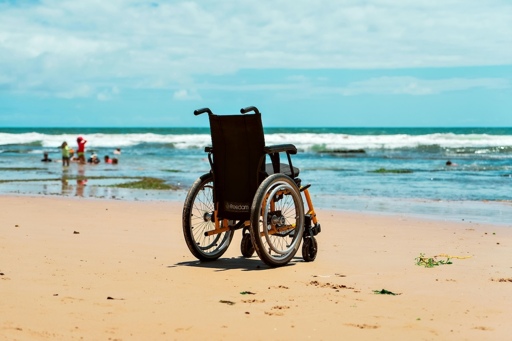
The global push to protect oceans is gaining momentum, from coral reef restoration to ambitious targets under the United Nations Decade of Ocean Science for Sustainable Development. Yet one critical dimension remains largely overlooked: accessibility. If the ocean is to be protected, it must first be experienced. Today, for millions of people, it remains fundamentally out of reach. This is not just a social gap. It is a conservation failure. Ocean conservation depends on connection. People protect what they value, and they value what they can experience. Research shows that direct interaction with natural environments strengthens long-term environmental stewardship. Yet coastal and marine systems across much of the world remain structurally inaccessible to persons with disabilities, older populations, and marginalized communities. Workshop for residents of Lakshadweep, India, on accessible diving and ocean literacy. Image courtesy of Accessible Ocean Tourism. Beaches lack barrier-free access. Transport systems remain exclusionary. Marine experiences such as snorkeling and diving are rarely adapted. The result is a quiet but widespread exclusion from the ecosystems conservation seeks to protect. Globally, governments have committed to ensuring that no one is left behind under the Sustainable Development Goals. Yet in ocean spaces, exclusion persists. Accessibility is still treated as an afterthought, added through isolated initiatives rather than embedded into planning and conservation systems. This has direct consequences. When access to the ocean is limited, ocean literacy declines, while public understanding of marine ecosystems is a key driver of conservation outcomes. Communities that cannot engage with the ocean are less likely to participate in citizen science, conservation dialogue, or local stewardship. Conservation becomes something done for people,…This article was originally published on Mongabay
From Conservation news via This RSS Feed.