

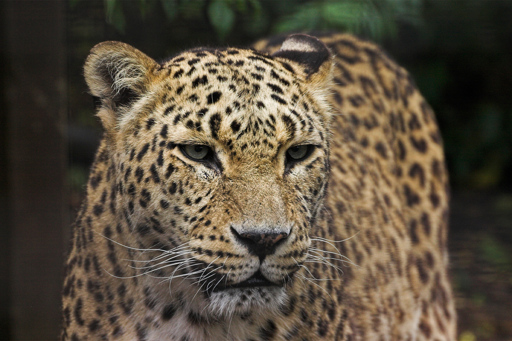
Last September, zoologist and conservationist Bejan Lortkipanidze received a video file from a collaborator, Zurab Gurielidze, the head of Georgia’s Tbilisi Zoo. Gurielidze offered no details, but told his friend to “just watch.” For several moments, Lortkipanidze saw nothing remarkable — just nighttime footage of a high fence topped with razor wire. Then a leopard entered the frame. Lortkipanidze, who heads the Georgian conservation NGO NACRES, was stunned: It was just the third sighting of a Persian leopard (Panthera pardus tulliana) in the south Caucasus nation in 20 years. The footage wasn’t from a wildlife camera trap. It came from a standard CCTV camera that surveilled the perimeter of a new breeding enclosure for endangered Caucasian red deer (Cervus elaphus maral) in Algeti National Park, situated an hour west of Tbilisi. The video quickly circulated around the conservation community. Vazha Kochiashvili, a biologist with WWF Caucasus, saw it: It was sent to him by the man tasked with checking the deer enclosure footage for Georgia’s National Agency of Wildlife, Sergo Tabagari, who called him immediately after he saw the cat while reviewing footage. Kochiashvili said he had a hunch and asked his friend: “Does the leopard have three legs?” It did. The male leopard’s name is Aren and, over the last few years, he’s roamed across at least two international borders. Persian leopards once traversed a vast territory that lies between Russia, the Middle East and the Caspian and Black seas. They’re wide-ranging animals, and Aren’s journey underscores the myriad…This article was originally published on Mongabay
From Conservation news via This RSS Feed.