

Podcast Episode: What Trump’s “Whenever Wars” Reveal About US Empire
0:00
/4778.81465
1×
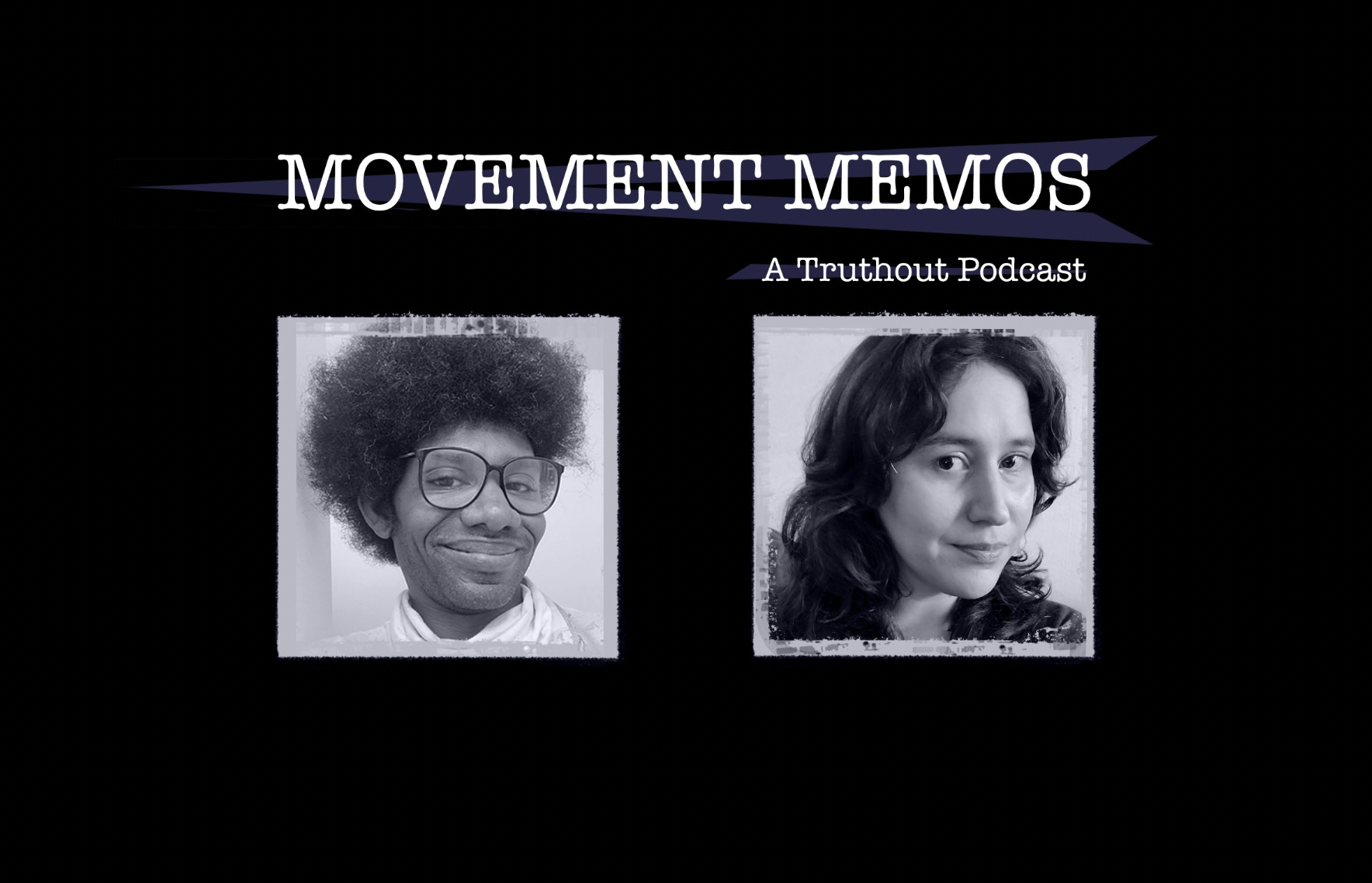
"Trump is banking on the idea that the entire U.S. population is as cynical and hateful as he is. And evidently, it’s not true,” says Khury Petersen-Smith. In this episode of Movement Memos, I talk with Khury about Trump’s “whenever wars,” the spectacle of militarized violence, and the anti-war movement this moment demands. From ICE raids in U.S. cities to military violence abroad, we explore how fascism at home and empire abroad are part of the same political project, and why our resistance must be rooted in solidarity, anti-militarism, and an ever-expanding sense of who belongs to us.
Music: Music: Son Monarcas, Dylan Sitts, and Mizlow
TRANSCRIPT
Note: This transcript was originally published in Truthout. It is reprinted here with permission.
**Kelly Hayes:**Welcome to Movement Memos, aTruthout podcast about organizing, solidarity, and the work of making change. I’m your host, writer and organizer Kelly Hayes. Fascist violence can feel chaotic, and it sometimes is. But even amid the chaos, there is a political project taking shape. If we want to resist effectively, we have to understand what the fascist project is doing, what it is normalizing, and what kind of future it is trying to force into being.
Today, I’m talking with Khury Petersen-Smith about Trump’s “whenever wars,” the spectacle of militarized violence, and the kind of anti-war movement this moment demands of us. We discuss why Trump should not be understood as corrupting an otherwise legitimate system, but as making a more visible and extreme use of systems that were already built on domination, coercion, and war.
Khury Petersen-Smith is the Michael Ratner Middle East Fellow and Co-Director of the New Internationalism Project at the Institute for Policy Studies. He researches U.S. empire and strategizes with activists working against the violence that the U.S. carries out and supports around the world. Khury focuses especially on U.S. militarism in the Middle East and the Pacific, and on the movements resisting it.
If you appreciate this podcast, and you would like to support Movement Memos, you can subscribe to Truthout’s newsletter or make a donation at truthout.org. You can also support the show by subscribing to Movement Memos on Apple or Spotify, or wherever you get your podcasts, or by leaving a positive review on those platforms. Sharing episodes on social media is also a huge help.
Truthout is an independent news organization, publishing stories that the craven corporate press won’t touch. We are a union shop with the best family and sick leave policies in the industry, and we could not do this work without the support of readers and listeners like you. So thank you for believing in us and for all that you do. And with that, I hope you enjoy the show.
[musical interlude]
KH: Khury Petersen-Smith, welcome to Movement Memos.
**Khury Petersen-Smith:**Thank you so much, Kelly. I’m excited to talk with you.
**KH:**How are you doing today?
**KPS:**I’m all right. I think I’m in general these days, including today, feeling a lot of tension, if I’m honest. I’m doing great. We have what we need in my house, and people are pretty well in my immediate circle. And I can’t get over the blessing of having food in the fridge and a roof over our heads. And then immediately outside of that circle, it feels just catastrophic. It’s such a difficult time. And there are people who are a part of my everyday life who are really struggling and people who live far away who are in very difficult situations. And I can’t believe that I share the same planet as folks in Gaza. You know what I mean?
And so, I’m kind of holding that tension all the time of, like, I’m doing all right. I’m having a good day, but really feeling the pretty cataclysmic times that we’re living in.
**KH:**That really resonates. And I really appreciate you naming that tension, which I’m sure a lot of people are feeling right now.
Today, we’re going to talk about some ideas that come up in your recent work, including a piece you co-authored in Truthout called “Trump Has Made the US War Machine a Spectacle — and It’s Spectacularly Unpopular,” and a piece you wrote for Hammer & Hope called “Donald Trump’s Whenever Wars.” But before we get into that, what would you like our listeners to know about who you are and what you do?
**KPS:**Yeah. My work is about working with people to resist the violence that the U.S. carries out and supports around the world, in particular its military violence. I work at a place called the Institute for Policy Studies, which was started in 1963 to be a think tank for social movements. The founders of IPS, Richard Barnet and Marcus Raskin, were living in D.C. They were working for the government, and they left it in disillusionment and disgust. They saw all these think tanks for the Pentagon and for Congress and the White House, and they said, “We need a think tank for social movements.”
At IPS, we do research and strategize with folks, with organizers and movement leaders, and just try to be in the service of, and be collaborators with, movement organizers. We do that on all kinds of questions, whether domestic economic inequality, climate change, and the fight for climate justice. Then my work is working with activists who work to stop wars and stop things like the U.S. support for Israel’s genocide, stop U.S. support for its allies like the United Arab Emirates and what they’re doing in Sudan, and of course, stop the wars that the U.S. is carrying out directly at the moment in Iran, but in places all around the world.
**KH:**Well, I really appreciate you bringing that thought work to the show during this fraught and dangerous moment.
You open your Hammer & Hope piece by writing, “Donald Trump’s eagerness to use military violence, both in deploying armed forces to U.S. cities and in using them overseas, has become a defining feature of his increasingly authoritarian rule.” Can you say more about what that’s looked like?
**KPS:**Yeah. I mean, I think to start with, state violence in the form of police and military violence — that’s just a feature of life in the nation state, because the people who run the society want things that they can only get through coercion. I mean, there’s lots of means to get what they want, things that you talk about on this podcast all the time. I mean, there’s dominant ideologies that serve them. There are forms of oppression like racism and sexism and homophobia and transphobia and all these things that serve to promote ideas that hold us down, divide us, all those things. And they also need armed force, actually, beyond the importance of ideology. Really, in a lot of ways, it’s at the core of what the state is.
So that’s always there, but what it’s looked like…. The thing is, it’s always present. I mean, obviously policing and U.S. military power, the U.S.’s use of its military to attack other people in other places and dominate, that existed well before Donald Trump, obviously. But there are different approaches that different people at the helm of U.S. empire take. And Donald Trump’s approach tends to rely on spectacle in general. I mean, he’s such a media and narrative person at his core, but in particular, spectacular violence.
And so, obviously, I shouldn’t say “obviously,” but it is the case that ICE existed well before Donald Trump, that ICE has been terrorizing our communities and carrying out all kinds of horrendous violence across this country well before Donald Trump. But what Trump has done, whereas previous presidents tried to minimize what U.S. immigration police were doing in cities, at the border, and elsewhere, Donald Trump has tried to make it highly visible as a demonstration of power. And that has been true with military power, domestically and abroad. And frankly, another feature of what it has looked like has been blurring the lines between domestic policing and military action within the U.S.’s borders and beyond the U.S.’s borders. And so we have federal immigration police wearing military uniforms, carrying military weapons, and using military tactics in cities like Chicago, in Minneapolis, in D.C., and many others, while Donald Trump is saying we should use these cities as training grounds for our wars, while the U.S. is also carrying out military interventions around the world. So, all of that is happening while Donald Trump is blurring the lines between each of these.
**KH:**The connection you’re drawing here feels so important. Because I feel like our experience of fascism domestically can sometimes make people less responsive to what’s happening around the world. But we have to be cognizant of the fact that the political visions our enemies are aspiring to cannot be brought to fruition without a whole lot of death-making and human disposal, and that’s a global project. And if our analysis and our organizing don’t account for that reality, we’ve lost the plot. I want to discuss all of that more deeply.
But first, I want to dig into something else you’ve written about. Trump’s violence can look chaotic, and in some ways it is. He swings between threats and deal-making, reverses himself, changes his rationale, and contradicts his own stated positions. He also seems to make life-and-death decisions through a mix of impulse, grievance, ego, and opportunism. But you argue that the chaos doesn’t mean there’s no logic at work. What larger project is this militarism serving?
**KPS:**Yeah, I love this question. There are two things that I want to talk about that I see converging. One is what is happening structurally, in terms of U.S. strategy to maintain a dominant position in the 21st century. And the other is what Donald Trump and his MAGA wing of the U.S. elite are drawing on.
On the first question, U.S. power in the world, I’ll call it U.S. empire or U.S. imperialism, it has some… Well, we should say, it’s done quite well for itself, particularly in the 20th century. It left the 19th century and went into the 20th century as a kind of rising power among other world powers. And it emerged from World War II as the dominant of the superpowers. And they established a system of military power, not only in the form of the U.S. military, but military alliances, like NATO and all kinds of other alliances. They established U.S. economic power. The U.S. basically wrote the rules of global commerce and economics after World War II, and political power. All of this worked really well for the U.S. in the 20th century.
And as we entered the 21st century, the people running the country, having seen the collapse of their rival superpower of the Soviet Union, and having been the world’s only superpower for a decade or so, they asked the question, how can we maintain this dominance in the 21st century? And there were different groupings of people in the U.S. elite, including one grouped around something called the Project for the New American Century, which loomed large in the George W. Bush Administration, and saw the post-9/11 wars as the way to assert U.S. power and maintain US dominance in the 21st century. That did not work out well for the U.S. I mean, it first and foremost was a catastrophe for the people on the receiving end of U.S. violence in Iraq and Afghanistan and Somalia and Yemen and Pakistan.
And unfortunately, I could go on, but it also did not work out well for U.S. power, from their own perspective. I mean, 20 years after the U.S. invaded Afghanistan, the Taliban’s back in power. In Iraq, instead of the U.S. becoming the dominant power, actually, Iran gained a lot of influence in Iraq. So, there were all these ways that they made this gamble by launching these wars and they lost the gamble in a lot of ways. Meanwhile, the people running this country are very freaked out about the rise of China as a regional power and increasingly as a world power, certainly economically, but also politically on the world stage.
So, these are the problems just from the perspective of the Washington political class and military elite, these are the problems they face, and they have been not united about which strategy will take U.S. power forward in the 21st century. And I actually think that the rise of Donald Trump and his emergence as a leader of the MAGA wing of the political class is an expression of this… It’s an expression of this figuring out that the U.S. elite is doing about how to maintain their power. So, that’s one thing. Just on a basic level, Donald Trump’s foreign policy represents a strategy, or I don’t know if I’d call it a strategy, Donald Trump’s foreign policy represents a certain approach to try to project and maintain U.S. dominance in the 21st century.
The other thing is just as they think about the different tactics they’re using and the different actions that constitute Donald Trump’s approach to US power on the world, they are drawing on a deep well of U.S. imperial history and violence and ideology. And I think that this has been very confusing for a lot of people in this country. People may remember, people listening may remember, this kind of debate that really heated up last year when Donald Trump took office for his second term. That was, is Donald Trump an interventionist or an isolationist? There had been this conventional wisdom that Donald Trump was an isolationist, and that being an isolationist meant that he was not interested in starting wars abroad, and not really interested in engaging with the world militarily or otherwise. And that that was what “America First” meant. And then it was very surprising to many when we saw tons of U.S. military interventions, but also tons of threatening, bullying behavior on the world stage. That Donald Trump wants to take Greenland, that he wants Panama, etc, etc.
And so, I think that one reason why that has been confusing is that the way in the United States that we tend to talk about foreign policy and U.S. military history on the world stage tends to only go back to World War II. We talk about World War II a lot, and not too much about what the U.S. was doing in the world before World War II. But if you extend that scope back, even just to the end of the 19th century, you extend it back 40 or 50 more years, then the U.S., it’s carrying out all kinds of military and colonial violence before it becomes a superpower, actually.
So, if we’re talking about the conquest of this continent and actually the forging of what became the United States, I mean, the United States itself emerged as a conquering project and as a colonial project, and that kind of ongoing war against the Indigenous peoples of this country. Donald Trump, I think, is drawing on the most violent, most confrontational, most genocidal (in a word) approach that people leading this project called the U.S. have taken in that particular project of conquering this place that came to be called the United States.
But then if we’re talking about the U.S. going abroad, think about the U.S. in the early 20th century, it’s carrying out all kinds of military interventions. It is invading and occupying Haiti and the Dominican Republic. It is invading Cuba. It is waging a horrific war of counterinsurgency in the Philippines. It is taking Guam. It is sending its Navy all around the world to flex its strength through a show of violence. And that history in particular, I think that that kind of early 20th century moment offers a very dark and violent palate that Donald Trump is drawing from, actually.
So when he talks about taking Panama, that’s not an original idea. He’s referring to a history in which the U.S. formally treated Panama as a colony with the Panama Canal and the canal zone the U.S. claimed as U.S. territory, which is incredible. Donald Trump is drawing on things like that. So, all of that is at play in the Trump approach to U.S. power on the world stage.
**KH:**Your work reminds readers that Trump’s white supremacy at home and his imperial violence abroad are part of the same political project. How do racism, Christian nationalism, Islamophobia, and Western chauvinism shape that project, from attacks on immigrants and protestors here, to U.S. violence abroad?
KPS: Yeah. I mean, truthfully, Donald Trump is, in a way, doing us quite a service by being so blunt and so crass in his descriptions of what he believes this country should look like and what this world should look like. When he talks about America first, the “America” that he is talking about, he’s straightforward about it being a white supremacist United States. I won’t repeat the way that he describes countries that Black people and other people of color immigrate from, but he very openly contrasts in a way that denigrates those countries with Nordic countries. And he’s saying, “We want white people.” I won’t repeat the way he described Ilhan Omar and the Somali community, but those comments are articulating a worldview that has a very strict racial hierarchy. That Africans belong in Africa, that Africans and their descendants, people like me, do not belong in this country. And if we’re going to be here, it is in a place of subservience.
The Ilhan Omar example, it’s such a profound illustration because in the way Trump talks about her and the way he glitches out when he even encounters her. The way he was during the State of the Union address, he lost focus because he was so distracted by his rage at Ilhan Omar and Rashida Tlaib. Well, there we see his combination of white supremacy and misogyny and Islamophobia. He is saying that these people do not belong in this country, they certainly don’t belong in this Congress. And so, the way that we see that play out operationally is, yeah, a deportation machine that is targeting communities of color in particular, that is drawing on all of the Islamophobic tropes and racist tropes that cast people in those communities as dangers to the United States. And then simultaneously, bombing the countries of origin for these communities with the same rhetoric that these countries, these communities are essentially dangerous.
The way that he talks about Iran or the way he talks about Somalia, the way he talks about Mexicans. I mean, so many communities, is that there is something essentially dangerous and something that can’t be trusted about these countries and people from them. And so, in terms of using policing and deportation and surveillance to repress and try to remove people from these communities from within the borders of the United States, and also use the Pentagon’s violence to attack these countries around the world, he’s using the same rhetoric.
KH: Thank you for breaking that down. And hearing you speak, I’m thinking about the ways Trump and his lackeys gamble, quite recklessly, with the extremity of their rhetoric. Trump leans on the assumption that his base is radicalized enough to cheer on blunt cruelty, and that everyone else is either too desensitized, too overwhelmed, or too tuned out to do anything about it. So he keeps escalating the death-making, the white supremacist imagery, and the politics of grievance, as though spectacle itself can carry the violence forward.
And every once in a while, when it’s clear he’s gone too far, and it seems like an alliance or support structure he needs might break, he just takes down a meme, or walks something back, and moves on. Like when he posted an image depicting himself as Jesus, and then said, oh, never mind, I thought that was me as a doctor.
Those moments are sometimes just blips in the news cycle, and sometimes, they have lasting impacts. We saw that with the murder of Alex Pretti, who the administration tried to depict as a would-be assassin. But that characterization didn’t stick, and we saw the fall of [Border Patrol head Greg] Bovino. We’ve also seen it with Iran, where Trump didn’t really do any of the usual legwork to manufacture consent for a war, and thought he could just conjure up enough contempt and nationalism to make it work on the fly. He’s gotten so far with the politics of grievance, self-adulation, and showmanship that he doesn’t see any boundary lines. And I think that’s something we need to pay attention to. When and how do these tactics fall short? When do they backfire? This is a man who believes he can drag us headlong into any narrative that suits him. So where do those efforts fray, and what does that open up for us?
**KPS:**Yeah. I just think that your point about Trump actually assuming that people are with him on everything, and then crashing against the limits of what people will accept. I think that that is actually deeply inspiring and hopeful, because Trump is banking on the idea that the entire U.S. population is as cynical and hateful as he is. And evidently, it’s not true. This is a time of so many things of such violence of different kinds, but it is also this time of revelation. And I’m just thinking about what all has been revealed to people in this country, even in the past six years.
I mean, I think about the murder of George Floyd, which the movement for Black lives was raging and impactful before 2020. But that moment when there was a video of police murdering a Black man in broad daylight in Minneapolis with utter contempt for his humanity, it’s like his humanity didn’t even register to them. And so many people in this country, I think in particular so many people who are not Black, saw that and the response was, “Oh my goodness, this is what it looks like?” Many people who thought, “I knew that racism was a problem. I maybe heard things about the police, but I didn’t know it looked like this.” And it provoked this explosion of protest. And I think that this past year, the first year of Trump’s second term has also been such a time of revelation. Actually, before we talk about Donald Trump coming back, I think we actually have to talk about the Gaza genocide too, which I think has profoundly impacted the U.S. population.
I think that that is actually related to the revelation that many people in this country had about anti-Black racism in light of the movement for Black lives and the murder of George Floyd and Breonna Taylor. People were changed by those murders and the uprisings that they provoked. And with those changed eyes, were able to see Palestinians in Gaza in a different way. And we have to acknowledge and appreciate, even though it’s kind of excruciating, that one of the things that Palestinians in Gaza did so effectively and movingly is actually document the very genocide that was being carried out against them. They took to their phones and they showed us what it was like and were able to get this direct line to people in this country on our phones. And I think, again, it was this revelation. It was like, “Oh, this is what the U.S. is supporting? I thought that the U.S. was doing something for democracy or Israel was acting in self-defense, and that is not what this looks like.”
So, people in this country have learned a lot, I think, in these past six years. And again, seeing the deployments of ICE, seeing the way that Bovino would walk through the streets, it was a revelation to so many Americans who, because this country’s so segregated, weren’t aware of what immigrant communities have been dealing with, including people who accepted Trump’s arguments that oh, we’re just targeting the so-called criminals, the “bad guys.” And then we see, we see how ICE behaves and the response was incredible mobilization. And mobilization of so many kinds, not only in the streets confronting the police as powerful and important as that was, but figuring out how to feed neighbors who were afraid to go to the grocery store. Figuring out how to pay folks’ rent. Figuring out how to stand with the families who sent their kids to the same school as yours.
So all of this, I think, has been so not only inspiring, but I think it points to something actually deeply hopeful. Donald Trump has a kind of… Again, I don’t know if it’s a strategy, but an approach that is, if I commit acts of horrendous racialized violence and actually broadcast those acts, that people will be with me. And actually we’ve seen the opposite.
**KH:**I think there’s something so true about what you’re saying, and it feels like a “yes, and” situation to me. Because yes, it’s inspiring, and it’s a huge reminder of our potential, when the response Trump is counting on doesn’t materialize, when people don’t cheer the violence, or look away, but instead rally, voice outrage, and take action.
And there’s also the slow, cumulative damage of the moments when the spectacle does work, or when people don’t react, because they’re becoming so accustomed to the constant barrage of terrible rhetoric and terrible action. People can feel like they can’t respond to all of it, or they don’t know how to respond to every iteration of it. I’m thinking about the normalization of ICE agents in airports, for example, and the normalization of this fascist militarism tightening its grip on our daily lives.
And I think there’s a real danger there, because outside of the moments when action feels obvious, people don’t always know what to do with themselves. Here in Chicago, during [Operation] Midway Blitz, when our communities were under siege, there was an incredible outpouring of people getting involved, getting into the streets, getting trained, and resisting violence. And some people have continued doing amazing work. But some folks have also floundered a bit, trying to figure out: What do I do now? What do I do when the violence is not as pronounced, when it’s not happening in real time, right in front of me? And people are tired from the wear and tear of those months.
That gets to something I really wanted to ask you about, which is how Trump’s terror at home wears people down. People are trying to protect their communities, protect their neighbors, survive raids and repression, respond to attacks on the people around them, and keep up with one crisis after another. That fear and exhaustion can shrink a person’s sense of what they can respond to, even as U.S. violence is escalating internationally. So how do we help people understand that these struggles are connected without minimizing the danger they’re facing here?
**KPS:**Yeah. Man, I so appreciate every single thing you said, because it’s true. There are reasons to be inspired right now by, in particular, the kind of outpourings that we have seen of people refusing to accept ICE in their communities. It’s also quite remarkable that a majority of people actually oppose this war in Iran, which is profound in a way that I, for one, am still grappling with every day. And I think those of us in that majority that wants this war to end really have to grapple with what it means that we are the majority. And at the same time, yeah, it’s really something to see the normalization of this kind of violence in all kinds of ways.
So one answer, I don’t have the answer to your question, but one answer to your question is, and I think that this is happening, people can and are expanding even their scope of not only what constitutes injustice for us to oppose, but also who our community is to stand up with. And so again, I’m thinking about that 2020 moment, the murders of George Floyd and Breonna Taylor, and how so many people, again, in particular, so many folks who are not Black, experienced that time and really internalized like, “Oh, okay, this is what anti-Black racism looks like. And I fit into this somewhere and I need to not only… I’m going to show up at the protest when it happens, but I also need to interrogate what my relationship is to this kind of violence.” And I think about, I don’t know, there’s a kind of widening of that circle over time.
And so again, folks for whom ICE may not have been on their radar, now understand something new and different, not only about what Trump is doing right now at ICE, but something about this country. It’s raising huge questions for folks. And again, folks are… I love the frame of, “I’m standing with my neighbor, I’m defending my neighbor, these are folks in our community.” And a big part of what I hope we do and I’m pushing for us to do is expand that notion of, who is your community? You know what I mean? I live in Boston and I don’t have to live in Minneapolis to be moved by what is happening in Minneapolis, and be compelled by what is happening in Minneapolis, and be invested in an end to the violence that this government carried out in Minneapolis. And that is also true for Palestine, that’s also true for Iran. You know what I mean? Those folks in those places are also part of our community, like folks in Sudan are also my neighbors.
And so, it doesn’t mean that one has to dedicate their entire lives to ending every single injustice. I think that it makes sense that there are those of us who focus on certain things. I feel very invested in reproductive justice, but that’s not my day-to-day work. I am in solidarity with folks for whom it is their day-to-day work. I want to figure out how to show up when I can, right? And I think that we can take that approach to all of these different injustices and struggles for justice. And then I think that the role of organizers, for those of us who are organizers, is to figure out how to make that invitation. You know what I mean? How do we give the greatest possible invitation for folks to show up for justice for Palestine? To end the war in Iran? To end U.S. complicity and the complicity of U.S. allies in the violence in Sudan? That is on us as organizers to figure that out.
**KH:**As you’re talking, I’m thinking about what you were saying about the movement for Black lives, and how that movement helped create a political context in which the murder of George Floyd was activating for so many people. People were able to understand that moment as part of a larger system of violence, and for many people, that created openings for political action and political change. And as you’re saying, that also broadened some people’s sense of solidarity, and their ability to see themselves in the people of Palestine.
And I think, at our best, our political activation, our outrage, and our sense of what’s just and unjust broaden our sense of who our people are and who we are willing to defend. But there’s also that contraction I was talking about, where, when it feels like everything is going wrong at once, and everyone is under attack, our worldview can shrink to the size of our neighborhood, or to the size of the most immediate emergency. And we may lose sight of ourselves as part of a larger global struggle.
So I think it’s really important for us to say: yes, defend your neighbors. Yes, protect each other. Yes, respond to the violence that is unfolding in front of you. And also, understand that work in opposition to the larger right-wing project. Because the right wing cannot realize its vision without mass death and human disposal: the mass death and disposal of Black and brown people, of people from countries and cultures they cast as inferior, of disabled people, of migrants, of poor people, of people they have marked as disposable. And we need to understand the rollback of vaccines and public health protections as part of that project.
Early COVID-era deaths reduced Social Security liabilities by $156 billion. That’s a bunch of older people who were not rich, and a bunch of disabled people, dying in ways that saved the state money. And those are people the fascist right views as “useless eaters,” just draining away resources. They recognize the ability to shift and redistribute resources, as we might say, but on their terms. Their version of redistribution is abandonment, extraction, and death.
So when we talk about the right-wing project, we have to be clear that, as Mariame Kaba and others have emphasized, this is an eliminationist project. And when we rally against it, we can’t be purely reactive. We can’t only organize against the direct, organized violence that’s unfolding in real time, when ICE agents attack our neighbors. We have to organize in defense of our lives, and our ability to exist, and not be abandoned, ground under, or left behind under any circumstances.
And when we say, as you said, “I am defending my neighbors,” we have to keep expanding our sense of who belongs to us. We saw that in Chicago. We saw that in Minneapolis. I heard that again and again from folks on the ground in Minneapolis, that people felt they belonged to each other in a way they hadn’t before, and that this made them stronger. And here in Chicago, there was this deep sense of connection people suddenly felt to folks they mostly hadn’t met before, and to protecting and patrolling our schools, whether or not they had children in those schools. And when Bovino and his roving gangs moved to Minneapolis, we felt a kinship with the people there, too.
Those are the kinds of social bonds we need to defend against the larger project that’s unfolding. Because fascism is a cultural project. It’s not just tactical or practical. It is a cultural project of dehumanization and disposal. So we need a cultural project of our own, rooted in a proliferating sense of empathy and solidarity. One that insists that we are all worth caring for and fighting for. And that has to happen at the cultural level, in the same way our dehumanization is happening at the cultural level. And it has to be backed up by tactical preparedness and a willingness to make practical interventions.
**KPS:**Yeah. I mean, I completely agree. Not only… well, yeah, it’s everything that you said. It’s a kind of belief and understanding of who we belong to and who belongs to us. And then I think that when we get together, I mean, it’s the most basic, simple, and fundamental truth of organizing and solidarity, but it’s like we really are stronger and more powerful together. Right? Because yeah, when we’re looking at the myriad, just unreal injustices, the ICE raids, the war in Iran, the ongoing U.S. support for Israeli genocide in Palestine and Israeli war in Lebanon, the incredible level of inequality in our cities and in this country, yeah, no one of us can respond to all of that. It’s just not possible.
But I think that when people in Chicago and in Minneapolis and in DC and LA were… I think what got folks out into the streets was, “I’m not going to let this happen to my neighbors and just sit by. I’m not going to let this happen without a fight.” But once folks left their houses and were in the streets, they discovered something else, which is just how powerful that collective is. And that’s really profound. So, I think that that’s pretty central to the answer of, how do we deal with this all?
I think that what you said about developing and committing to frameworks that sees none of us as disposable and all of us as belonging, is just absolutely critical. And it is about practically breaking that isolation because the sort of tactics and strategy that the ruling elite, but the right wing in particular use, are very much ones of isolating us, making us feel isolated and alone. And that feels, they have a lot of tools to do that, more tools than ever maybe, with these devices that we all have and social media that our lives are all plugged into. And so, breaking out of that isolation is so important. And then it is creating that culture that you’re talking about as well. On one hand, I’m horrified by all of the ways that they are normalizing these violences, but I’m also so inspired and moved by the ways that we are normalizing solidarity.
I just went to this really good music festival in Providence, Rhode Island, shout out Providence Popfest, it’s really good indie pop music. And you go to the merch table to buy records and tapes and shirts and tote bags, and there’s Palestine posters and Palestine totes too. And the proceeds go to folks in Palestine, and it’s just like, that was just part of the merch table. This wasn’t billed as a particularly political music festival, and yet there it was. You know? So, there are ways that we can… I mean, I think that there’s any number of ways that we need to kind of immediately respond to immediate attacks, whether that’s like an ICE raid or a U.S. invasion. And there are ways to build in resistance and solidarity into the kind of culture that we are working to create.
[musical interlude]
KH: Some of the most disturbing framing I’ve seen around Trump’s actions depicts him as corrupting an otherwise legitimate system, rather than Trump making a more visible and extreme use of a system that was already engaged in horrendous acts of violence. Can you talk about what we lose when we fail to challenge that approach?
**KPS:**Yeah, this is such an important question. I mean, I think that we really have to see the rise of Trump itself as an indictment of the whole system. If this is a legitimate system, a democratic system, a thoughtful system, what kind of system allows somebody like Donald Trump to be the president and to wield the kind of power that he has? Answering that question is not just about looking at Donald Trump, it is about looking at everything that has been done to build up this system in the U.S., not only at its origins, but really recently.
I mean, the way, for example, that he is waging war, the way that he is approving weapons to the Israeli military, to understand that, we have to appreciate the fact that the whole… I mean, again, there’s deep roots here, but let’s just look at the past 20 years. The war on terror, the post-9/11 wars has been a context for strengthening executive rule in this country and dismantling what democratic protections were put in place. It should be said, those were put in place not as part of some wisdom of our Founding Fathers or whatever, but movements fought for measures actually to put restraints on U.S. imperial power after the experience or through the experience of other horrendous abuses by the U.S. During the war in Vietnam, for example, right? That’s where we got actually a bunch of the rules that were then dismantled in the post-9/11 period.
So, there’s a kind of ongoing project, an ongoing U.S. project to legitimize military violence. And again, that I would argue it’s in the DNA actually of this thing called the United States. And Donald Trump is taking its most crude and violent aspects and turning them up to the maximum. But I think that we cannot accept a kind of opposition on the basis that Trump is somehow doing it wrong, but the system is legitimate. I’ll just say that the way that the kind of criticisms that I’ve heard in the mainstream media and from elected officials about this war in Iran tends to fall in that vein. It’s the problem with this war is that there’s not a good plan for it, but it accepts the idea that Iran is this threat that has to be dealt with and has to be dealt with through U.S. violence, whether that’s the violence of sanctions or the violence of military force. And that’s actually a real problem. We have to interrogate and really dismantle that whole way of thinking and those systems of violence.
**KH:**I really appreciate what you’re saying, because I think we are at great risk right now of imagining that, if we can get out from under this right-wing movement moment, the answer is simply to empower a more liberal, or a more polite, version of the neoliberal project that brought us here. It’s easy to gloss over the worst of what we were seeing prior to Trump 2.0, but we cannot treat these things as alternatives in a way that makes the harms of the Democratic Party seem acceptable by comparison. Because, as you’re saying, all of these things build upon each other.
The repression of Stop Cop City empowered Trump 2.0. Democratic complicity with the genocide in Gaza empowered Trump 2.0. The worship of law enforcement, and the treatment of policing as the only answer to problems created by organized abandonment and the deprivation of life-giving services, empowered Trump 2.0. This whole thing delivered us to this moment. So we cannot just keep repaving the same path and pretend it won’t lead us back to authoritarian solutions. That trajectory existed under neoliberalism, just as it exists on the more openly fascistic road we’re on now. These are enmeshed political journeys. We cannot separate everything that was not specifically MAGA politics from this moment and say, “We just need to get back to that.”
And I do see that kind of idealization happening. I saw some people recently saying that, when Democrats retake power, they don’t want to hear progressives making unreasonable demands, because Democratic leaders are not going to be handed a functioning government, and they’ll need years to rebuild before they can think about big progressive projects.
And first of all, first of fucking all, why would the masses pivot toward you as an alternative if your political project is not actually grounded in making their lives better? That has to be foundational from jump. We only get out of this, we only win, by actually getting behind a politics that improves the lives of everyday people, that makes our lives more survivable, that makes things better for people. If that’s not there, then you do not have a political project that can get us beyond this moment.
And the idea that we should make concessions to people who want us to accept that kind of abandonment is outrageous to me. Because we can never treat this government as innocent. It always builds upon the misdeeds of those who came before. It would be fucking fanciful to imagine that Democrats taking office after Trump would not take advantage of the powers and norms he leaves behind — more surveillance, more crackdowns on activists, more violations of civil liberties, more normalized militarism, more accommodation to the violence and white supremacy that are always coursing through government in this country, regardless of which party is in power.
So we need a politics that exists in active opposition to all of those things, not just this iteration of those things. We are fighting fascism, and there will definitely be moments when we have to act alongside people whose only real point of alignment with us is, “not this.” But “not this” can’t be our whole agenda. Because “not this” is far too easily satisfied. It could leave us settling back into a condition where the ruling class is still systematically maintaining conditions that are making large swaths of the world uninhabitable, consolidating human beings into shrinking spaces of survival, boxing others out, and then, within those spaces where some of us are allowed to survive for a time, winnowing away our rights, our recourse, and our access to the means of survival.
All of those mechanics will still be at work. So the only way we can be politically prepared for every stage of what’s ahead is by fighting for a politics of an expanding sense of “we,” fighting against organized abandonment, and demanding policies and ways of living that do not leave people behind.
[musical transition]
KH: I feel like all of this brings us to the question of whether we are looking at a new kind of U.S. war. What makes the current U.S.-Israeli war on Iran and Lebanon distinct from earlier chapters of the war on terror, including Iraq, Afghanistan, and the drone wars? And if this is a new kind of war, what kind of anti-war movement does it call for? What do we need to understand, connect, and do differently?
KPS: Well, this question is precisely what I’ve been grappling with, because I do think that… I think of this as the U.S.’s first major 21st-century war. Obviously, the U.S. had wars in the 21st century. I mean, the wars that you named, the invasion of Afghanistan, the invasion of Iraq, the many post-9/11 military operations, those happened in the 21st century. But I think particularly those two large scale invasions of Iraq and Afghanistan actually had a lot in common with the U.S.’s approach to war in the ’90s, which was framed in terms of humanitarian interventions, there was some noble goal. Including the U.S., the 1991 invasion of Iraq, the formal justification for that was an intervention on behalf of Kuwait, which Iraq had invaded. And so, this was supposed to be, or this was framed as the United States standing up for a defenseless country.
That is not the framing that they are using now at all. I mean, you think about the post-9/11 invasion of Afghanistan, for example, where not only George W. Bush, but people like Hillary Clinton and Madeleine Albright talked about an invasion that was on behalf of Afghan women to save them from Afghan men. There’s this kind of white savior, very Islamophobic notion that was very messed up and violent, but the framing was a noble purpose. They have shed that entirely with this attack, this U.S.-Israeli attack on Iran. The way [Defense Secretary] Pete Hegseth talks about this, we’re kicking them while they’re down. I mean, I won’t repeat his incredibly violent language, but there’s no real sense that this is on behalf of a sort of noble or humanitarian goal. Trump will mention, “People of Iran, you should rise up.” But that’s a throwaway line, it’s not really the framing of this war.
Then the warfare is also different. The kind of paradigm of the ’90s and post-9/11 wars was smart bombs, this kind of rhetoric and technology was debuted at full scale during the ’91 invasion of Iraq. We have smart bombs with which we do precision strikes or surgical strikes, this notion that the United States is surgically identifying the “bad guys” and sparing innocent civilians. And that if innocent civilians get hurt, then that is collateral damage. That entire framework is from a different time. They don’t care. It’s not that they just don’t care, because I don’t think that previous people running the Pentagon or the White House cared. But they don’t pretend to care, they don’t even go through the motions of having a concern for the life of ordinary Iranians, let alone folks in Lebanon or Palestine or elsewhere in this region who are increasingly being tied up in this war. So, it’s quite different. The kind of legality and the role that the legal approach played in previous wars versus now is profoundly different.
When the U.S. invaded Iraq in 2003, the George W. Bush Administration was compelled to make the case to the United Nations that a U.S. invasion was justified, according to international law. The United Nations did not approve of the war and the U.S. invaded anyway, which I think that decision itself was actually a turning point that led us down the road that we’re now on, but it’s not just they weren’t compelled to go to the UN. It’s that the UN has been a non-factor in the calculations, not only of the Trump administration, but also of the Democrats and the critics of this war too. They didn’t even feel compelled to go to Congress the way they did when they invaded Iraq. There was no presidential address to the nation. They didn’t feel compelled to make a huge push to manufacture consent among the U.S. population. Trump has largely just spoken to his base through his personal social media accounts. So in many ways, this is quite different, and it means that our approach has to be really different.
Like when in February 2003, on the eve of the U.S. invasion of Iraq, there was a massive mobilization that happened in cities in this country and all around the world under the banner of “The world says no to war.” And part of that mobilization was an appeal to and a reference to in alignment with the UN and international law. That the hope would be obstacles, would act as obstacles to that U.S. invasion. But when it’s so clear that they were not obstacles at all, that requires a different approach on the part of our movement organizing. So, I think that we’re still figuring out what a 21st century anti-war movement looks like, but there are two things that feel straightforward to me that have to be focuses of ours.
One is the funding, and not only funding of this war in particular, but of the whole Pentagon budget. I’ve spoken throughout our conversation about this being a time of revelation. The U.S. war budget passes every year and military budget, it passes every year without much of a public conversation, really. And now I think it has been revealed to Americans what that money actually goes to. This is what it goes to, it goes to bombing schools in Minab, in Iran. It goes to developing weapons that are used against Palestinians in an Israeli genocide. It goes to developing weapons that are used against folks