

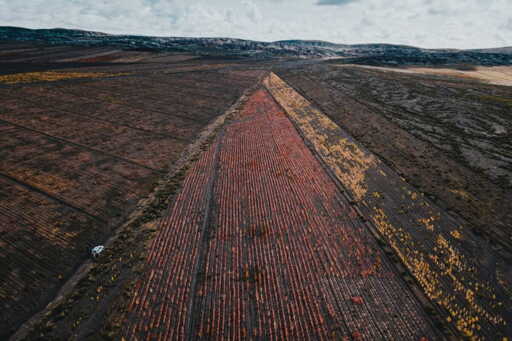
AROMA MARKA, Bolivia — The rolling hills around the town of Aroma Marka are a cacophony of colors: golden-yellow, deep-red and purplish-black quinoa pods smatter the otherwise barren landscape here in Bolivia’s southern Altiplano, the Andean Plateau. At 3,800 meters (about 12,500 feet) above sea level, the Altiplano stretches across much of western Bolivia and into Peru, Chile and Argentina. Quinoa (Chenopodium quinoa) has been grown on the Altiplano since pre-Hispanic times, but it was only recently that the nutrient-dense pseudocereal was put on the global map, fueling a production boom in the Andes. Prices later tumbled as countries outside the region also began cultivating it. Yet the striking scenery belies the lasting scars the 2010-2014 quinoa boom left in the region. At its height, sky-high prices triggered a production frenzy, drawing former residents back from cities to plant the “golden grain.” But Walter Canaviri, a quinoa producer and local leader, remembers that the sudden spike came at a cost. “Everyone wanted to produce more,” he told Mongabay. In the rush to capitalize on the moment, some growers encroached on neighbors’ lands, leading to disputes. “It was a sad time for this area because everyone turned against everyone,” he said. While the quinoa boom brought a temporary boon for rural Andean Indigenous communities, it also came with the destruction of local ecosystems, soil degradation, and social conflict – all of which have been exacerbated by changes in regional weather patterns and global climate change. Though Bolivian producers like Canaviri are…This article was originally published on Mongabay
From Conservation news via This RSS Feed.