

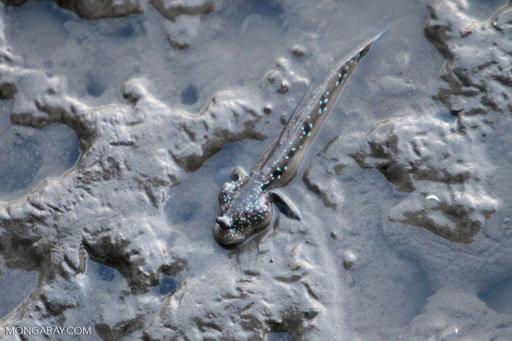
Mudskippers are amphibious fish that can live both in water and on land. Usually found in muddy landscapes, the big-eyed creatures dig tunnels through the mud with their mouths, wrapping themselves in air pockets to maintain healthy levels of oxygen. A group of Egyptian boarding school students from Giza in the Greater Cairo region found inspiration in this animal — which is found far away from urban Giza in the mangrove areas and mudflats off Egypt’s Red Sea coast— and designed a small robot that could help tackle one of the most pressing challenges Egyptian farmers currently face. Combining robotics with environmental science, the students developed the “TerraSkipper” robot. Its design is inspired by the real mudskipper, with a body and feet that “skip” through wet, salty and degraded farmland, collecting data on soil conditions like salinity and pH levels. The team was among five from Africa shortlisted for this year’s Earth Prize, which recognizes the efforts of 13- to19-year-olds offering innovative solutions to pressing environmental challenges. The “TerraSkipper” team. Image courtesy of The Earth Foundation. “We have seen that farmers are struggling with the increasing soil salinity and the variety in the pH [levels] in the soil,” one of the students, 16-year-old Mustafa Mohammed, told Mongabay by phone. The Nile Delta, where the River Nile meets the Mediterranean Sea, is densely populated and home to 40% of Egypt’s population. It has been flagged by the United Nations as one of the world’s hotspots for climate change-related sea level rise.…This article was originally published on Mongabay
From Conservation news via This RSS Feed.