

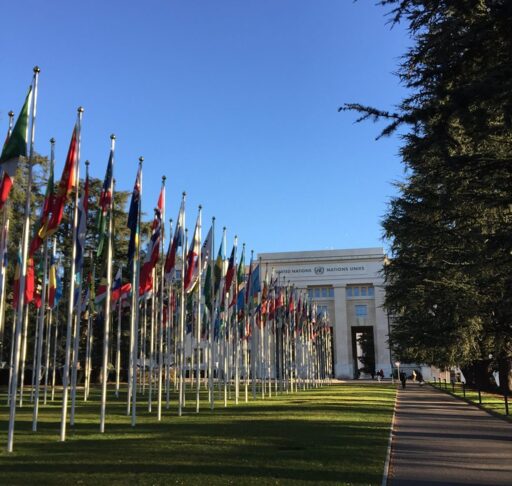
The filing argued that the Philippines continues to violate its obligations under CEDAW by failing to provide equal rights for women in same-sex relationships in matters involving family relations and property.
MANILA — A Filipina filed a complaint before the United Nations Committee, accusing the Philippine government of discrimination, privacy violations, and reinforcing the exclusion of same-sex unions from legal recognition.
The complaint, filed on May 8, 2026 under the Optional Protocol of the Convention on the Elimination of All Forms of Discrimination Against Women (CEDAW), stemmed from a Supreme Court Second Division ruling involving a property dispute between the complainant and her former partner.
The case centered not only on a property dispute, but also on the publication of the complainant’s sexual orientation, complete name, and home address despite her objections.
The complainant argued that the disclosure violated her right to privacy and exposed women in same-sex relationships to further discrimination.
Contested SC ruling
According to the communication, the complainant’s former partner filed a lawsuit in 2015 seeking the partition of the complainant’s home.
Both the trial court and the Court of Appeals ruled in favor of the complainant, finding that the former partner failed to prove actual contribution to the acquisition and maintenance of the property.
The lower courts also found that the former partner’s primary document presented as evidence was falsified.
However, the Supreme Court’s Second Division later reversed the earlier rulings and applied Article 148 of the Family Code, which governs property relations in unions where parties are legally barred from marrying each other.
The complainant argued that the court wrongly applied the provision to a same-sex relationship and ignored the findings of the lower courts regarding the absence of proof of contribution.
Privacy under scrutiny
The communication also challenged the Supreme Court’s decision to publicly disclose the complainant’s personal information.
In the complaint, the Filipina argued that revealing her sexual orientation and home address without consent created a chilling effect on members of the LGBTQIA+ community seeking legal remedies.
“A litigant who discloses sensitive personal information, including her sexual orientation, in pleadings to either seek judicial relief or defend herself in a suit does not thereby consent to the public dissemination of that information by the court itself,” the communication read.
The complaint added that such disclosure discourages women and LGBTQIA+ individuals from accessing courts and asserting their rights.
Challenging a heteronormative framework
The communication also questioned the broader legal framework governing same-sex unions in the Philippines.
It argued that applying Article 148 of the Family Code to same-sex couples further entrenched discrimination because the provision historically applied to heterosexual unions involving parties legally barred from marriage, such as bigamous or adulterous relationships.
The complainant said the decision effectively placed same-sex unions within the same legal category as illicit heterosexual relationships instead of recognizing them as legitimate unions deserving equal protection.
The filing argued that the Philippines continues to violate its obligations under CEDAW by failing to provide equal rights for women in same-sex relationships in matters involving family relations and property.
“What resulted from the piecemeal tinkering with the policy architecture of the Family Code to accommodate [the former partner’s] individual cause is a firmer disavowal of same-sex unions,” the communication stated.
The complainant also argued that the ruling constrained women’s autonomy in determining how they manage property and define relationships.
“For every woman in a same-sex relationship in the Philippines, the decision is not a shield, but a novel risk,” the communication read.
Calls for recognition and protection
Aside from seeking compensation for legal costs and psychological harm, the complainant asked the CEDAW Committee to direct the Philippine government to anonymize the Supreme Court decision and remove identifying information from the court’s website while proceedings remain pending.
The communication also called for legislation formally recognizing same-sex unions and establishing protections equivalent to those available under the Family Code for heterosexual couples.
It further urged the adoption of explicit procedural rules protecting the privacy of sexual orientation in Philippine court proceedings.
The Philippines ratified CEDAW on August 5, 1981 and acceded to its Optional Protocol on February 12, 2003, allowing individuals to bring complaints before the CEDAW Committee after exhausting domestic remedies.
As the communication moved before the UN women’s rights body, the case raised broader questions about privacy, equal protection, and the continuing absence of legal recognition for same-sex unions in the Philippines. (RVO)
The post Filipina challenges SC ruling on same-sex unions before UN body appeared first on Bulatlat.
From Bulatlat via This RSS Feed.