

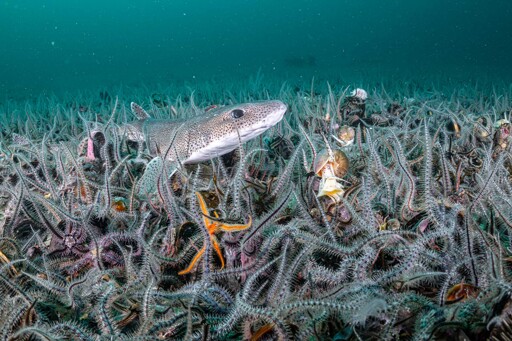
Nearly a decade since Scotland established the South Arran Marine Protected Area and banned bottom trawling across much of it, life on the seafloor has thrived, a new study has found. Scientists surveying the area found three times more seabed organisms and twice as many species compared to nearby unprotected waters. “What looks like a boring desert of mud, it’s actually really, really dynamic,” lead author Ben Harris, a marine ecologist at the University of Exeter in the U.K., told Mongabay by phone. “We saw not necessarily the most glamorous things … but once you get a bit nerdy about it and look a bit deeper, you realize that they’re playing a really important role.” Researchers found more than 150 species in a small sample of the seafloor, including spoon worms (subclass Echiura), bobbit worms (Eunice aphroditois) and shell-building organisms like tower snails (genus Turritella), which Harris called “important gardeners of the seabed … all performing different roles.” “There’s like eight Mount Everest’s worth of sediments being turned over every minute of every day on the global continental shelf by these small animals,” he added. This movement is important for carbon storage, and in the South Arran MPA, these animals are starting to rebuild a long-lost ecosystem that once thrived at the bottom of the sea. Europe’s seabeds are the most trawled in the world. Heavy fishing gear has been dragged along the seafloor there since at least the mid-14th century, destroying those ecosystems. Approximately ”86% of the assessed seabed in…This article was originally published on Mongabay
From Conservation news via This RSS Feed.