

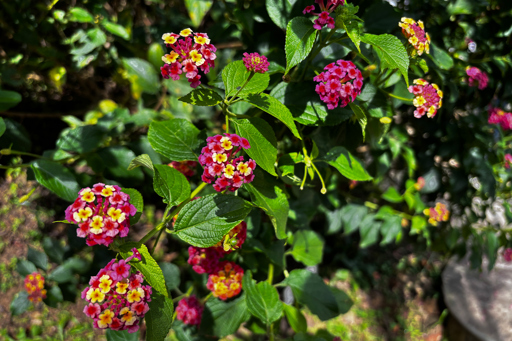
Native plants are rapidly declining in Nepal’s capital, Kathmandu, replaced by invasive species historically introduced for ornamental and urban greening purposes, reports Mongabay contributor Bibek Bhandari. Botanist Bharat Babu Shrestha said he has observed traditional medicinal plants like the Indian pennywort (Centella asiatica) slowly vanish from Kathmandu over the past decades, displaced by dense, flowering shrubs of Crofton weed (Ageratina adenophora), native to Central and South America. “There has been no qualitative assessment in Kathmandu, but our observations show that our native vegetation has been dominated and displaced by many invasive species,” said Shrestha, a botany professor at Tribhuvan University, Nepal. He added that research in Nepal’s national parks suggests these invasive species can reduce native species by nearly half, a trend being mirrored in the country’s capital. According to experts, dominant invasive species in the city include Crofton weed, common lantana (Lantana camara), Santa Maria feverfew (parthenium weed, Parthenium hysterophorus) and blue billy goat weed (Ageratum houstonianum). A 2024 study found that 48% of observed plant species in the Sanobharyang region, close to protected areas and community forests, were non-native. Similarly, researcher Ronish Pandey, who submitted his master’s thesis on Kathmandu’s plant species composition to Tribhuvan University last year, found that more than half of the 437 species he surveyed in the capital’s green spaces were exotic; 21% of those naturalized species categorized as invasive. Krishna Prasad Sharma, the 2024 study’s co-author and an assistant professor at Tribhuvan University, said that some non-native species are less harmful, such as…This article was originally published on Mongabay
From Conservation news via This RSS Feed.