


For decades, the DRC, Rwanda and Uganda have been engaged in multiple wars revolving around security, sovereignty and survival. A crucial part of this is how the West benefits and uses all three countries to generate a state of near-permanent insecurity in order to cheaply extract minerals and resources from the region.
Behind this, both Rwanda and Uganda have attempted to position themselves as partners for the West in Central and East Africa, with the intention of benefitting from being strategically useful in a vulnerable region. It is a pattern similar to other client states in the past, such as Israel, Singapore, Taiwan, South Korea, Japan and West Germany. However, there is a structural ceiling for African client states; Rwanda and Uganda will likely never industrialise in the same way as previous proxies of Western imperialism, despite their best efforts to exploit the DRC.
What is the Role of Rwanda and Uganda in the DRC?
Both Rwanda and Uganda have been accused of violating the sovereignty of the DRC, plundering the country of its resources and committing war crimes over the last three decades.
Since the First Congo War of 1996–97, the Second Congo War of 1998–2003, and the intermittent conflicts that have erupted since, over 6 million people have died, with millions more being displaced in the conflict.
Over the course of these conflicts, war crimes and financial incentives developed between Rwanda and Uganda, causing them to have a near permanent presence in the eastern Congo. More recently, the European Commission signed a minerals deal with Rwanda in 2024, even as the Rwandan backed March 23rd Movement (M23) extended control over North Kivu.
Congolese President Félix Tshisekedi denounced the EU/Rwanda deal as a provocation, arguing that:
It was as if the European Union were making war against us by proxy.
It was during the Second Congo war that the first reports of mineral siphoning surfaced. Now it has evolved and grown further as many analysts have argued that the territorial influence that Rwanda and Uganda exercise over the eastern provinces outstrips the level of security threat that their governments claim to be concerned about. Evidence suggests that up to 90% of Rwanda’s coltan exports were illegally stolen from the DRC.
Some estimates put the losses from mineral smuggling out of the DRC at almost $1 billion a year.
Intervention in the Congo
Both governments of Rwanda and Uganda argue that, due to the porous nature of the Congo’s borders and the inability of the Congolese army to maintain control over the remote eastern provinces, it is necessary for them to intervene militarily in order to protect their own security and stability.
For Rwanda, interventionism goes back to the 1990s following the catastrophe of the Rwandan genocide. Uganda has had similar security concerns on the basis of combating the Allied Democratic Forces (ADF) – a Ugandan Islamist rebel group that moves between the Ugandan and Congolese borders in terrorist attacks that seeks to overthrow the Ugandan Government and establish an Islamic State.
For the Congo’s part, it has historically struggled to protect its remote provinces and has constantly battled secessionist movements since independence in 1960. Over 120 armed groups are currently active in the DRC, often driven by the huge global demand for Congolese minerals, which incentivises them to secure and control land and people for exploitation.
The lack of a strong centralised force across the country has made many regions easy to exploit. Since the Belgian invasion and brutal colonisation of the Congo in 1885, the valuable mineral resources have been a significant source of continuous conflict and destabilisation by outsiders.
Western Support
Both the United States and the European Union have asserted that they have laws and binding agreements in place that regulate and limit the export of mineral resources from conflict zones such as the DRC.
However, according to the UN Security Council report of the Panel of Experts on the Illegal Exploitation of Natural Resources and Other Forms of Wealth of DR Congo, Western companies were quick to strike deals with Rwandan and Ugandan proxies operating in the Congo since the First Congo War.
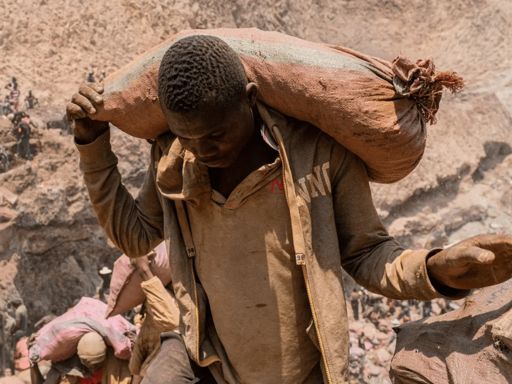
Moreover, it is almost impossible for most electronic devices – from laptops to your mobile phone – to not contain minerals plundered from the DRC. This is due to the depth of “artisanal mining” that is present in the Congo, where the most vulnerable people and communities – especially children – are either pushed into working in forms of indentured servitude due to poverty or are forced to work by militias in mining.
This is done with little to no industrial equipment and without health-and-safety regulations. Pay is also extremely low. The minerals from these mines are then passed on to processing plants like those in Rwanda in order to be sold to the West.
On paper, this is illegal in the DRC, but there is no enforcement against these practices. As demand grows for rare-earth minerals, so do the incentives to keep conditions in the DRC the way that they are.
This is what capitalism in Africa looks like. The DRC holds almost half of all known reserves of cobalt in the world and is responsible for supplying 70-73% of all mined cobalt globally. Similarly, the DRC is responsible for 45% of all tantalum mined in the world, along with 11% of all the copper. And yet, it remains one of the poorest and most insecure countries in the world. This is not an accident.
The “Peace” Deal
Both the United States and EU see the DRC as a vital node in the procurement of rare-earth minerals and the production of green industrial technology. However, China dominates trade and production in this area in the DRC, controlling a number of key mines and 80% in cobalt production.
Chinese firms have established agreements with the Congolese Government and various armed groups across the country. As a result, the West has been using Rwanda and Uganda to get around and break the Chinese monopoly in the DRC, in order to secure the rare-earth minerals it needs to maintain their industrial edge in the 21st century.
As such, Rwanda and Uganda’s own security, economic and imperial interests over the last thirty years have found a convenient synergy with Western desperation to regain a foothold in the DRC. The recent “peace” deal that the United States brokered between the DRC and Rwanda in June 2025 served to further entrench the exploitation of the Congo only through diplomacy, while doing little to reverse Rwanda’s long-term goal of subordinating the DRC to Rwandan economic and security interests.
The deal is designed to give the United States – a country that was already benefitting from stolen Congolese minerals entering the global market from Rwanda – access to Congolese minerals with dubious private companies and billionaire investors with questionable human rights records, which US Secretary of State Marco Rubio stated will:
bring good governance and ensure responsible, reliable supply chains for things like critical minerals.
Firms such as KoBold Metals, Rio Tinto, Ivanhoe Mines, America First Global, Tesla, Glencore & Dan Gertler, and many more US companies, have exclusive access to mines and sites for exploitation.
The peace deal, while limiting Rwandan and Ugandan expansionist ambitions for now, has essentially formalised the illegal extraction networks that both countries had already established informally in the Congo and doesn’t bring any benefit to the Congolese people. What it does is deepen the DRC further into a cycle of exploitation.
Why Rwanda and Uganda will Ultimately Fail to Develop from this
It is clear that the Governments of Rwanda and Uganda have adopted a strategy of positioning themselves as useful states in a vulnerable region. They have done this in the hope of obtaining some degree of technology transfer, economic growth and diplomatic cover from the West.
Some of these have materialised, as in the case of diplomatic cover for both countries when it comes to human rights violations. For instance, even when the US decided to later sanction Rwanda over the M23 in 2012, this was a paltry cut of $200,000 out of $200 million in US funding. Similar funding and aid has flowed into Uganda, which the West sees as a critical partner in maintaining regional security.
As such, for both countries, aid is heavily tied to a form of securitised developmental assistance., While not directly coordinating Rwanda and Uganda’s foreign policy to the DRC, the US has given both countries significant resources, military training and capacity to overwhelm the Congo when needed.
Despite this, Rwanda is unlikely to become the next “Singapore”, nor will Uganda develop into the next “West Germany”. This is because the industrialised proxy states mentioned developed at a specific time when the West needed them to develop.
During the Cold War, East Asian countries had to develop as a barrier to the spread of Communism in the East. This was a strategic necessity as the West poured billions into technology transfers, training, preferential access to Western markets and permission to use industrial policy tools that were later restricted to African countries, such as infant industry protectionist policies.
Moreover, these countries initially built their development on manufacturing in the 1950s and 1960s, before it became saturated. After this, countries like Japan and Singapore were able to quickly transition to more advanced industries. Today, it is structurally harder to expand since China dominates manufacturing globally. Additionally, there is a globalised racial hierarchy that developed from the colonial period, which still shapes how African states interact with the rest of the world.
Fundamentally, African states are still seen as sites of raw material extraction, not developmental states like East Asian proxies, and certainly not as potential competitors for the West. This perception affects everything from why a country like South Korea can ignore IMF industrial policy recommendations in the 1980s and be “rewarded” for discipline, while Uganda would be punished with structural adjustment programmes in the late 1980s for similar practices. African proxies exist to maintain security in the region; Asian proxies exist as an ideological buffer against Communism and are “allowed” to develop.
Conclusion
Perhaps this is what in part drives Rwanda and Uganda’s exploitation of the DRC: the political and economic ceiling put in place by the current global order desperately pushes African countries downwards and against each other, generating more conflict and insecurity that ultimately forces the DRC to grant foreign powers even more access to their resources.
What this demonstrates is that the conflict between Rwanda, Uganda and the DRC is not simply a regional war. It is a conflict created from and embedded deep within the global system.
Featured image via the Canary
From Canary via This RSS Feed.