

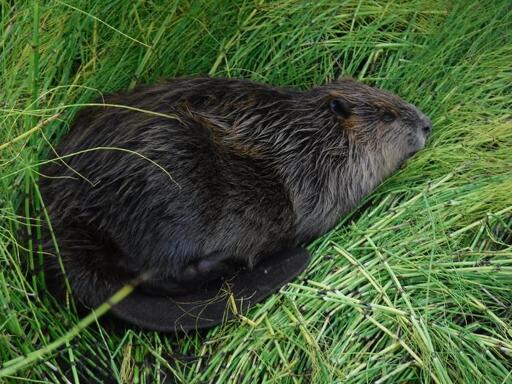
Beavers are expanding their range into Canada’s western Arctic, and a recent study has reconstructed when these ecosystem engineers first became active in the area — sometime around 2008. Historically, North American beavers (Castor canadensis) have been associated with boreal and temperate waterways. However, they’re increasingly being observed moving northward in the Arctic tundra. This range expansion is partly aided by a warming climate and the growth of shrubs they depend on to build their dams and lodges. When local Indigenous communities in the Inuvialuit Settlement Region in the Canadian Arctic noticed an increase in beavers, they “flagged this as an urgent issue requiring investigation,” study lead author Georgia Hole, from Durham University in the U.K., told Mongabay by email. Beavers are known for their ability to build dams in streams and rivers, which blocks the flow of water, creating ponds. For the Inuvialuit, the impacts of busy beavers led to “creeks running dry, dams blocking access to historic established travel routes and harvesting sites, and changes in vegetation,” said Hole, who carried out the work while at Anglia Ruskin University, U.K. However, in the absence of long-term scientific monitoring, nobody knew exactly when the beavers had moved in and colonized this remote Canadian Arctic region. When beavers chew through woody plants such as trees or shrubs, their browsing leaves behind scars in the stems’ growth rings. So, to peek back in time, the researchers examined growth rings in the stems of willow and alder shrubs — local species the…This article was originally published on Mongabay
From Conservation news via This RSS Feed.