

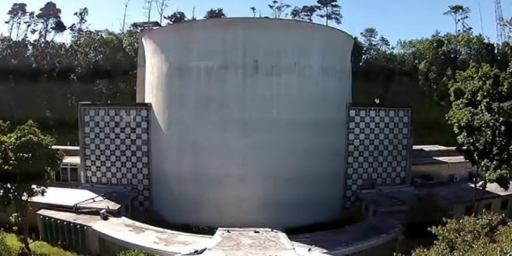
The removal of highly enriched uranium (HEU) from the Venezuelan Institute for Scientific Research (IVIC), carried out in May 2026, was neither an improvised nor a reactive action. It was a planned operation under bilateral agreements between Venezuela and the United States, with the support of the International Atomic Energy Agency (IAEA), and with documented precedents in technical reports from 2008-2009.
The removed material weighs 13.5 kilograms and consists of remnants from the RV-1 research reactor, which has been inactive since 1991. It was transported to the United States for safe processing and conversion into low-enriched fuel intended for use in advanced reactors.
Was this operation improvised or planned?
It was planned. Since the RV-1 reactor ceased operations in 1991, enriched uranium has been classified as “surplus material.” Since 1996, international non-proliferation programs—led by the US National Nuclear Security Administration (NNSA)—have worked to recover this type of material in more than 30 countries. In the case of Venezuela, IAEA reports dating back to 2009 have documented procedures for the return of spent fuel.
Were the international protocols respected?
Yes. The transport was carried out with containers certified under the IAEA INF Code, with technical supervision from the IAEA and cooperation from the Ministry of Science and Technology of Venezuela. The operation followed the standards of the Convention on the Physical Protection of Nuclear Material.
Who owned the material and who has it now?
Historically, the material belonged to the Venezuelan State, under the custody of IVIC. After the removal, the ownership transferred to the US Department of Energy (DOE) under a bilateral agreement. Currently, the material is being processed at the Savannah River Site (South Carolina) for its conversion into HALEU (high-assay low-enriched uranium).
What is the origin of this uranium and how did Venezuela acquire it?
The uranium was not “purchased” on the free market nor obtained clandestinely. It was legally supplied to Venezuela by the United States more than 60 years ago as part of the “Atoms for Peace” cooperation program launched under President Dwight D. Eisenhower during the Cold War. Its presence at IVIC was well known, thoroughly documented, and subject to international oversight since then. The recent transfer is not a confiscation but the execution of a return clause included in the original agreements.
Was the material in secure final deposit?
No. It remained in the RV-1 reactor facilities, an inactive research plant. It was neither a geological repository nor an authorized final disposal site. Its relocation is based on the criteria of physical security and non-proliferation.
Did the US military operation against IVIC in January 3, 2026 have any connection to this material?
There is no evidence linking the two events. Official reports show that the targets in the January 3 US invasion were communication and air defense systems near the IVIC, not the nuclear facilities. Moreover, the uranium was removed months later, in May 2026, under a civilian operation coordinated with the IAEA.
Have these types of operations been conducted before?
Yes. Since 1996, the NNSA has carried out more than 70 similar missions in countries such as Kazakhstan, Serbia, Chile, Mexico, and Japan. The Venezuelan operation stands out for its speed: less than six weeks from the initial assessment to the removal, compared to the usual timelines of several years.
What will the removed uranium be used for now?
It will be processed at the H-Canyon plant at the Savannah River Site to reduce its enrichment from >90% to ~19.75% U-235, turning it into HALEU. This material is used as fuel in advanced nuclear reactors and small modular reactors (SMRs), part of the US strategy for “nuclear renaissance.”
Why is it relevant to highlight that this was documented since 2008-2009?
Because it dismantles narratives of improvisation or situational geopolitical intentionality. The recovery of HEU by the US from Venezuela is part of a technical, multilateral, and long-term effort in nuclear security. Recognizing this precedent allows us to contextualize the operation as part of a global non-proliferation policy, not as an isolated event.
Verified sources:
– Official statement NNSA/DOE (May 2026)
– Technical reports from the IAEA (2009, 2026)
– Documentation of the Global Threat Reduction Initiative (GTRI) program
– Historical records of the RV-1 reactor (IVIC)
– Technical specifications of H-Canyon (Savannah River Site)
Featured image:
(La Tabla)
Translation: Orinoco Tribune
OT/SC/SH
From Orinoco Tribune via This RSS Feed.