

In recent years, it has become almost a cliché to speak of the advance of the Far Right: Trump in the United States, Milei in Argentina, Reform UK in the United Kingdom, Alternative for Germany, and various reactionary governments and forces across Europe and Latin America. This diagnosis has real foundations: the crisis of capitalism, militarism, wars, the repressive hardening of state apparatuses, and the offensive against the living conditions of the majority have fueled reactionary political phenomena across much of the globe.
However, that is not the whole story. In parallel, left-wing political phenomena have also been developing — movements that reflect significant subjective shifts, particularly among the youth, segments of the working class, and feminist, anti-racist, and student movements, as well as the international movement for Palestine. These are heterogeneous and contradictory processes — led by vastly different political organizations — yet they demonstrate that the international political landscape is far from being entirely dominated by the Right.
Examples include Zohran Mamdani’s victory in New York, the emergence of Your Party in the United Kingdom, and the growing support for Die Linke among young people in Germany, among others. Thus, the immense popularity garnered in Argentina by leading figures of el Partido de los Trabajadores Socialistas (PTS) — such as Myriam Bregman and Nicolás del Caño — forms part of a broader international political landscape. The question is: which strategy can rise to the challenge of this new moment?
Mamdani in New York: The Contradictions of Managing the Capitalist State
Zohran Mamdani recently marked his first 100 days in office as Mayor of New York City. His victory has correctly been interpreted as a sign of a leftward shift among significant segments of the youth, and as a rift between a portion of the Democratic base and the party’s establishment. His campaign raised expectations with proposals such as free public transportation, taxing the rich, and disbanding the most violent police units, among others. However, during his first months in office, moderation appears to have been the watchword.
In a recent article for Jacobin magazine, Peter Frase examines what he identifies as “the contradictions of democratic socialism.” Among these is Mamdani’s endorsement of the reelection of Kathy Hochul — the Governor of New York State and a figure within the Democratic establishment — who had opposed central tenets of his platform. Frase also notes that Mamdani retained Jessica Tisch — a member of a billionaire family — as the head of the New York City Police Department; a clear gesture toward the city’s 33,000 police officers and, more specifically, toward maintaining a police budget that amounts to $6.4 billion. The logic is a familiar one: make concessions to the powers that be in the hope of subsequently securing their backing for certain proposed reforms. Yet the results thus far underscore the limitations of this approach. Although Frase does not frame it in these exact terms, the reality is that the project of a “21st-century social democracy,” as the author dubs it, has little to offer. The problem is not that Mamdani is not a revolutionary; that much is self-evident. The problem is that, even as a reformist, he has been making concessions without securing any significant reforms that would actually improve the lives of the working class.
This experience once again brings a strategic debate to the fore. Without an organized social force capable of challenging the Democratic Party, the police, big capital, and the institutional apparatus, governance “from the Left” tends to devolve into mere administration of the existing order. It is a path already trodden by other movements: Syriza in Greece, which ultimately implemented austerity measures; and Podemos in Spain, which ended up becoming subordinate to the Socialist Party. Bhaskar Sunkara — Jacobin editor and a prominent figure within the Democratic Socialists of America (DSA) — together with Gabriel Hetland, argued after Mamdani’s victory for the need to organize popular assemblies that would mobilize his social base as a counterweight to pressure from the establishment.
However, this policy did not succeed; there is a contradiction inherent in spending years calling for support for candidates within the Democratic Party, only to then expect — overnight — to build grassroots bodies capable of challenging the establishment of that very same party.
Nevertheless, another fundamental question remains: one that concerns not merely “holding assemblies,” but rather the strategic purpose behind them. Are these assemblies intended to pressure the establishment, or are they institutions of self-organization capable of developing a genuine counter-power? To answer this question, it is undoubtedly worth looking toward Minneapolis. The Minneapolis rebellion brought to the fore several advanced elements: neighborhood watch groups standing guard against ICE raids, the organized coordination of supplies and transportation, the active involvement of unionized sectors such as teachers, and the proposal for a general strike across the state. It also exposed a decisive problem: the conservative role played by union bureaucracies and the urgent need to reclaim mass organizations.
Expectations surrounding “Your Party” and its Deconstruction as an Electoral Apparatus
In the United Kingdom, too, a deep political polarization is taking shape. The traditional parties are currently undergoing a crisis bordering on disintegration, while Nigel Farage’s Reform UK is emerging as one of the most dynamic forces on the Right. Keir Starmer’s Labour Party faces significant social unrest, contending with an increasingly beleaguered government — one plagued by internal crises and facing criticism for its complicity with Zionism and its role in repressing pro-Palestine demonstrations.
On the Left, the emergence of “Your Party” — led by Jeremy Corbyn and Zarah Sultana — initially appeared to crystallize a sense of immense expectation. When the project was launched, 800,000 people expressed interest in participating. This was no coincidence: it followed years of mobilization in solidarity with Palestine, a widespread rejection of Labour’s rightward shift, and a collective search for a viable political alternative. But that expectation quickly fizzled out. Instead of committing to the development of class struggle — and the democratic coordination of social movements, union sectors, and youth organizations — Corbyn’s group merely replicated the very same bureaucratic methods that the Labour Party establishment had previously deployed against the Corbynite movement itself. The central objective became ensuring control of the party apparatus — even through the expulsion of critical left-wing factions.
Currently the Greens are filling the void left by Your Party and gaining ground. Their key figure, Zack Polanski, attempts to emulate the “Mamdani phenomenon” with a proposal for a more humane management of capitalism. However, in the United Kingdom, standing on the opposing side is the city of London — a key global hub of international finance capital — alongside an imperialist bourgeoisie with a long history of plunder. This class cannot be truly challenged with mere good intentions or with polite campaigns for progressive renewal.
Die Linke, Politicization of the Youth, and the Test of German Militarism
In every country, the relationship between left-wing political phenomena at the level of mass sectors and the political organizations through which these movements ultimately find expression varies. Generally this relationship is characterized by a multitude of contradictions.
In Germany, the growth of Die Linke among young people is occurring in parallel with the rise of the far-right Alternative for Germany (AfD). In elections held in February 2025, Die Linke secured nearly 25 percent of the vote among young people aged 18 to 24. This highlighted a significant phenomenon: a substantial segment of the youth is seeking an alternative to militarism, racism, austerity measures, and the radical Right. It is this very same youth demographic that is at the forefront of the mobilizations opposing the reintroduction of compulsory military service. Within Die Linke itself, however, factions that categorically reject German militarism coexist with others willing to accommodate it.
This contradiction was laid bare in the face of Chancellor Merz’s rearmament plan, which set the objective of building “Europe’s largest conventional army.” The legal basis for this rearmament was a constitutional amendment that effectively removed all limits on military spending. In the Bundestag, Die Linke deputies voted against the measure. However, in the Bundesrat — the upper house — where Die Linke had sufficient leverage to potentially block the reform, they allowed it to pass. It is the kind of decisive test that reveals what a political party is — or is not — good for.
It serves as an example highlighting a key strategic problem: in a party where hawkish and anti-militarist wings, Zionists and defenders of Palestine, and moderate reformist sectors and left currents coexist, it is in practice the wings most aligned with the established order that tend to prevail during decisive moments. The debate in Germany is by no means trivial, as it concerns a political force that has recently been growing electorally and attracting young people. A struggle is currently underway there to intervene in this phenomenon in order to convince the most advanced sectors of the youth of the necessity of an anti-capitalist, anti-imperialist, and revolutionary strategy.
France and the Experience of “Broad Parties”
The case of the New Anti-Capitalist Party (NPA) in France took a different trajectory. It emerged as a party further to the left, modeled after the so-called “broad anti-capitalist parties.” Within its ranks, very distinct strategies coexisted: sectors pushing for moderation and adaptation to Mélenchon’s Popular Front, and revolutionary sectors defending class independence. Contrary to what the terminology might suggest, the concept of a party with permanent “freedom of tendencies” does not contribute to fostering broad and democratic debate within the organization; rather, it stifles it. In other words, each crystallized tendency is free to uphold whatever views it chooses, yet this carries no implications for the other tendencies. Consequently, the organization’s collective activity is reduced to a bare minimum — generally limited to electoral campaigns and congresses where support is garnered for specific platforms — while the actions of public figures, parliamentarians, trade unionists, movement leaders, and the like effectively define the entire organization’s political line, without that line ever being subject to democratic debate. Most importantly, however, when critical moments requiring a decision arise, the organization as a whole proves incapable of making one. Naturally, this is not at odds with parliamentarism or trade unionism operating within the confines of the established regime; it is, however, fundamentally incompatible with class struggle — all the more so when that struggle intensifies.
These contradictions ultimately caused the NPA to fracture in the face of the emergence of the New Popular Front (NFP) led by Jean-Luc Mélenchon. A significant majority sector of the party went so far as to abandon the very project of building an independent anti-capitalist alternative, choosing instead to fall in behind Mélenchon — joining a front alongside the Socialist Party and the PCF — with the illusory hope of elevating him to the office of Prime Minister and administering the French imperialist state “from the Left.” Ultimately, after millions voted for the NFP, Macron vetoed that possibility using the Bonapartist mechanisms of the Fifth Republic; the New Popular Front was left mired in impotence, while — thanks to the parliamentary seats secured through this alliance — the Socialist Party transformed into a key pillar supporting Macron’s ability to govern.
From the struggle against these policies emerged Révolution Permanente — a young, dynamic organization with a prominent role in class struggle. This was exemplified during the 2023 movement against Macron’s pension reform, specifically through the development of the Network for a General Strike. This initiative successfully mobilized significant sectors of the vanguard across various branches of the labor movement — including transport, industry, education, and others — alongside militant activists in the student movement, intellectuals, and other groups. Révolution Permanente’s dynamism also found recent electoral expression in the municipal elections, where it garnered nearly 7 percent of the vote in several localities and secured two council seats in Saint-Denis — the working-class heartland of the Paris suburbs — in its very first electoral bid. Furthermore, the organization achieved strong results in student representative elections at France’s major universities. This experience demonstrates that a different relationship is possible between electoral politics, militant organization, and class struggle — a debate that is now being reignited by Mélenchon’s relaunch of the Popular Front strategy.
Podemos: From the “Assault on the Heavens” to the Reconstitution of the PSOE
The experience of Podemos in the Spanish State remains an indispensable reference point for any serious assessment of 21st-century neo-reformism. Born in the heat of the 15-M movement, it emerged as a “party-movement” featuring a reformist platform and rhetoric that challenged the established regime. At its peak, the party held 71 seats in parliament. Pablo Iglesias served as Deputy Prime Minister, and Unidas Podemos — a coalition comprising Podemos and the United Left (Izquierda Unida), which includes the Communist Party of Spain (PCE) — held five key cabinet positions. What came of this? No substantial transformation in the lives of the working class. Conversely, it did contribute to the rebuilding of the Spanish Socialist Workers’ Party
(PSOE) — one of the central pillars of the Spanish political system — which was deeply discredited following the crisis sparked by the 15-M movement.
Upon stepping down from the vice-presidency, Iglesias acknowledged that being “in” the government was not the same as holding power. The statement was true. However, the decisive question is: what strategy follows from that conclusion? In the case of Podemos, the answer was not a break with their previous orientation, but rather the pursuit of new broad fronts in order to once again form part of a progressive coalition — one that included the PSOE. This begs the question: why would doing the exact same thing lead to different results this time around?
That said, the Podemos experience would not have unfolded as it did without the involvement of a specific sector of the anti-capitalist Left — namely the organization Anticapitalistas — which had previously dedicated its resources and activist base to facilitate the emergence of the party led by Pablo Iglesias. Anticapitalistas was a key part of Podemos for six years — a period during which Podemos formed governments in major cities such as Madrid and Barcelona, while Anticapitalistas itself held the mayoralty of the city of Cádiz. Upon their departure from Podemos, it became evident that their strategic hypothesis — namely, that they could serve as the left wing of the reformist camp — had not only bolstered the reformists in securing their alliance with the PSOE, but had also left Anticapitalistas significantly weaker than before.
The Political Phenomenon Surrounding Myriam Bregman and the PTS in Argentina: A Class-Independent Left
Argentina is viewed by the global Right as a political laboratory. Trump, Netanyahu, and other reactionary figures are betting heavily on Milei. On the other side of the barricade of this international landscape of political phenomena, a significant new development is the phenomenon currently unfolding in Argentina around key figures from the Party of Socialist Workers (PTS). Foremost among them is Myriam Bregman; various polls consistently show her garnering between 9 to 14 percent of the vote as a presidential candidate, while public opinion surveys rank her among the political leaders with the highest positive approval ratings in the country. Also prominent is Nicolás del Caño, who likewise ranks among the political figures enjoying the highest positive image and name recognition nationwide; as well as Alejandro Vilca, who secured 25 percent of the vote in the province of Jujuy during the previous midterm elections. In one of the most recent opinion polls — conducted by the Brazilian firm Atlas Intel, which notably predicted Milei’s rise early on — Bregman ranks first in positive image ratings; she is, in fact, the only political leader in Argentina — including Cristina Kirchner and Axel Kicillof, and placing far ahead of Milei himself— to maintain a net positive approval.
Unlike the various political currents on the Left that have emerged in response to the rise of the Far Right in different countries, this case does not involve a social-reformist current operating within a capitalist party — like Mamdani —nor a reformist Left party like Die Linke; rather, what has emerged here is a Trotskyist Left. The PTS is part of a coalition — the Left and Workers’ Front (FIT-U) — that champions a program of class independence and advocates for the struggle to establish a workers’ government. Formed in 2011 — at a time when the broader Left was largely aligning itself with Kirchnerism — it established itself as a pole of class independence. Throughout its initial phase, its existence coincided with the growth of phenomena such as rank-and-file trade unionism, thereby fostering a synergy between the trade union sphere and the political sphere. The emergence of Nicolás del Caño as the FIT-U’s leading figure in 2015 was directly linked to his active involvement in the major conflicts of that period; the same holds true today for Myriam Bregman, who serves as a leading voice in the women’s movement, workers’ struggles, and other causes—as well as in the consistent opposition mounted against Milei during his two years in office.
This current political phenomenon did not appear out of the blue; it is a process spanning several years — the product of intense political struggles within Argentina’s Left that ultimately led to the adoption of this specific orientation.1Since 2011, the FIT-U has not remained static; rather, it has undergone significant internal changes. The 2015 presidential primaries brought to the fore a dispute regarding differing strategies within the FIT-U. This contest — precipitated by the Workers’ Party’s (PO) refusal to join the presidential ticket — concluded with a victory for the PTS list, headed by Nicolás del Caño, over the PO list, headed by Jorge Altamira, who had led the former FIT’s electoral lists since 2011. In 2019, the Workers’ Socialist Movement (MST) joined the coalition after endorsing the platform the FIT had been championing for the previous eight years; from that point forward, the alliance operated under the name the United Left and Workers Front (FIT-U). The PO, for its part, fragmented into two separate organizations, and Altamira’s faction — now known as Política Obrera — withdrew from the FIT-U. For the 2023 presidential election, the PO — led by Gabriel Solano — and the MST joined forces in the primaries, running a campaign centered on attacks against the ticket of Myriam Bregman and del Caño — nominated by the PTS and Socialist Left (IS). The latter ticket ultimately prevailed, securing over 70 percent of the vote; furthermore, the lists associated with this ticket went on to head the coalition’s key candidacies across nearly the entire country. This organizational configuration solidified further in the years that followed, with Nicolás del Caño leading the lists in Buenos Aires Province in 2025 — where the FIT-U secured two seats in the National Chamber of Deputies — and Myriam Bregman received 9 percent of the vote in the City of Buenos Aires (CABA). At the same time, this phenomenon cannot be understood in isolation from the role the Left — and the PTS in particular — has played during Milei’s two years in power. While the Peronist leadership remains divided between those who offered merely token opposition and those who directly supported Milei’s legislative agenda, the Left is seen standing at the forefront of every struggle against austerity, repression, Milei’s “chainsaw” cuts, and the sell-off of national assets. A pivotal moment in this trajectory was the battle against Milei’s draconian labor reform — a conflict in which every political actor was forced to show their hand. The government made it clear that it wants to take everything: not only does it seek to reduce the working class to a state of servitude, but it also refuses to implement popular laws funding public services that have already passed by Parliament, such as the disability rights law, the university funding law, and others. The leadership of the CGT (Argentina’s largest union federation) exposed its unwillingness to organize any serious resistance. Furthermore, a faction of the Peronist movement played a pivotal role in allowing the labor reform bill to advance through Parliament.
In response, the PTS spearheaded a national campaign against the reform — even during the height of summer — employing agitational tactics with widespread impact. It also facilitated coordination efforts across Greater Buenos Aires and other regions of the country to prepare for the struggle. On February 11, despite the CGT’s refusal to call for a general strike, thousands braved police repression in Plaza Congreso. The outrage, however, extended far beyond those who were able to mobilize. Consequently, the CGT was compelled to call for a strike the following week, though it took great care not to push its members to mobilize. Milei succeeded in passing the labor reform, but he paid a heavy political price. Those who acted as accomplices — including the trade union bureaucracy — paid a price as well. The current phenomenon surrounding Myriam Bregman can be interpreted as a political expression of the conclusions that broad sectors of society have been drawing from that experience, as well as from the two years of struggle against the libertarian government.
From Sympathy to Activism. From Anger to Organization
The survey of these experiences of the Left in recent years shows clearly that there are vastly different strategies within the international Left. In the United States, the debate surrounding Mamdani highlights the dilemma between managing the machinery of the State versus pursuing a strategy of rupture — between drawing upon advanced experiences of class struggle or leading movements to their demise at the feet of the Democrats. The case of Germany and Die Linke demonstrates that a party in which Zionists and pro-Palestine activists, as well as warmongers and anti-militarists, coexist ultimately ends up playing a conservative role during pivotal moments. Furthermore, the example of Podemos illustrates the fiasco inherent in projects that emerge with purely electoral objectives and subsequently integrate themselves into the administration of the capitalist State. The anti-capitalist leftist forces that fell in line with, and actively promoted, these types of reformist projects — thereby abandoning the fight for an anti-capitalist program and for class independence — forfeited the opportunity to transform themselves into a viable political alternative.
The fundamental problem is this: without forging a material force comprising the working class, the youth, the women’s movement, anti-racist movements, and the masses, there exists no realistic prospect for confronting the power of the capitalists and the state — an apparatus organized precisely to ensure that no one steps out of line. The major uprisings of recent years have also driven home this lesson. The events in Chile in 2019 constituted a massive mobilization — spanning months of struggle — yet the combined forces of state repression and institutional co-optation ultimately prevented any of the demands raised by the movement from being met. Then came the Boric administration, which turned its back on the demands of the 2019 rebellion, thereby contributing to demoralization and paving the way for the victory of far-right president Antonio Kast.
In Argentina, growing support for Myriam Bregman, Nicolás del Caño, and the PTS presents a significant political opportunity. The decisive question is whether this support — manifested, for instance, in polls crediting Bregman with up to 14 percent of the vote ahead of the presidential election — can be transformed into active militancy, into organization, and into a new cohort of comrades willing to build a material force capable of defeating Milei and proposing a fundamental alternative. This shared struggle operates on at least two levels.
On one level, there is the fight to establish independent institutions — such as coordinating bodies or assemblies — everywhere. These must serve as spaces where those who genuinely wish to confront and defeat Milei can organize; where the program and actions necessary to achieve this can be debated; where every struggle is embraced with solidarity; and which encompass the fight to reclaim existing mass organizations, such as trade unions, student councils, and the like. An organized force of this nature could prove pivotal in compelling the major trade unions to form a united front, thereby rendering the struggle for a general strike to defeat Milei a far more concrete and tangible prospect.
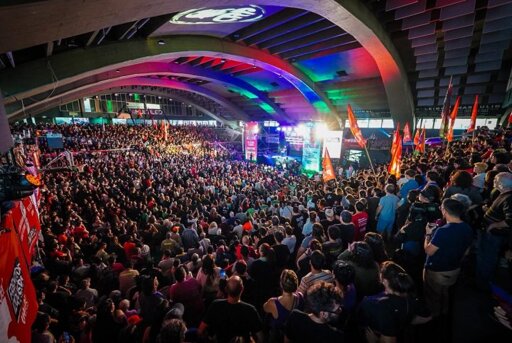
On another other level, there is the imperative to build a movement for a major party of the new working class — a class that is increasingly feminized, precarious, and composed of both formal and informal sectors, the employed and the unemployed, and workers in new strategic industries, alongside students, intellectuals, and others. This must be a party grounded in a program of class independence — such as the one championed by the FIT-U — serving as a political instrument capable of transcending Peronism. For the question at hand is not merely how to defeat Milei; it is also: after Milei, what comes next? These were some of the themes addressed this past May 1st at the PTS rally at Ferro Stadium — an event held before a packed arena, with thousands following along outside and tens of thousands more online.
It is an undeniable fact that war, the imperialist offensive, and the authoritarian projects of the radical right are also giving rise to political processes on the Left. This opens up possibilities for a socialist and revolutionary current to advance — a struggle that is not merely national, but international. For this reason — and as part of this struggle — we, the Current for Permanent Revolution (Fourth International) — an alliance comprising organizations from 14 countries — are joining forces with organizations from South Korea, the Spanish State, Belgium, and Canada to issue a call to other organizations and sectors of the working class and youth vanguard worldwide: let us build a movement for an International of the Socialist Revolution.
In the face of right-wing forces coordinating globally — alongside imperialist states that are rearming and capitalists who offload the crisis onto the backs of the majority — the response cannot be to repeat the old tale of a benevolent administration of capitalism. What is needed is a strategy of class independence, a force organized from below, and a revolutionary and internationalist perspective aimed at confronting and defeating the capitalists and their governments. The challenge lies in organizing it.
This article was originally published in Spanish on May 5 in Ideas de Izquierda.
Notes[+]
Notes
| ↑1 | Since 2011, the FIT-U has not remained static; rather, it has undergone significant internal changes. The 2015 presidential primaries brought to the fore a dispute regarding differing strategies within the FIT-U. This contest — precipitated by the Workers’ Party’s (PO) refusal to join the presidential ticket — concluded with a victory for the PTS list, headed by Nicolás del Caño, over the PO list, headed by Jorge Altamira, who had led the former FIT’s electoral lists since 2011. In 2019, the Workers’ Socialist Movement (MST) joined the coalition after endorsing the platform the FIT had been championing for the previous eight years; from that point forward, the alliance operated under the name the United Left and Workers Front (FIT-U). The PO, for its part, fragmented into two separate organizations, and Altamira’s faction — now known as Política Obrera — withdrew from the FIT-U. For the 2023 presidential election, the PO — led by Gabriel Solano — and the MST joined forces in the primaries, running a campaign centered on attacks against the ticket of Myriam Bregman and del Caño — nominated by the PTS and Socialist Left (IS). The latter ticket ultimately prevailed, securing over 70 percent of the vote; furthermore, the lists associated with this ticket went on to head the coalition’s key candidacies across nearly the entire country. This organizational configuration solidified further in the years that followed, with Nicolás del Caño leading the lists in Buenos Aires Province in 2025 — where the FIT-U secured two seats in the National Chamber of Deputies — and Myriam Bregman received 9 percent of the vote in the City of Buenos Aires (CABA). |
The post Rebellion on the Left: Strategic Debates on New Political Phenomena at the Global Level appeared first on Left Voice.
From Left Voice via This RSS Feed.