

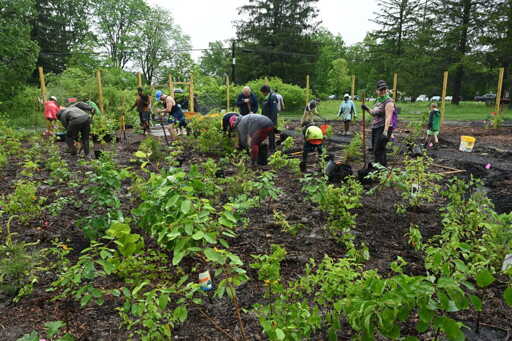
The popular Miyawaki method of reforestation, often used to create “mini-forests” in urban areas, lacks empirical evidence to support its claimed benefits, according to a new study. Proponents of the method have claimed rapid growth is achieved by soil improvement and dense planting, the latter of which causes saplings to complete for sunlight. The Miyawaki method has also been claimed to accelerate succession, enhance biodiversity, boost carbon sequestration, and increase tree density. In the study, published in the Journal of Applied Ecology in December 2025, researchers reviewed 51 pieces of scientific literature on the Miyawaki method and found that only 41% provided quantitative assessments. Of these, only 33% included a control and a mere 14% included replication, key elements of the scientific method. The Miyawaki method was first developed in the 1970s. However, over the past decade or so it has seen a new wave in international popularity, likely due to society placing greater importance on urban greening and reforestation, say two of the paper’s authors, Narkis S. Morales, a forest ecology researcher at the Bioeconomy Science Institute in Aotearoa New Zealand, and Ignacio C. Fernández, an associate professor of ecology and sustainability at the Adolfo Ibáñez University in Chile. They see Miyawaki forests’ rapid growth rate as a major reason for the method’s popularity. People “don’t want to wait that much to have greener areas,” Fernández tells Mongabay. However, the researchers caution that there may be social and ecological consequences for choosing any reforestation method — Miyawaki included —…This article was originally published on Mongabay
From Conservation news via This RSS Feed.