

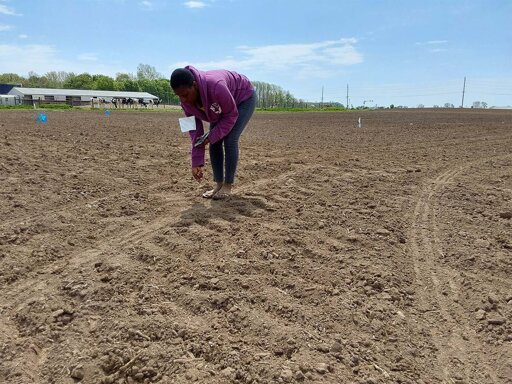
Tile drainage is common in U.S. Midwest agricultural fields, helping to remove excess water and aerate the soil. While the practice enhances crop productivity, it can cause phosphorus to leak into nearby waterways, where it contributes to harmful algal blooms. Directing tile-drain runoff through a structure filled with biochar—a form of charcoal produced from organic waste—provides a potential remedy for phosphorus pollution, but the method is novel and not fully explored.
From Biology News - Evolution, Cell theory, Gene theory, Microbiology, Biotechnology via This RSS Feed.
You must log in or # to comment.