

Photo: Christopher Katsarov Luna / The Narwhal
Summary
- The amalgamation of Ontario’s 36 conservation authorities into nine regional bodies is expected to take effect in early 2027.
- A new directive from Environment Minister Todd McCarthy orders conservation authorities to halt any major decision-making processes, such as changing staffing structures or purchasing property, in the meantime.
- After a meeting between Environment Ministry officials and conservation authority staff on May 6, 2026, one public servant told The Narwhal, “The province has essentially handcuffed conservation authorities.”
On Friday, May 1, Ontario Environment Minister Todd McCarthy sent a letter to all conservation authority heads directing them to halt any “significant financial, asset or employment decisions” as the government begins consolidating the agencies tasked with protecting watersheds.
The letter signals that the work to amalgamate authorities from 36 to nine, and shift oversight to a new government agency that takes direction from McCarthy’s office, has begun.
Five days later, senior ministry officials told authority staff in an internal meeting that this reorganization will be complicated and still contains many unknowns.
The directives “were not easy to write,” a senior official said at the meeting. “I’ll be frank to say that this required us to get into the [conservation authority] business in a way that we as a ministry aren’t typically.”
A recording of that meeting, which included discussion of the consolidation on drinking water protections, was shared with The Narwhal by one participant and independently verified by another. The Narwhal is not identifying the officials who led the meeting by name to respect their privacy as public sector workers with limited authority.
In it, a director in the ministry’s conservation and source protection branch notes the directive McCarthy sent out to authorities was not meant to affect the day-to-day business of conservation authorities, but to “put some guardrails in place that would sort of mitigate against any decision, like extraordinary decisions that would not be to the benefit of the regional [conservation authority].”
Such guardrails are common in government-initiated mergers, the official said, to protect agencies and organizations from decisions that may harm their consolidated form. A staff member from McCarthy’s office, speaking unofficially, told The Narwhal this is “standard operating practice” for any amalgamation, designed to “essentially keep things stable.”
Rhonda Bateman, chief administrative officer of Lower Trent Conservation said in an email to The Narwhal, “It was not a surprise. We were expecting some direction.”
“When businesses amalgamate or are merged, there needs to be a baseline of information available and I believe this is the intent behind the direction,” she said.
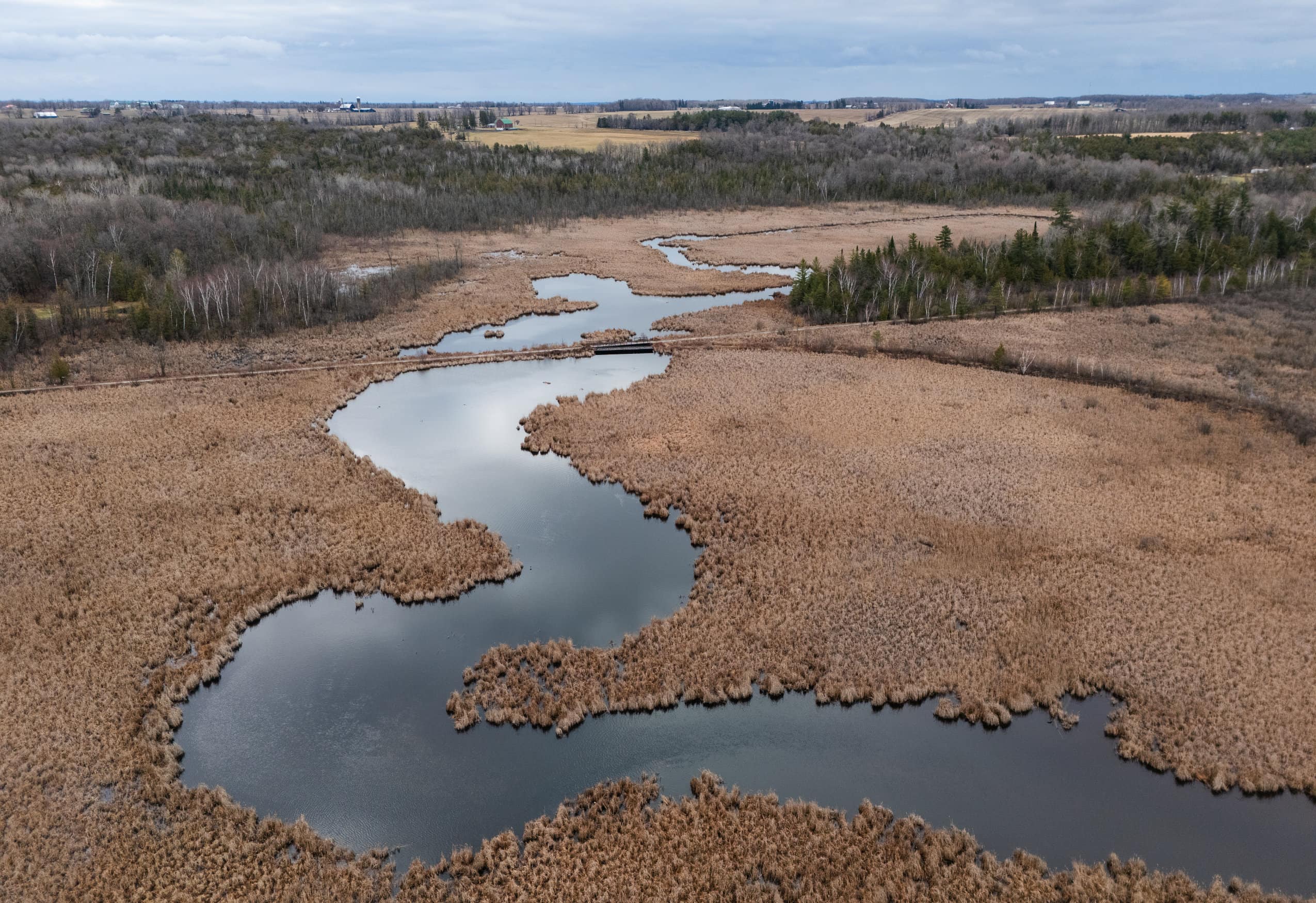
Ontario’s transition from 36 to nine conservation authorities will be managed by the government’s new Ontario Provincial Conservation Agency, which has a handful of staff and a five-person board of directors made up of deputy ministers from different ministries. Photo: Laura Proctor / The Narwhal
Along with the recording, The Narwhal was sent a copy of McCarthy’s letter, which was later publicly posted by the ministry. The Narwhal reached out to 10 conservation authority officials for comment, with most saying they were not allowed to comment, could not comment for fear of repercussions or were still trying to understand the implications of the directive. Five people agreed to speak to The Narwhal for this story, all on the condition of confidentiality.
“The province has essentially handcuffed conservation authorities,” one public servant who attended the meeting told The Narwhal. “Conservation authorities are not in control now [of the consolidation], and it seems that they won’t be in control moving forward.”
One conservation authority official in central Ontario said they were “surprised” by the “sweeping” nature of the directive, and felt that the consolidation was “out of our hands.”
Conservation authorities are tasked with protecting Ontario watersheds by safeguarding local drinking water sources and reducing the risks from natural hazards like flooding, erosion and drought. The government’s move to amalgamate them from 36 agencies to nine is the biggest disruption since the agencies were created 80 years ago, and has created widespread concern about their continued ability to preserve access to fresh water for more than 80 per cent of Ontario residents.
The government’s 2026 budget officially greenlit the consolidation and gave the environment minister powers to issue directives as needed. It also created a new Ontario Provincial Conservation Agency, which will oversee the 36 conservation authorities during the transition, under the Ministry of Environment, Conservation and Parks. This agency will work with Hassaan Basit, a longtime conservation authority official who is now the province’s chief conservation executive, and is staffed by a handful of bureaucrats, with a five-person board of directors made up of deputy ministers from other ministries. The agency’s goal is to see resources equally shared among the consolidated conservation authorities.
McCarthy’s first directive on the consolidation restricts conservation authorities’ actions to what has already been set out in their 2026 budgets. That includes making any changes to staff or governance structure, acquiring or disposing of any land, approving any new projects (like wells, for example) or making major purchases without explicit authorization from the government.
The official from McCarthy’s office told The Narwhal they expect conservation authorities to be able to do things that are beyond their budget. “We’ll likely approve it,” they said. “Conservation authorities remain independent.” They also noted that the restrictions don’t apply to land donations, as “they are not an expense.”
The directive notes there will also be exceptions in responding to “an immediate danger to human life, health or property.” The official from McCarthy’s office said, for example, this could be “if the conservation authority has a dam and the dam is on the verge of breaking and they need to make emergency repairs.”
These restrictions are in place until at least Feb. 1, 2027, when the consolidation is expected to take effect. They can be amended any time “at the sole discretion of the minister,” according to the letter.
Ontario’s drinking water is tied up in conservation authority changes but officials have few details
The details of how McCarthy’s directive will affect conservation authorities’ work protecting drinking water remain unclear.
The authorities work closely with community-led source protection committees, which include directors from industries like agriculture, manufacturing and tourism to protect and properly manage drinking water.
The province’s 19 source protection committees were created on the heels of the deadly water contamination crisis in Walkerton, Ont. They are supported by staff from conservation authorities, who provide data and carry out protective actions as the source protection authority.
The Narwhal reported in April on the impacts of consolidation on source protection committees, and the fact that 15 of the 19 committees had vacant chair positions. The government began seeking people to fill the chair positions soon after.
Many source protection staff were in attendance at the May 6 meeting hosted by Ministry of Environment officials after McCarthy’s directive was issued.
In the recording of the meeting, ministry officials are heard assuring attendees that they were happy to keep working with conservation authority staff, and that the government remains committed to preserving drinking water protections. But the officials repeatedly said things are still being figured out, with “a range of scenarios” being considered. They acknowledged the lack of answers was “not terribly reassuring” and “anxiety producing, probably” for conservation authorities.
During the two-hour meeting, ministry officials did not answer direct questions about whether the source protection regions would also be consolidated.
“I think that is probably the first question that needs to be answered, and we can’t answer it,” the official responded. “Obviously, that has to come from the decisions from whoever is making them.”
McCarthy previously told The Narwhal the 19 source protection committees will remain as they are and work with the nine regional conservation authorities, but said their jurisdictions are “a work in progress.” The government has said changes to the Clean Water Act will be needed but hasn’t specified what those changes will be.
“We’ve got eight months to sort out the details,” the official from McCarthy’s office told The Narwhal. “The point is not to rush this. We just started the process.”
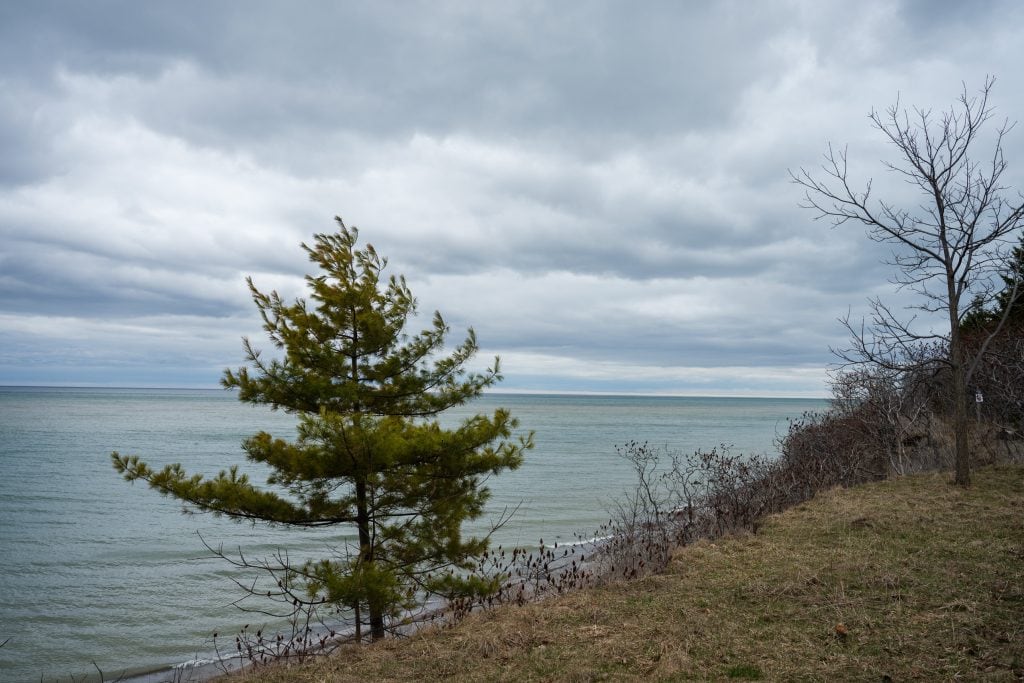
During a meeting on May 6, Environment Ministry officials were pressed for details on how the consolidation of the province’s conservation authorities would impact the protection of Ontario’s drinking water sources. Officials could not provide answers. Photo: Laura Proctor / The Narwhal
During the meeting, ministry officials gave two explanations for their inability to answer attendees’ questions. First, they said they weren’t directly part of the decision-making process as the transition is being run by the new Ontario Provincial Conservation Agency, “not the ministry.” And second, they cited cabinet confidentiality, referring to private policy deliberations between Premier Doug Ford, his ministers and senior ministry officials.
“Typically, sometimes the reason you have to, like, back away and stop engaging is because things become cabinet confidential at a certain point,” a senior official said in the meeting. “I’m not allowed, right? Because it’s become a cabinet process.”
They continued that staff in the ministry were working to ensure source protection plans, for example, weren’t being unnecessarily rewritten, though much of the consolidation process was still being sorted out.
“This isn’t a change many people were asking for and want necessarily, and I fully appreciate that I can’t necessarily know what all this means to you,” one official said in the meeting. They added that they hoped to help conservation authorities understand “what our thinking has been around the transition planning.”
“This is a government that is set to do this,” the official said. “This is happening.”
The Narwhal’s reporters are telling environment stories you won’t read about anywhere else. Stay in the loop by signing up for our free weekly dose of independent journalism.
From The Narwhal | News on Climate Change, Environmental Issues in Canada via This RSS Feed.