

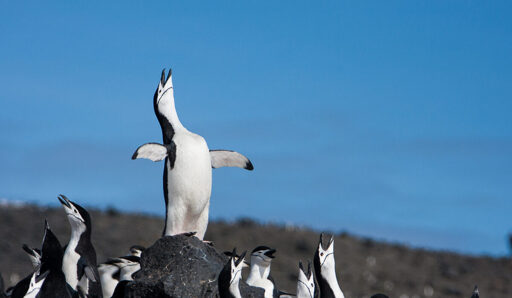
One of the most striking images in David Attenborough’s Ocean, his defining 2025 documentary, is of supertrawlers dragging vast krill nets through a pod of feeding humpback whales off Antarctica. For most viewers, it will have been the moment a distant and invisible crisis became viscerally real. But it was also something else: a glimpse of what is at stake if we fail to act, and a reminder of how little time we have left to protect some of our planet’s most precious resources. The Southern Ocean is not simply another stretch of water in need of protection. It is the engine of the global climate system, and one of the last places on Earth where nature still operates on its own terms. Right now, it is in serious trouble. The Antarctic Peninsula is home to roughly a third of the global krill population, which sustains whales, penguins, seals and seabirds. But three consecutive years of record-low sea ice have disrupted the reproduction cycles that krill depend on, and last year the krill fishery hit its 620,000-metric-ton catch limit for the first time in history, closing three months early. Industrial fleets from Norway, China, South Korea, Chile and Ukraine are extracting them at a pace that the ecosystem, already stressed by climate change, cannot absorb. The Marine Stewardship Council’s recent decision to recertify the Antarctic krill fishery as “sustainable,” despite an outdated stock assessment and mounting evidence of localized harm to whale and penguin populations, has rightly drawn legal challenge.…This article was originally published on Mongabay
From Conservation news via This RSS Feed.