

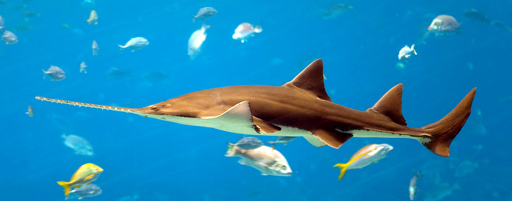
The sawfish, recognizable by its distinctive saw-shaped snout or rostrum, is now thought to be “functionally extinct” in Sri Lankan waters. This, researchers say, means that while a few individuals may still exist, their numbers are likely too low to maintain a viable breeding population, reports contributor Malaka Rodrigo for Mongabay. In a 2021 study, researchers from the Colombo-based nonprofit Blue Resources Trust (BRT), interviewed 300 fishers across 21 harbors to assess the status of the species. The results showed a stark generational gap. While fishers over the age of 50 remembered sawfish as once abundant, none of the fishers under the age of 30 could even identify the animal from photographs, Akshay Tanna with the BRT told Mongabay. He added that roughly half of the older fishers who had seen one had not encountered a sawfish since 1992. The last confirmed record of a sawfish in Sri Lanka, the researchers found, was a chance encounter in 2017 off the eastern coast, when a fisher had photographed the animal and framed its picture. Marine biologist and study co-author Sahan Thilakaratna said three of five species of sawfish have historically been recorded in Sri Lankan waters: the narrow sawfish (Anoxypristis cuspidata), the largetooth sawfish (Pristis pristis) and the green sawfish (P. zijsron). All are currently listed as critically endangered on the IUCN Red List. Globally, their decline is driven by overfishing, habitat loss and bycatch. The sawfish’s rostrum, which it uses as a sensory organ and weapon to hunt, easily becomes…This article was originally published on Mongabay
From Conservation news via This RSS Feed.