

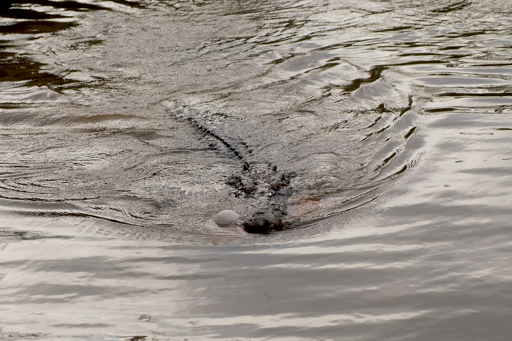
The destruction of coastal wetlands for illegal tin mining and oil palm plantations is to blame for a surge in crocodile attacks on people on Indonesia’s Bangka Island, residents say. Mongabay Indonesia contributor Taufik Wijaya reported that in February this year, a 40-year-old fisherman was killed by a saltwater crocodile (Crocodylus porosus) in the Menduk River. He was possibly the 21st victim of a crocodile attack in the last five years on Bangka Island, according to local wildlife charity the Alobi Foundation. The attacks have also resulted in 12 crocodiles being killed and dozens of humans and crocs injured during the same period. People have lived in the wetlands of the Menduk River estuary since the 7th century, but the recent rise in crocodile attacks has been attributed to the region’s changing landscape. Approximately 1,000 hectares (around 2,500 acres) of oil palm plantations and 250 illegal tin mining sites have taken over the Menduk wetlands, according to Suhadi, a resident of Menduk village and the manager of a community group established by Indonesia’s largest environmental NGO, Walhi. Bangka and neighboring Belitung Island were once responsible for more than a quarter of global tin production. Much of the environmental degradation is a legacy of that tin mining, researchers say, including possible illegal mining that became the focus of a massive recent corruption scandal. As the wetlands are destroyed, crocodiles are forced to migrate to new territories, leading to increased aggression and territorial disputes, said Endi R. Yusuf, manager of the Alobi…This article was originally published on Mongabay
From Conservation news via This RSS Feed.