

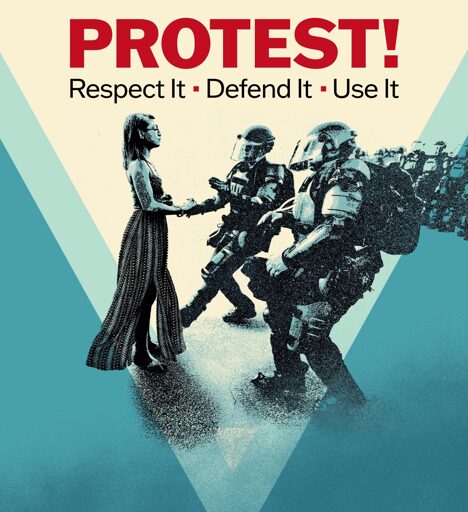
“We are experiencing what some people call sort of a shutdown of the public square in the United States and around the world,” says veteran environmental activist André Carothers. Along with the former executive director of Greenpeace US, Annie Leonard, the two have co-authored a new book about the history of protest, why it works, and why it’s under attack. Protest: Respect It. Defend It. Use It. was written to “remind readers about the role protests played in gaining a lot of the progress that we take for granted today,” Leonard says. Earth Day 1970 famously saw around 10% of the U.S. population actively participating in one of the largest demonstrations in the nation’s history. This led to a number of landmark environmental laws that are arguably taken for granted today. Protest highlights how movements begin, and ultimately shape public discourse leading to these significant victories. The authors also highlight how some in society often lionize protest movements of the past, while condemning ones of the present, forgetting that at their inception, protests and the movements they represent are often unpopular. Leonard and Carothers point to Dr. Martin Luther King Jr., whose approval rating never went above 50% in all his years as a civil rights leader. His disapproval rating stood at 75% the year he was assassinated. “There’s something about the gymnastics of history that allows us to honor these people well after they’re dead, but not when it’s happening right in front of them,” Carothers says. If you’re…This article was originally published on Mongabay
From Conservation news via This RSS Feed.