

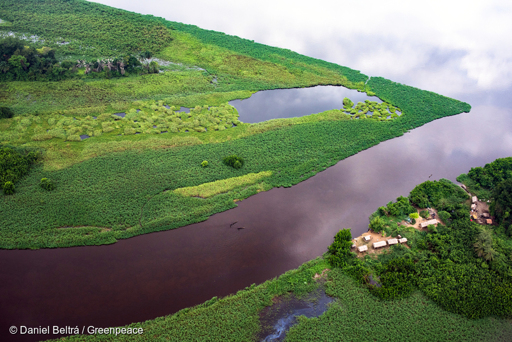
Agriculture is the biggest driver of peatland loss in Indonesia, Peru and the Democratic Republic of Congo, home to the largest expanses of tropical peatlands in the world, a recent study has found. Peatlands are crucial in the fight against climate change: They cover less than 3% of the world’s landmass, but sequester more carbon than any other terrestrial ecosystem. Yet, the boggy wetlands are being deforested and drained at unsustainable rates, releasing climate-warming greenhouse gases. However, scientists have lacked a clear understanding of the emissions associated with the different drivers of recent tropical peatland degradation. In the new study, researchers analyzed satellite imagery from 2020-2021 to determine what’s driving peatland conversion in Indonesia, Peru and the DRC, and to quantify the greenhouse gas emissions associated with it. Logging emerged as a key driver of tropical peatland loss in all three countries. Mining and road development were major factors in Indonesia and Peru. However, agriculture was by far the biggest driver across all three regions, the study found. In Indonesia, where large-scale agriculture was the leading source of emissions, agriculture overall accounted for 67% of peatland conversion. In Peru, smallholder agriculture was most responsible, for the 61% of agricultural conversion. In the DRC, smallholder agriculture alone accounted for 93% of peatland conversion and 94% of emissions, with no significant role by large-scale agriculture. Tropical peatlands are often cleared by burning, which the study found accounted for roughly half the total greenhouse gas emissions of the conversion. “Fire emits a very…This article was originally published on Mongabay
From Conservation news via This RSS Feed.