

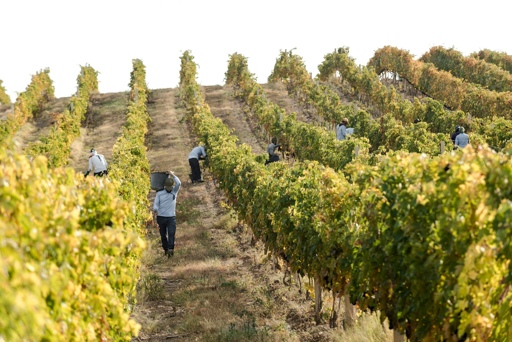
AGHAVNADZOR, Armenia — It’s 6 a.m. as the rising sun illuminates apricot-colored cliffs in central Armenia. It’s so still that even the distant buzz of a bee can be heard. Coca-Cola bottles filled with homemade wine for sale line the narrow road leading to acres of grapes growing quietly in an unusual vineyard. At 1,300 meters (about 4,300 feet) above sea level, Trinity Canyon Vineyards seems like it’s flirting with the sun. Located in Vayots Dzor province, where winters are bitterly cold and summers hot, Trinity Canyon and other vineyards use “vertical viticulture” to grow grapes among the mountains. Unlike many other wine-producing countries, where vineyards are cultivated horizontally on more level ground, in Armenia vineyards rise from 1,100-1,600 m (3,600-5,250 feet), with elevation affecting climate, soil and harvest timing. With the country’s rocky terrain, even terracing is difficult. “As a result, most Armenian vineyards, including those in Vayots Dzor, are planted on [natural] plateaus — flat elevated areas that allow the vines to thrive despite the challenging terrain,” Artem Parseghyan, the head winemaker at Trinity Canyon, tells Mongabay. Parseghyan spends his life on the road, driving between Yerevan, the capital, and Vayots Dzor. Born and raised in Russia, Parseghyan studied viticulture and enology (the science of winemaking) in France and Germany. In 2013, when Trinity Canyon was established, Parseghyan came to Armenia to work at what was then one of the country’s few vineyards. Vineyards in Vayots Dzor, the heartland of Armenian wine. Image courtesy of the Vine and…This article was originally published on Mongabay
From Conservation news via This RSS Feed.