

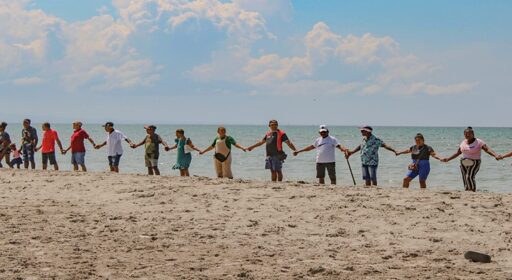
Globally, the “blue economy” dominates discussions of ocean-related projects. At the United Nations Ocean Conference (UNOC) in France in June 2025, references to the blue economy abounded, and the government of Monaco co-sponsored a two-day event on the blue economy and finance that featured world-famous dignitaries. The tagline for the upcoming Ocean Impact Summit in Bali, Indonesia, is “Unlocking the Potential of the Blue Economy.” World Economic Forum participants frequently use the term, while the World Bank has a blue economy program complete with a multidonor trust fund. The African Union has a blue economy strategy, and Brazil is currently developing one of its own. Countries such as Belize and Madagascar, meanwhile, have in recent years incorporated the “blue economy” into ministry names. Yet there’s debate and confusion over what the blue economy is. Understanding on the ground can be limited, with definitions squishy. Mbacke Seck, executive director of Hann Baykeeper, a coastal community organization in Senegal, told Mongabay the term is relatively new and “its contents remain poorly understood within our community.” The World Bank, for its part, calls a blue economy approach “the sustainable use of resources for economic growth, improved livelihoods, and job creation while preserving the health of ocean ecosystems.” Offshore energy, coastal infrastructure, tourism, maritime transport, aquaculture and fishing are often considered part of the blue economy. The bank declined an interview request for this story. However, development projects, even some that carry the blue economy banner, can profoundly affect coastal communities. For example, a…This article was originally published on Mongabay
From Conservation news via This RSS Feed.