

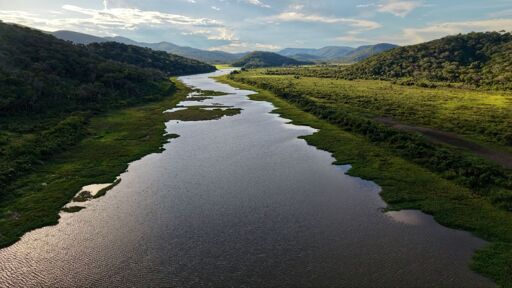
Forced to quarantine at a ranger station during the COVID-19 pandemic, a group of researchers in northern Argentina passed the time by monitoring wildlife around a lagoon on the Bermejo River. One day, something unexpected appeared in the water: a giant river otter, thought to be extinct in the country for nearly 50 years. The researchers paddled out in kayaks to photograph the animal, which soon began building a den beside their station, allowing them to monitor its behavior. They eventually launched a campaign for its protection. “We couldn’t believe it. It was like it had come looking for us,” recalled Sofía Heinonen, executive director of the nonprofit Rewilding Argentina, the group working at the ranger station. “Everyone’s reaction was that it was as if everything seemed to be aligning too perfectly. The encounter was so powerful that we were practically stunned.” Giant otters (Pteronura brasiliensis) are the largest otter species in the world, reaching nearly 2 meters (6 feet) in length and weighing up to 32 kilograms (70 pounds). They are highly social, typically living in family groups that communicate with a variety of calls. Heinonen and her team said they believe this otter came downstream from neighboring Paraguay. The sighting, inside El Impenetrable National Park, is about 140 kilometers (87 miles) south of the Paraguayan border. They wondered how many other otters might still be out there, and how their habitat connected to allow one to reach Argentina. Rewilding Argentina has been working in the country for more…This article was originally published on Mongabay
From Conservation news via This RSS Feed.