

Bullets:
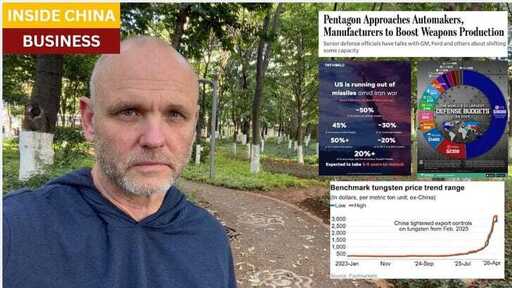
The Pentagon is racing to rebuild munitions stocks, which have been drained to feed wars in Ukraine, Iran, Gaza, and Lebanon.
The War Department is seeking a record $1.5 trillion budget, and new weapons suppliers recruited from the civilian sector.
The Pentagon’s strategy is to attract smaller companies to build for the defense industry, by offering longer-term contracts, with guaranteed high volumes of orders.
China’s dominance of the rare earth supply chains mean that the problem is not merely a ack of manufacturing, but also of mining and refining.
Vast reserves of raw materials reserves are found outside China, but those are typically found in countries closely allied with the Chinese, instead of Washington.
Inside China / Business is a reader-supported publication. To receive new posts and support my work, consider becoming a free or paid subscriber.
Report:
Good morning.
The Pentagon is overhauling the procurement process for weapons manufacturing. And top executives from Ford Motor Company and GM are in talks to build equipment for the Department of War. The wars in Ukraine and the Middle East have burned through years of future production, and the Pentagon needs to backstop the contractors they are using now and find more suppliers who can shift from manufacturing for civilian sectors, and do defense work instead.
None of this can happen fast enough, as far as the Department of War is concerned. The production of munitions, and strategic and tactical platforms of all kinds needs to happen as soon as possible. Pentagon officials say that “bolstering weapons production” is a matter of national security.
Oshkosh is another company that is in discussions with the Pentagon, and they have a “chief growth officer” who is exploring how Oshkosh manufacturing capacity can be brought to bear “in a way that matches (their) core capability”. Most of Oshkosh’s business is in nondefense, and right away we’ve got some questions: Oshkosh is famously one of the tiny handful of companies that has a monopoly on the manufacturing of fire trucks, and their business model is to slow down production of equipment, so that order backlogs go up, so they can charge high prices.
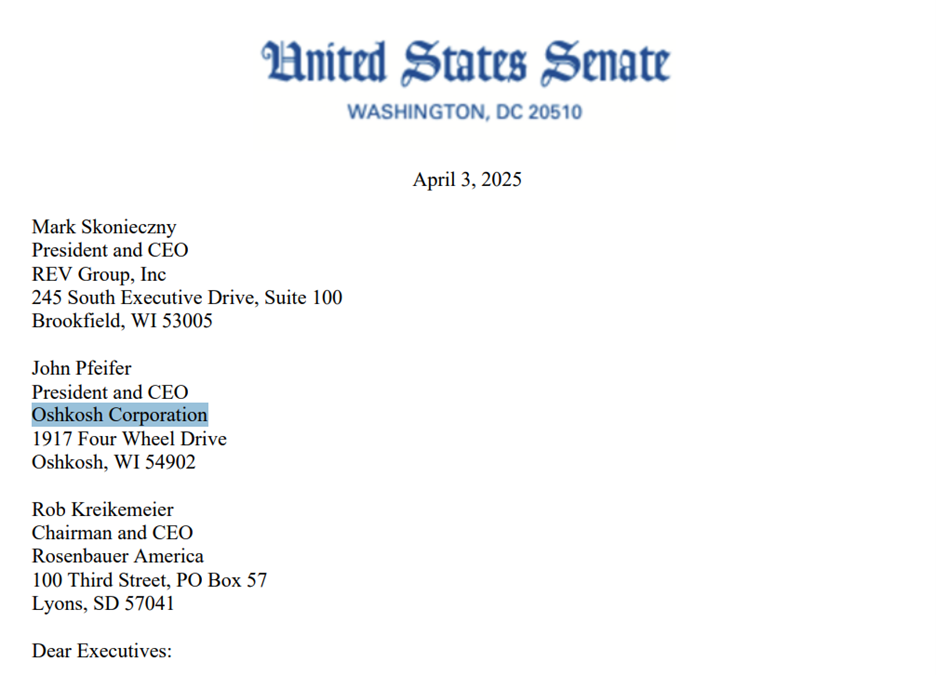
Last April, members of Congress wrote to the CEO’s of companies in the fire truck industry, including Oshkosh Corporation. The production delays for the fire trucks seem to come from the backlogs, totaling billions of dollars. In Oshkosh’s case, the backlog of orders is $4 billion, which is up 4 times in just 4 years:


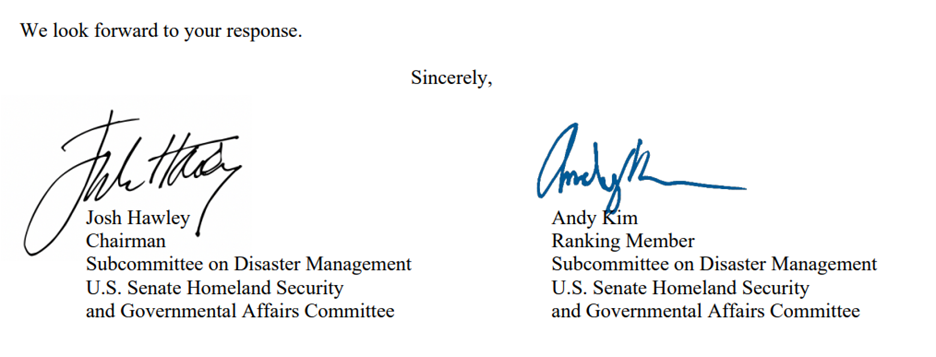
Josh Hawley is a conservative Republican and Andy Kim is a liberal Democrat, and good luck getting them to agree on anything, but both are saying here that the profit-maximizing practices of fire equipment manufacturers “reduce readiness for fire stations and put American lives at risk.”
This April, cities and towns across the United States filed lawsuits under Antitrust laws, against Oshkosh Corp and the other two companies, who collectively control 70 to 80% of the total American market.
Pete Hegseth is the Defense Secretary, or War Secretary or whatever we’re calling him now, and says that military manufacturing is back on a war footing, and the Pentagon will “leverage all available commercial solutions and technology to ensure warfighters maintain a decisive advantage.”
So we’re left to wonder just how they think Oshkosh is likely to help with any of that. It is literally their business model to let cities and towns in the United States burn to the ground, so they can make more money. That’s what the Congress said. That’s what those lawsuits say. The Executive Branch is theoretically independent and co-equal to Legislative and Judicial, but it is still okay to read about what’s going on over in those other places. Oshkosh execs are just fine with endangering the lives of first responders, at the fire department just down the street from their factories, and in the neighborhoods they live in. It’s obvious why Oshkosh would love to run that same business model at the federal level that they’re running on municipal governments in North America; it’s harder to understand what’s in it for the Pentagon.
The Department of War wants the auto industry to help with building vehicles, munitions, and hardware faster and less expensively than how they do things now. During World War II, car companies helped build the “arsenal of democracy”, and switched from cars to planes. Difference between then, and now, is that the machine tools and supply chains that went into building bombers were already in Detroit, and already set up in those factories. So what the Pentagon is suggesting isn’t going to work, at least not soon, unless the equipment the Department of War wants to buy is something similar to the products coming out of those factories now, like pickup trucks or sedans.
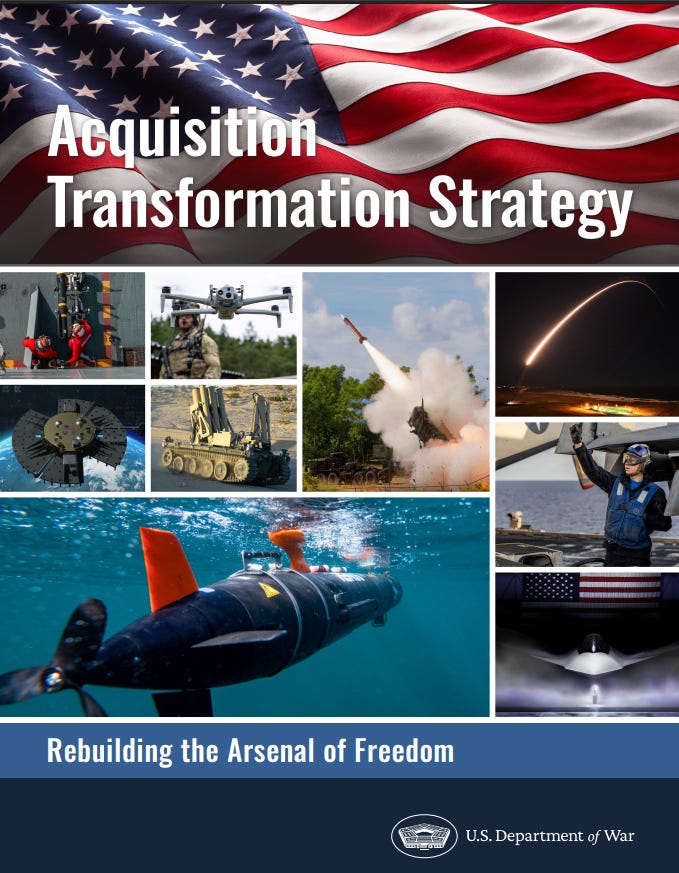
The objective now is to rebuild “the arsenal of freedom”. This report runs almost 50 pages and spells out the new strategy to expand the industrial base—Get more companies building weapons and gear, come up with better ideas, work faster, deliver results better:
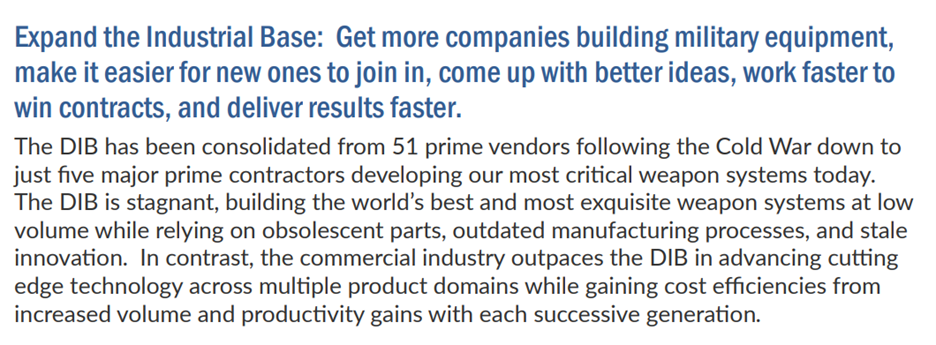
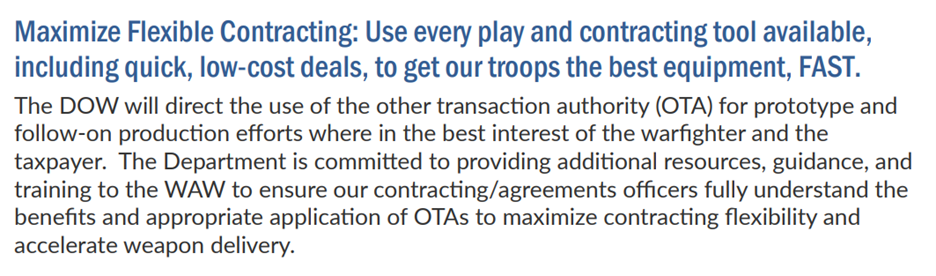
If you’re looking for a great example of bureaucracy-speak, lots of word salads that run on forever without really saying anything at all, then I cannot recommend this document enough. But I wanted to find out just why, if the Pentagon is opening up the Military Industrial Complex to new competition, and streamlining the order process, to emphasize “quick, low-cost deals”—then why is everything about to cost a lot more.
This is from war.gov—no kidding; that’s really the URL now—and the War Department’s 2027 budget request is for $1.5 trillion dollars. It’s the biggest in history. Secretary of War says here that previous administrations “underinvested in our military”, and now that Washington is under new management, they’re changing the game.
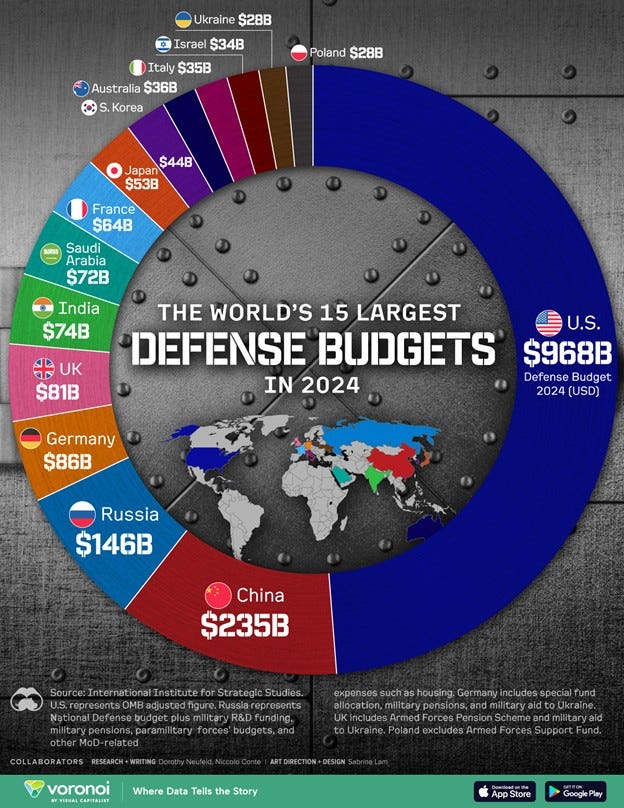
This chart is from 2024, back when the Biden Administration was “underinvesting in the military”, and when defense budget was the same as the next 14 countries combined. For next year the Pentagon wants a 42% bump, which will supercharge the Military Industrial base, expand production, and build a Golden Dome missile defense system, along with some drones.
In order to make all that go, they need a lot of companies building weapons who aren’t doing so now. And the Pentagon needs to offer long-term contracts to get civilian companies interested in doing that. Smaller companies need incentives to invest in new supply chains and capacity.
The War Department is committing to buy far more weapons than in the past, so that smaller companies don’t have to worry anymore about big fluctuations in future orders. This goes back to the monopsony problem—the defense industry has a bunch of suppliers, but only one buyer, and a new president or a new Congress can come in and decide there may be better uses for that $1.5 trillion.
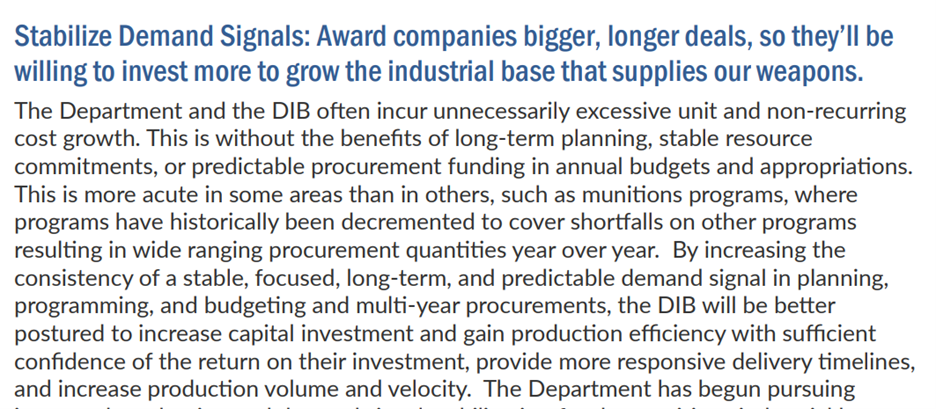
That’s why it’s crucial to sign long-term contracts that will survive the Trump Administration, is how the thinking goes. That is what “stabilize demand signals” means there: get big projects under contract now, which cannot be undone later. Sign deals for longer-term, then hope that compels companies to more invest in their own capacity, but get busy immediately. Because for the Pentagon, the crisis is immediate, and long-term. Just in the past six weeks, they launched missiles and dropped bombs that will take at least five years to replace.
Carmakers are a logical first place to look—they have economies of scale, and deep engineering and manufacturing expertise. But it’s here that China enters the conversation. The whole world now knows the Pentagon doesn’t have enough munitions, and the whole world also knows that automakers’ supply chains go through China. Ford Motor Company needs Chinese rare earth metals to build civilian cars, for families, and was one of the first companies approved to buy metals from China following the deal between Trump and Xi.
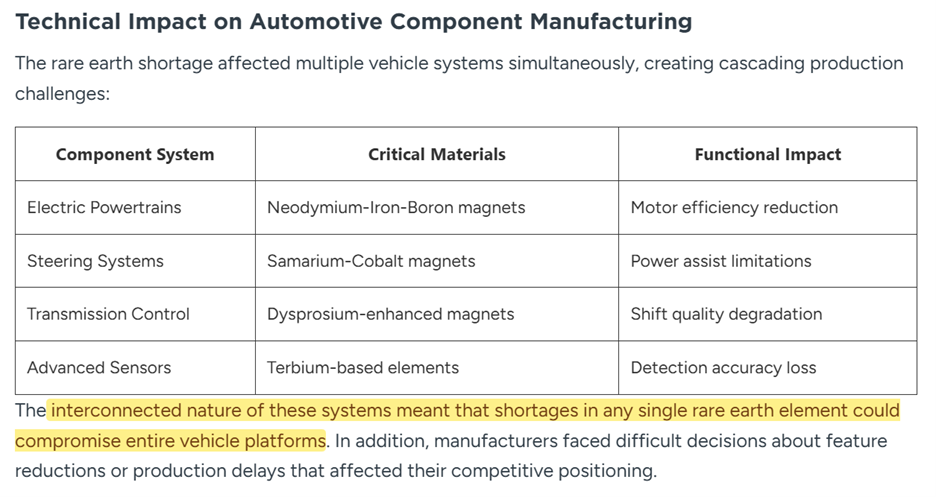
Ford was pleased that some of their suppliers were approved, under a special Chinese import license that lasts for 12 months, for magnets that are crucial in powertrain, steering systems, transmissions, and sensors. A shortage of any rare earth element, or in any of those magnets, means the vehicle doesn’t get built. At the time, Ford was approved, but German, Japanese, and South Korean automakers had not been.
Vehicles don’t work without rare earth metals and magnets, and Ford Motor needs Chinese magnets to keep their factories open. But General Motors is a little bit further along on the magnets sourcing problem. GM committed to buy more expensive magnets from new American factories, even from manufacturers who are new to the industry. So GM might be able to build vehicles for the War Department, without Chinese magnets. But the problem comes here, if you want to protect those vehicles from people who are shooting at them. Tungsten is used for that, and China and Vietnam own the supply chains for Tungsten.
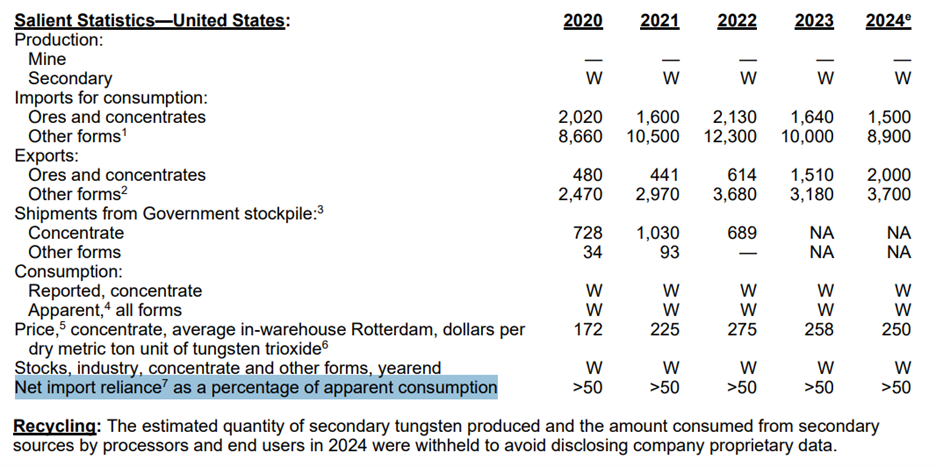
This is from the US Geological Survey. Top line is tungsten mining, in the United States, which is zero, and has been for a long time. Bottom line—net important reliance is over 50%. In 2024, the price for Tungsten concentrate was $250 per ton.
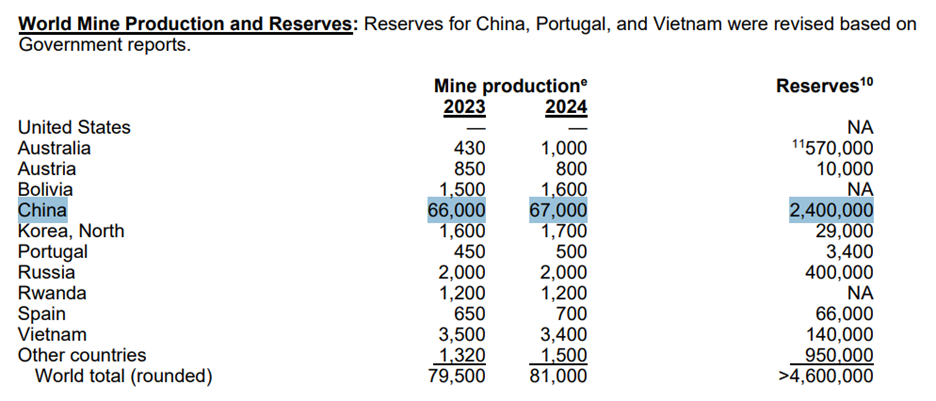
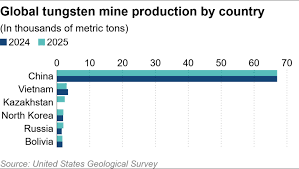
Here is where tungsten comes from. In 2024, 81,000 tons of tungsten were mined, with 80% of that coming from China. China also has more than half of the world’s proven reserves. Global mining production, by country—and here again we see a lot of countries who are a lot more friendly with China, than with the Pentagon. China plus Vietnam is over 90% of global tungsten supply:
China classifies tungsten as a dual-use material, and has cut off exports to any company using tungsten to build weapons. Now there are hot wars in Ukraine, Iran, Gaza, Lebanon, and the prices paid for tungsten back in 2024 were the happy times for NATO weapons makers.
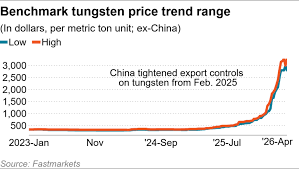
Now they can’t get any, and so it doesn’t matter how big those Pentagon budgets get, or how long-term those contracts are.
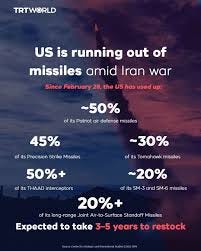
None of those missiles and munitions can possibly be replaced, unless and until dozens of new mines and refineries are built and come online, which will take decades. The Pentagon needs a lot of new equipment and vehicles, and fast. Ford and GM can do build a lot of equipment and vehicles, and fast, but without tungsten can’t make them useful to the Pentagon. And as soon as any American company becomes a dual-use manufacturer, China will just add it to their export-restricted lists, and cut them off of everything else they need to make anything.
Be Good.
Resources and links:
Did a Private Equity Fire Truck Roll-Up Worsen the L.A. Fires?
[ BIG by Matt Stoller
Did a Private Equity Fire Truck Roll-Up Worsen the L.A. Fires?
Today’s piece is written by antitrust lawyer Basel Musharbash…
Read more
a year ago · 713 likes · 27 comments · Basel Musharbash](https://www.thebignewsletter.com/p/did-a-private-equity-fire-truck-roll)
Chinese factories build fire trucks for $400,000 in six weeks. In the US it’s $2 million in 4 years
Antitrust suits against fire truck manufacturers will be centralized in Wisconsin federal court
https://www.wpr.org/news/antitrust-suits-fire-truck-manufacturers-centralized-wisconsin-federal-court
Senator Hawley letter to fire truck executives
https://www.hawley.senate.gov/wp-content/uploads/2025/04/Hawley-Letter-to-Firetruck-Executives.pdf
Wall Street Journal, Pentagon Approaches Automakers, Manufacturers to Boost Weapons Production
https://www.wsj.com/politics/national-security/pentagon-approaches-automakers-manufacturers-to-boost-weapons-production-19538557
Ranked: The 15 Largest Defense Budgets in the World
https://www.visualcapitalist.com/largest-defense-budgets-in-the-world/
war.gov, $1.5 Trillion Budget Request Prioritizes Service Members, Modernization
https://www.war.gov/News/News-Stories/Article/Article/4465551/15-trillion-budget-request-prioritizes-service-members-modernization/
New York Times, Pentagon Seeks Help From Ford and G.M.
https://www.nytimes.com/2026/04/16/business/pentagon-ford-general-motors-defense-production.html
Reuters, How U.S. Defense Industry Dodged a Rare-Earth Shortage After China’s Curbs
https://www.reuters.com/business/autos-transportation/ford-suppliers-receive-chinas-new-streamlined-rare-earth-licences-2025-12-10/
Ford Suppliers Receive China’s New Streamlined Rare Earth Licences
https://discoveryalert.com.au/global-automotive-transformation-supply-chain-2025/
Acquisition Transformation Strategy, Rebuilding the Arsenal of Freedom
https://media.defense.gov/2025/Nov/10/2003819441/-1/-1/1/ACQUISITION-TRANSFORMATION-STRATEGY.PDF
Tungsten in Military Use
https://www.samaterials.com/content/tungsten-in-military-use.html
Tungsten Supply Crunch: How China’s Export Restrictions Rattled Global Markets
https://theoregongroup.com/commodities/tungsten/tungsten-supply-crunch-how-chinas-export-restrictions-rattled-global-markets-guest-post-by-brian-hendrich/
US Geological Survey: Tungsten
https://pubs.usgs.gov/periodicals/mcs2025/mcs2025-tungsten.pdf
WSJ, GM’s Rare-Earth Gamble Pays Off as China Tightens Magnet Exports
https://www.wsj.com/business/autos/gms-rare-earth-gamble-pays-off-as-china-tightens-magnet-exports-b115ef72
Tungsten breaks records as China export curbs, military demand boost investment
https://www.reuters.com/world/asia-pacific/tungsten-breaks-records-china-export-curbs-military-demand-boost-investment-2026-04-29/
Inside China / Business is a reader-supported publication. To receive new posts and support my work, consider becoming a free or paid subscriber.
From Inside China / Business via This RSS Feed.