


This article originally appeared in the May 10, 2026 edition of El Diario de Coahuila.
Although the 2012 labor reform, which made hiring and firing more flexible, legalized outsourcing, and limited back pay to one year, has been reversed or substantially modified, the country’s labour market remains subject to certain structural factors that prevent all Mexican workers from enjoying optimal working conditions and fair wages.
“More than half of the workers in Mexico are in the informal sector, meaning that because they work for themselves, they don’t have a formal contract or any benefits (social security, Christmas bonus, vacation, vacation bonus, days off, and profit sharing). This means that the progress seen in recent years, such as the increase in the minimum wage, the approval of vacation time, and even the reform that regulates teleworking, doesn’t have the desired impact,” says Ana Escoto Castillo, an academic at the Faculty of Political and Social Sciences at UNAM and a scholar of working conditions in Latin America.

Photo: Jay Watts
The law on digital platforms was also recently approved, which, although it brought a group of very active workers out of the shadows since the COVID-19 pandemic and already recognizes their labour rights, has certain minimum thresholds for its application, related to the amount of income that they must generate (at least a minimum wage).
“Furthermore, there may be problems verifying compliance with this law, because the verification systems are unclear and the work done on digital platforms is very difficult to pinpoint in a specific location… In short, the balance is mixed because, on the one hand, there is now recognition of more labor rights, but on the other hand, it is very complex to see how companies implement them and to verify that they adhere to the law in an extremely segmented labor market, where more than half of the workers are in an informal situation.”
Stable Informality
Currently, in a universe of 61.3 million Mexicans with jobs, the rate of informal employment is 55%, and according to Escoto Castillo, if you review the data from the National Survey of Occupation and Employment, from the National Institute of Statistics and Geography (INEGI), you can verify that, from 2005 to date, the latter has fluctuated between 55% and 59%, that is, it has been very stable.
“The rate of salaried employment has increased slightly: 5% compared to 2005; thus, one would expect that the rate of formal employment (with social security and other benefits) would also increase, but that has not happened. As for the rate of employment in the informal sector (street vendors, family businesses, micro-businesses that hire people but cannot provide them with benefits), it remains at 30% .
Regarding the rate of informal employment, the university academic points out that a large part of salaried work today is no longer formal. “If someone has a boss or employer, that person should provide them with the legally mandated benefits, but that is increasingly rare in Mexico. Formal employment has become informal.”
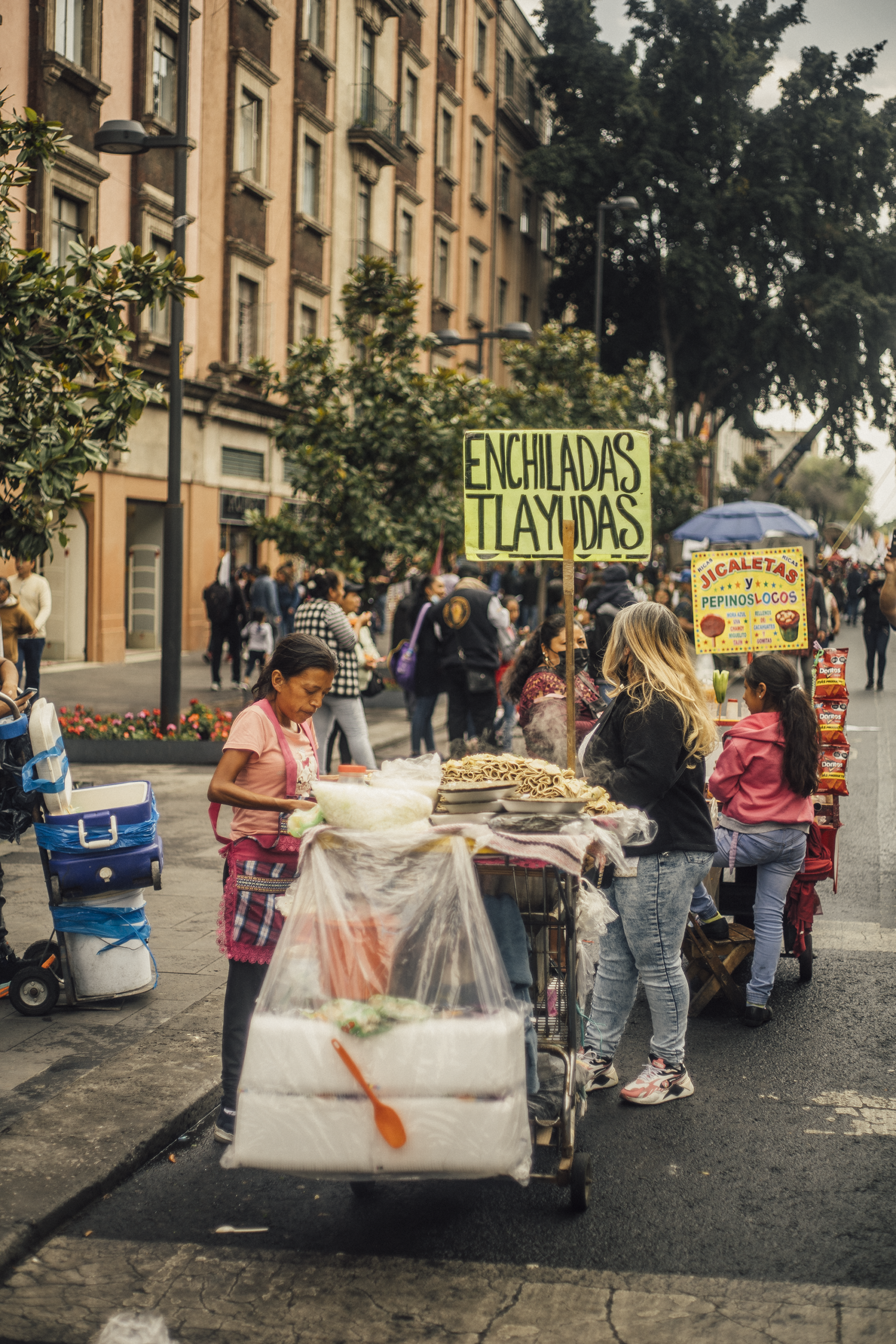
Photo: Jay Watts
The Wage Gap
Regarding the wage gap between men and women, Escoto Castillo states that it has widened due, among other causes, to the fact that the labor market insertion of Mexican women is not as stable as that of men.
“Here, the career paths of many women are discontinuous and unstable because, after becoming pregnant and giving birth, they must fulfill their duties as mothers. Hence, penalties are generated against them. This is a structural factor that persists not only in the Mexican labor market, but also in other countries on every continent.”
Critical Conditions
According to the academic from UNAM, in Mexico and other Latin American countries, the problem has never been unemployment per se, but rather the precariousness of these jobs, the conditions in which they are performed, and informality itself.
“Last week, INEGI published that the unemployment rate for March was 2.4%, the lowest among the countries that make up the Organization for Economic Cooperation and Development (OECD). And yes, it is low, but the country maintains a very high rate of informality and the population with formal employment is not growing as we would like.”
The Critical Employment Conditions Rate (TCCO), derived from the National Survey of Occupation and Employment (ENOE) by INEGI, measures the proportion of the employed population working in precarious conditions. This includes insufficient work hours (less than 35 hours) due to market demands, work hours (more than 35 hours) with income below the minimum wage, and excessive work hours (more than 48 hours) with income below two minimum wages. It should be noted that, at the beginning of 2026, the TCCO was 38.3%.
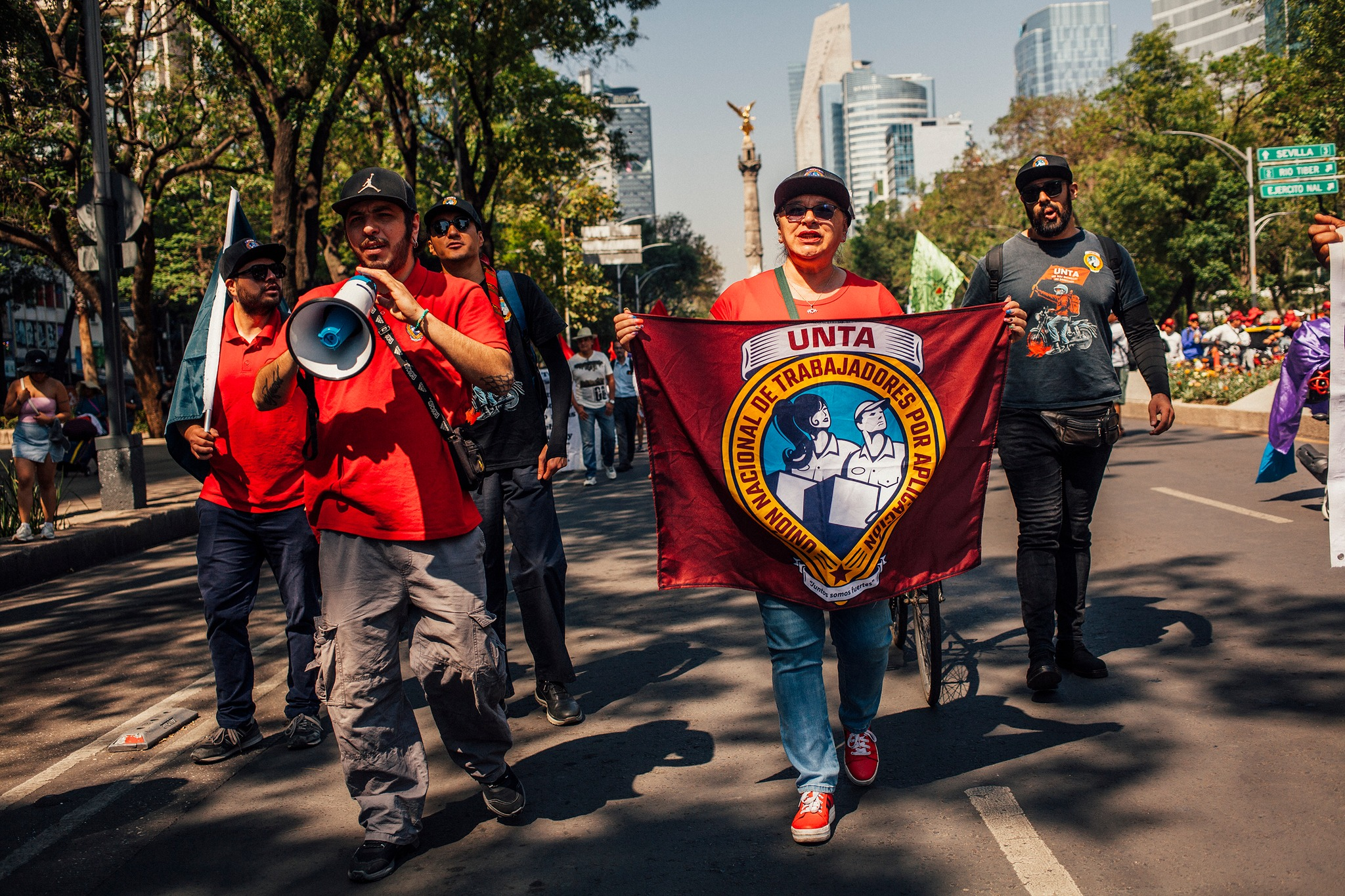
Unión Nacional de Trabajadores por Aplicación, one of the new breed of unions organizing digital platform workers Photo: Jay Watts
Unions
The history of unions in Mexico is marked by a large number of interests, some legitimate, but others not so much.
However, Escoto Castillo believes that there are now more instruments that allow for greater worker participation in union matters, and that many of these instruments have been driven not by the activity of the unions themselves, but by the conditions of the United States-Mexico-Canada Agreement (USMCA) and by other international actors.
Reality
According to the academic from UNAM, in Mexico and other Latin American countries, the problem has never been unemployment per se, but rather the precariousness of these jobs, the conditions in which they are performed, and informality itself.
-

Informality Reigns Among Workers
May 12, 2026May 12, 2026
Mexico’s enduring high levels of informality means the progress seen in recent years with minimum wage increases & vacations has not had the desired impact.
-
The Horror of Violence
May 12, 2026May 12, 2026
To build peace in Guerrero, criminal structures must be dismantled; it is a legal imperative to prosecute those who threaten the lives and safety of people and to guarantee the protection of communities and families subjected to criminal violence.
-

Intentional Homicides Decrease by 40% Under Sheinbaum’s Government
May 12, 2026
With 1,020 fewer homicides, April is the month with the lowest incidence in the last 11 years.
The post Informality Reigns Among Workers appeared first on Mexico Solidarity Media.
From Mexico Solidarity Media via This RSS Feed.