

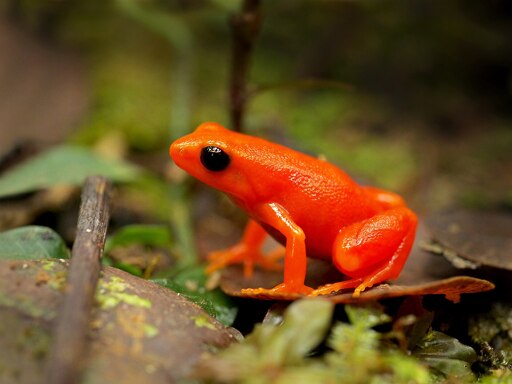
Herpetologists are calling for greater inclusion of amphibians in African conservation planning, in a recent letter published in the journal Science. Africa is home to roughly 1,170 known species of amphibians, 99% of which are endemic. Some 37% of the amphibians are recognized as threatened with extinction. The researchers note that amphibians — frogs, salamanders and caecilians — are especially important as early-warning detectors of ecological disruption, given their sensitivity to pathogens, thermal stress, pollution and hydrological changes in their wetland habitats. Yet amphibians as a group remain poorly represented in protected-area planning and management tools in Africa, the authors write. They note there are only 12 documented amphibian-specific action plans across the continent. These include a conservation plan for frogs in Cape Town, South Africa, and for the golden mantella frog (Mantella aurantiaca) in Madagascar. The Democratic Republic of Congo (DRC), for example, doesn’t yet have conservation action plans specifically dedicated to amphibians, according to the letter’s lead author, Bienvenu Mwale, an expert on amphibians in the DRC and Cameroon. “To date, the DR Congo existing legal frameworks remain broad and give limited attention to this taxonomic group, with a stronger focus on large mammals,” Mwale told Mongabay by email. Cameroon, on the other hand, has given full protection to six amphibian species, including the Goliath frog (Conraua goliath), the world’s largest, through a ministerial decree. This could be a good model for African conservation planning, Mwale said. He added that several African amphibian species are currently classified as data…This article was originally published on Mongabay
From Conservation news via This RSS Feed.